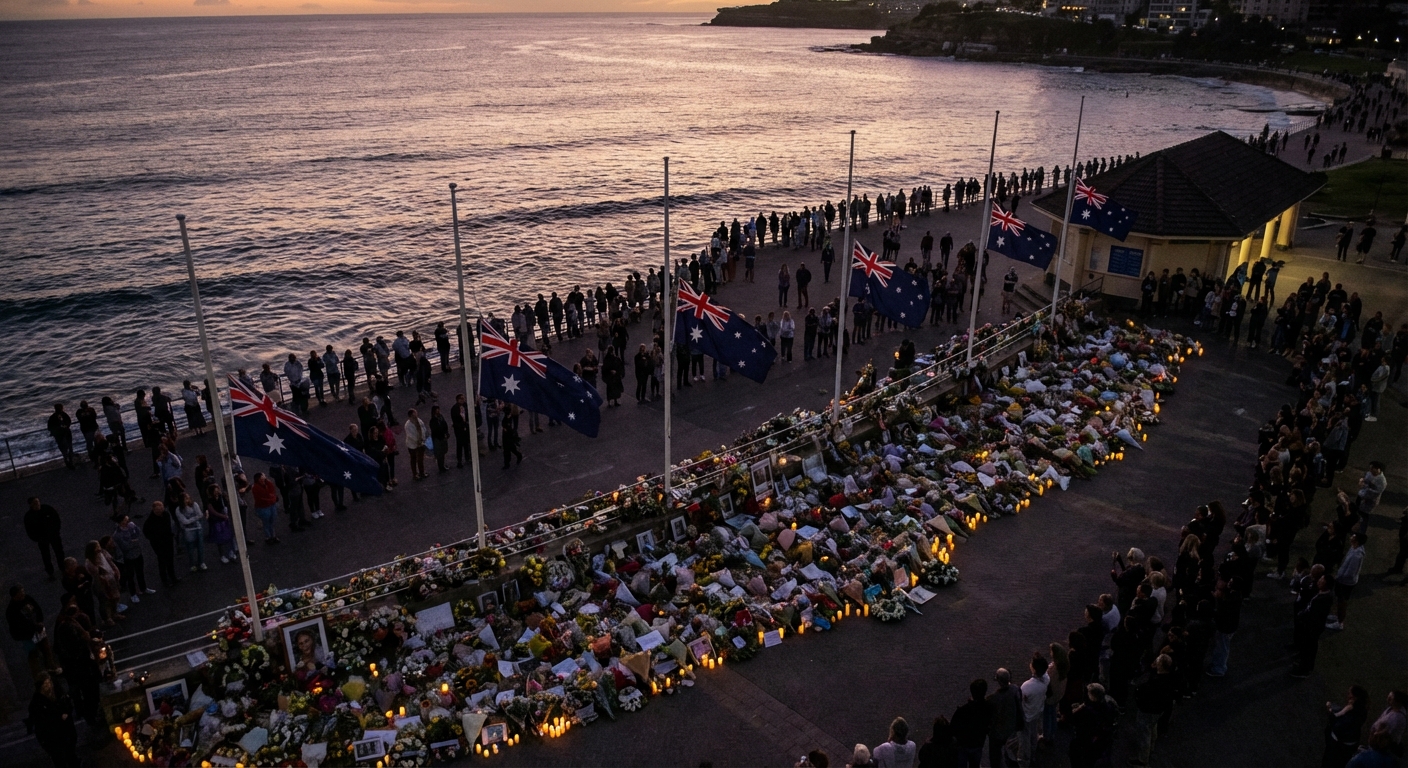
The crowd had gathered for a Hanukkah celebration at one of the world’s most famous beaches. By the time the shooting stopped, at least 16 people were dead and more than 40 were injured in what Australian authorities have declared a terrorist attack targeting the Jewish community.
The December 14 attack at Sydney’s Bondi Beach represents the worst mass shooting in Australia since the Port Arthur massacre of 1996, when 35 people were killed in Tasmania. That tragedy led to Australia’s landmark gun control reforms, making this weekend’s violence not just a national tragedy but a jarring challenge to the country’s identity as a nation that solved its gun violence problem.
“An attack on Jewish Australians is an attack on every Australian,” Prime Minister Anthony Albanese said in a statement, calling the shooting “an act of pure evil.” The attack has sent shockwaves through a country where mass shootings had become largely a memory, and where the Jewish community now grapples with a devastating assault during one of their most joyous holidays.
What Happened
According to police accounts and video footage analyzed by Al Jazeera, two gunmen opened fire from a footbridge leading to Bondi Beach around 7:30 PM local time on Saturday. Witnesses described scenes of panic as families scattered, parents shielding children as the sound of automatic gunfire echoed across the beachfront.
The attackers, armed with long guns, targeted a public menorah lighting ceremony that had drawn hundreds of community members and tourists to the iconic location. The celebration, organized by Chabad of Bondi, was one of dozens of similar events happening across the world during Hanukkah.
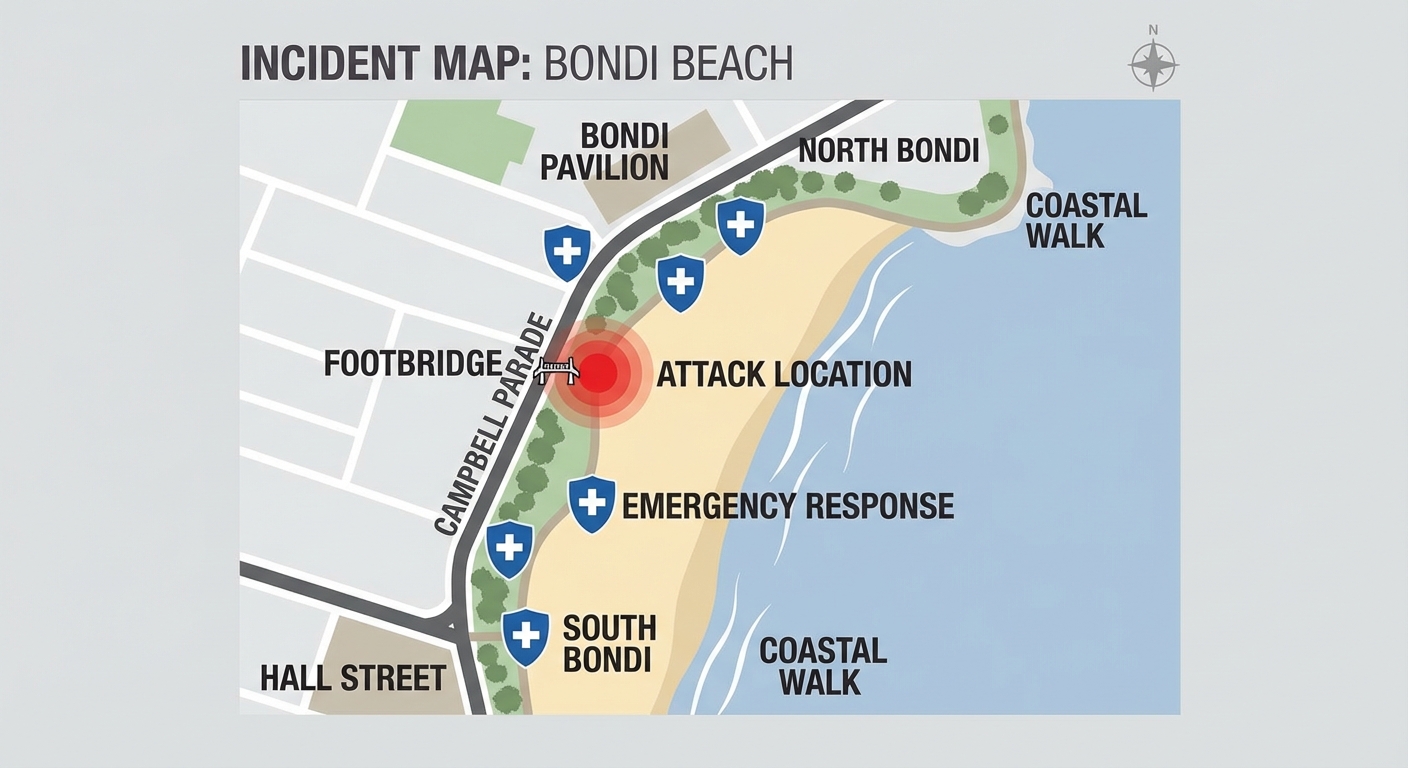
During a press conference on Monday, New South Wales Police Commissioner Mal Lanyon confirmed that the suspects were a 50-year-old man and his 24-year-old son. The elder gunman was shot and killed by responding officers at the scene. His son sustained wounds and remains hospitalized under police guard. Lanyon revealed that the father “is a licensed firearms holder who had six firearms licensed to him” and “met the eligibility criteria for a firearms licence,” according to NPR’s reporting.
The investigation continues, with authorities raiding multiple locations connected to the suspects. Police have described the attack as terrorism specifically targeting the Jewish community, though the full ideological motivations remain under investigation.
The Victims
The victims ranged in age from 10 to 87, according to the Jewish Telegraphic Agency. Their stories paint a picture of a community gathered in celebration, suddenly shattered by violence.
Among the dead are two rabbis: Rabbi Eli Schlanger and Rabbi Yaakov Levitan, both of whom served at Chabad of Bondi. A Holocaust survivor was also killed, a detail that has added particular weight to the tragedy’s symbolism. The youngest victim was a 12-year-old girl who had come to the celebration with her family.
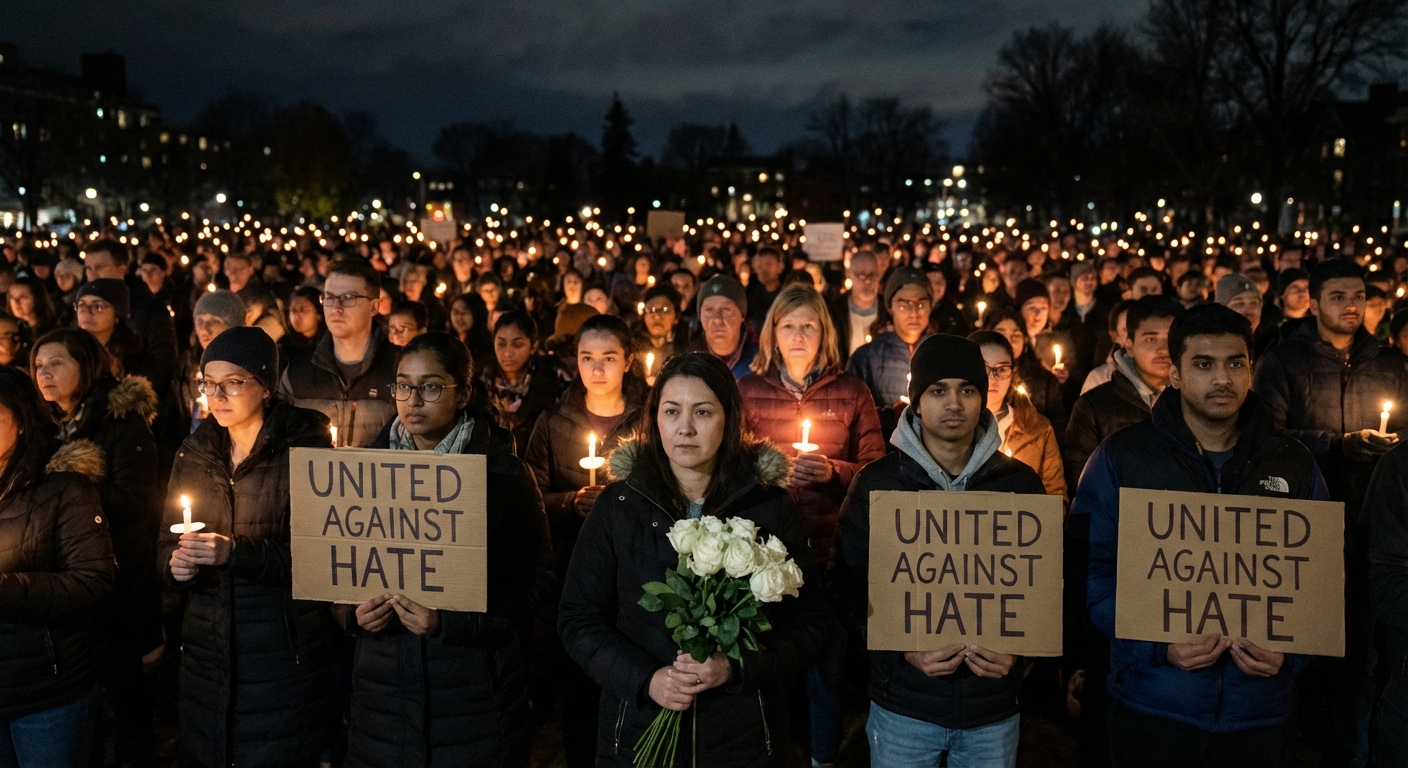
At least 40 others were injured, with several remaining in critical condition at Sydney hospitals. Medical staff have described the injuries as consistent with high-powered rifle fire, presenting challenges for trauma teams more accustomed to vehicle accidents and isolated incidents than mass casualty events.
The Hero
In the chaos of the attack, one man’s actions likely saved numerous lives. Ahmed al Ahmed, a 43-year-old fruit shop owner, approached one of the gunmen from behind while the attacker was reloading and tackled him to the ground.
Video footage broadcast on Australian television and analyzed by NPR shows al Ahmed walking toward the gunman, grabbing him around the neck, and wrestling the weapon away. The intervention likely prevented additional deaths during the minutes before police arrived on scene.
“I saw him reloading and I just acted,” al Ahmed told Australian media from his hospital bed, where he is being treated for injuries sustained during the struggle. “I didn’t think about it. People were dying.”
A GoFundMe campaign established in al Ahmed’s honor has raised more than 1.4 million Australian dollars, approximately $950,000 USD, as of Monday afternoon. The fund was created to support his family while he recovers and to recognize his courage.
Australia’s Response
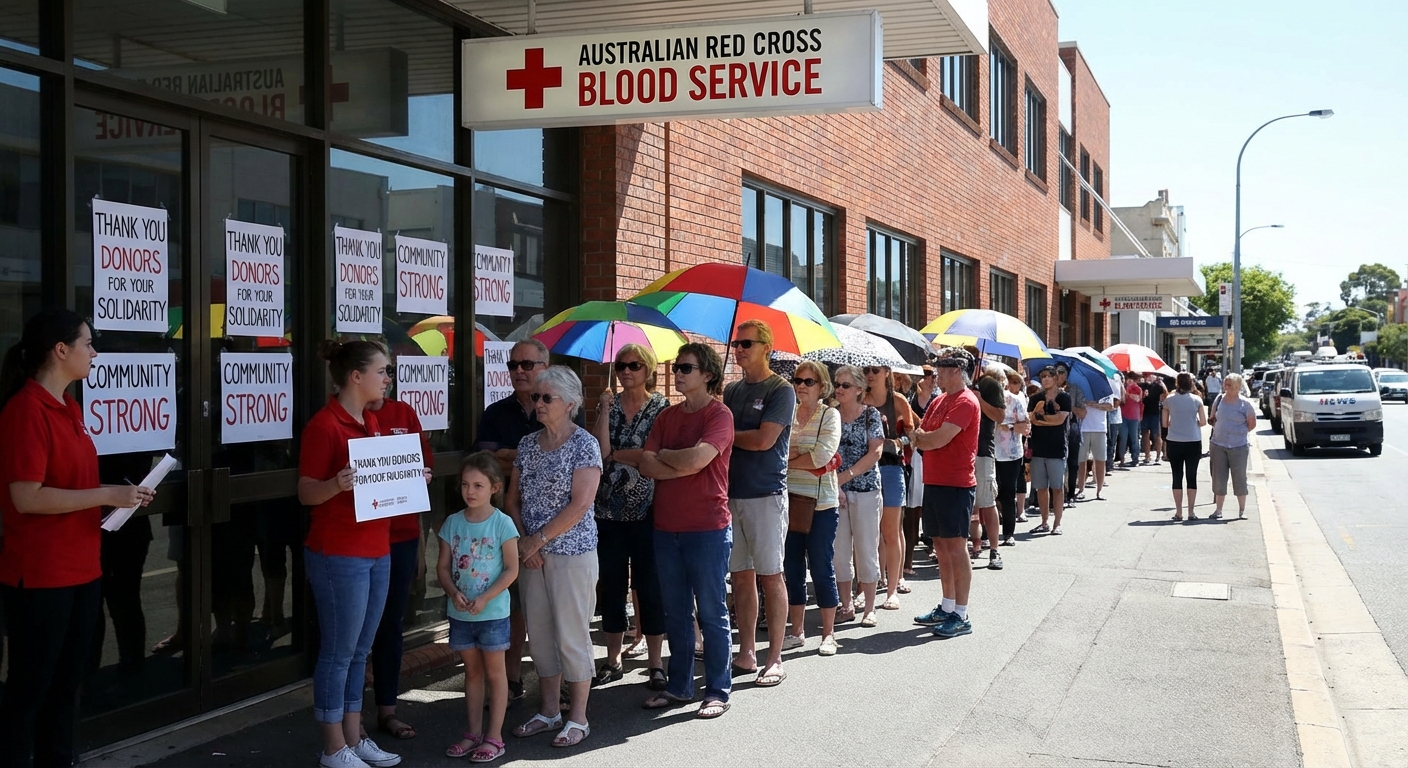
The attack has galvanized a national response. According to the Australian Red Cross, more than 40,000 blood donation appointments were booked nationwide on Monday, roughly 30,000 more than on a typical day. Donation centers reported lines extending around blocks in Sydney, Melbourne, and Brisbane.
Prime Minister Albanese announced flags would fly at half-mast on all government buildings and called for a national moment of silence. Opposition Leader Peter Dutton joined Albanese at a bipartisan memorial event, a rare show of political unity in an otherwise fractious parliamentary session.
Jewish community leaders expressed gratitude for the outpouring of support while acknowledging the fear that now pervades their community. “We came to Australia because it was safe,” one community member told The Washington Post. “That feeling is gone now.”
The attack has also prompted difficult conversations about Australia’s gun laws, coming just weeks after the country enacted controversial social media bans for minors in an effort to protect young people. The Port Arthur massacre led to the National Firearms Agreement of 1996, which banned automatic and semi-automatic rifles and established strict licensing requirements. That the elder attacker was a licensed firearms holder with six registered weapons has raised questions about whether the current system adequately screens for extremist ideologies.
International Context
The Bondi Beach attack occurs against a backdrop of rising global antisemitism. According to the Anti-Defamation League, antisemitic incidents worldwide have increased significantly since October 2023, with Jewish communities reporting heightened security concerns across Europe, North America, and now Australia. The attack also comes amid ongoing instability in the Middle East, where tensions remain high.
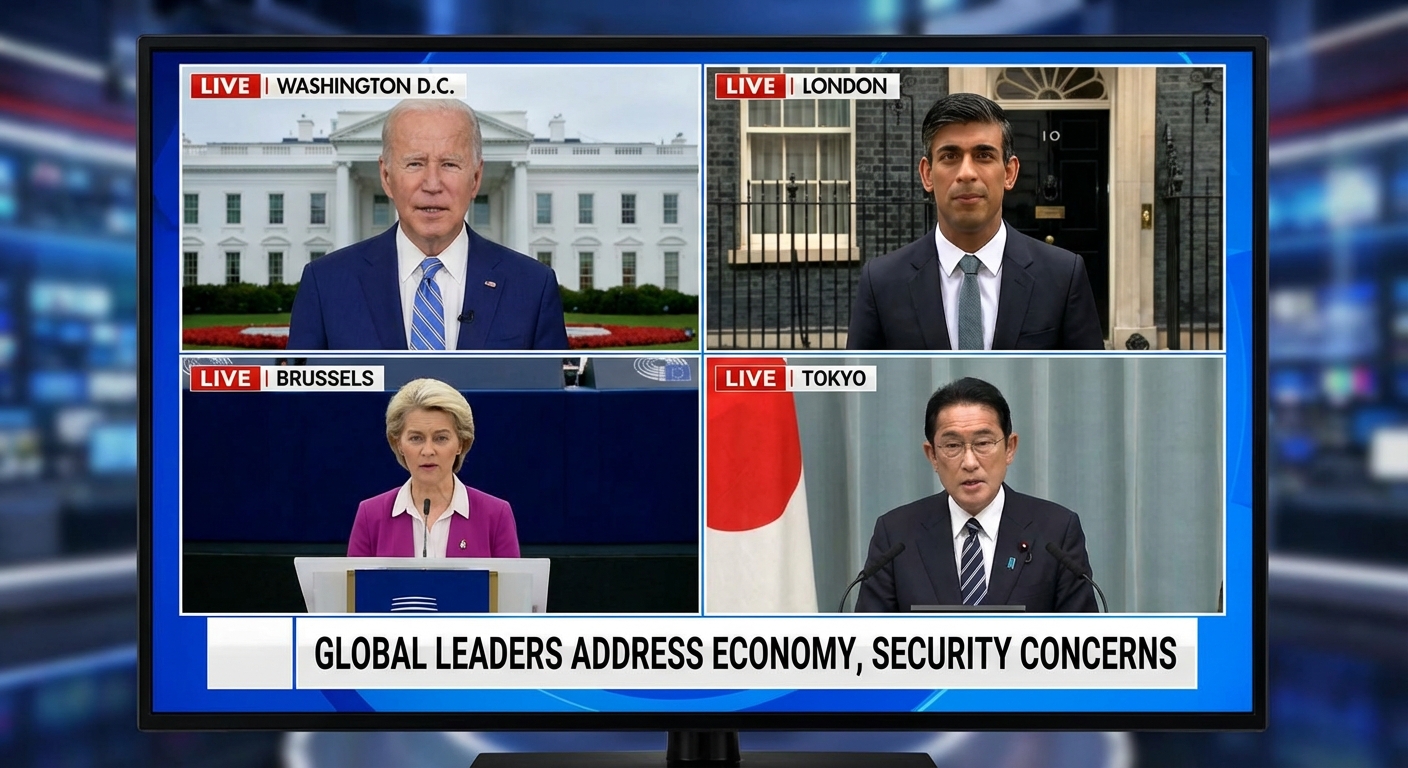
World leaders swiftly condemned the attack. Israeli Prime Minister Benjamin Netanyahu called it “a horrific act of terror against the Jewish people” and offered assistance to Australian authorities. U.S. President Trump issued a statement expressing solidarity, while European leaders from France, Germany, and the United Kingdom added their condemnations.
The United Nations Secretary-General released a statement calling for global vigilance against antisemitism and all forms of religious hatred, echoing long-standing calls for UN reform to better address global security challenges. “An attack on any community, anywhere, during a religious celebration is an attack on our shared humanity,” the statement read.
What Comes Next
New South Wales Premier Chris Minns announced an immediate review of security protocols for religious gatherings and public events. Additional police resources have been deployed to Jewish institutions, schools, and synagogues across the state.
The surviving suspect remains hospitalized. When he is medically cleared, he will face terrorism charges that carry potential life sentences under Australian law. Investigators are examining digital communications and travel records to determine whether the attackers had connections to broader extremist networks.
For the victims’ families, the days ahead will bring funerals and the beginning of an impossibly difficult grieving process. For Australia, the attack has reopened questions about security, gun access, and the rising tide of hatred that no border seems able to stop.
The menorah at Bondi Beach remained standing after the attack, damaged but not destroyed. Community leaders have announced they will light it again this week, in defiance of those who sought to extinguish its flame.
Sources: Al Jazeera, NPR, Jewish Telegraphic Agency, The Washington Post, Australian Red Cross.