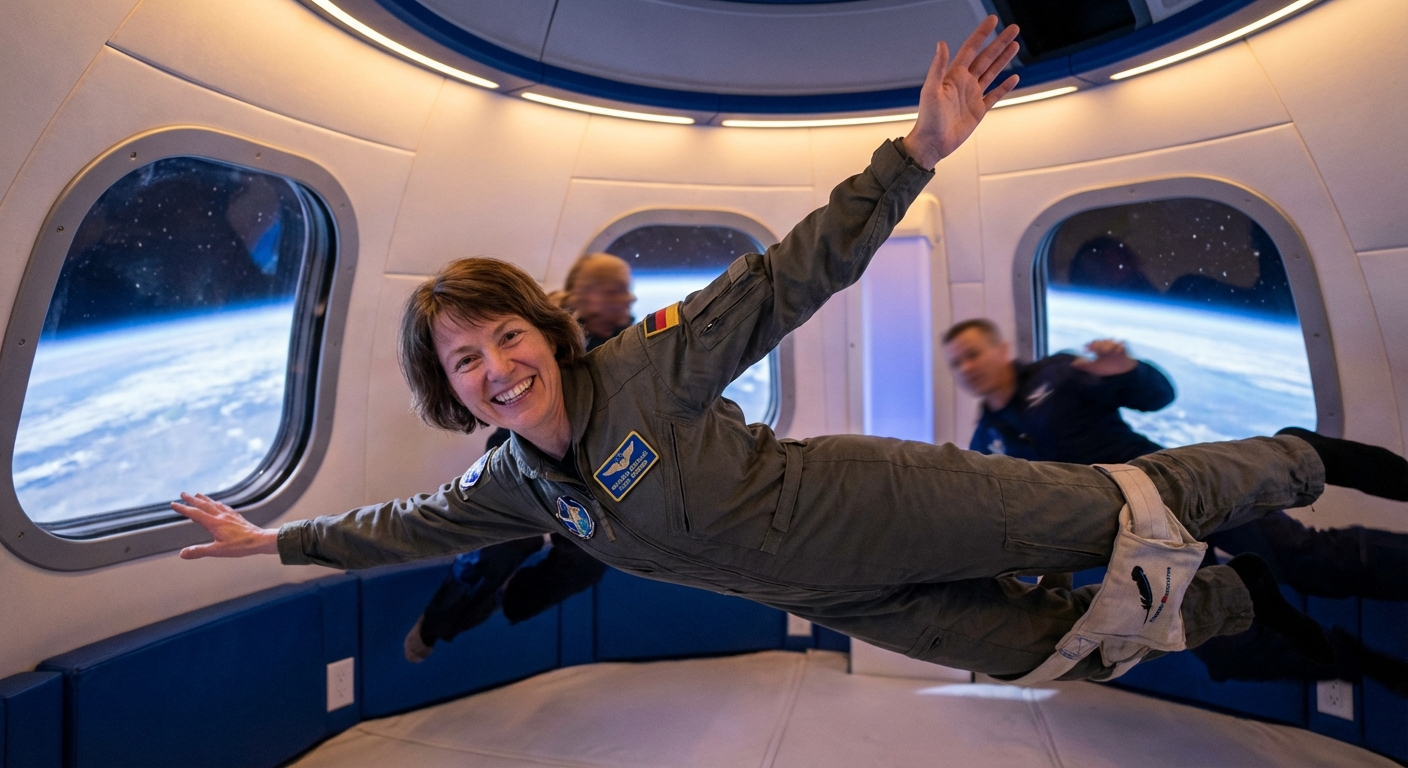
Michaela Benthaus floated in zero gravity for about three minutes on Saturday, laughing as she drifted through the cabin of a Blue Origin spacecraft. It wasn’t just a joyride for the 33-year-old German aerospace engineer. It was a statement: space doesn’t belong only to people who can walk.
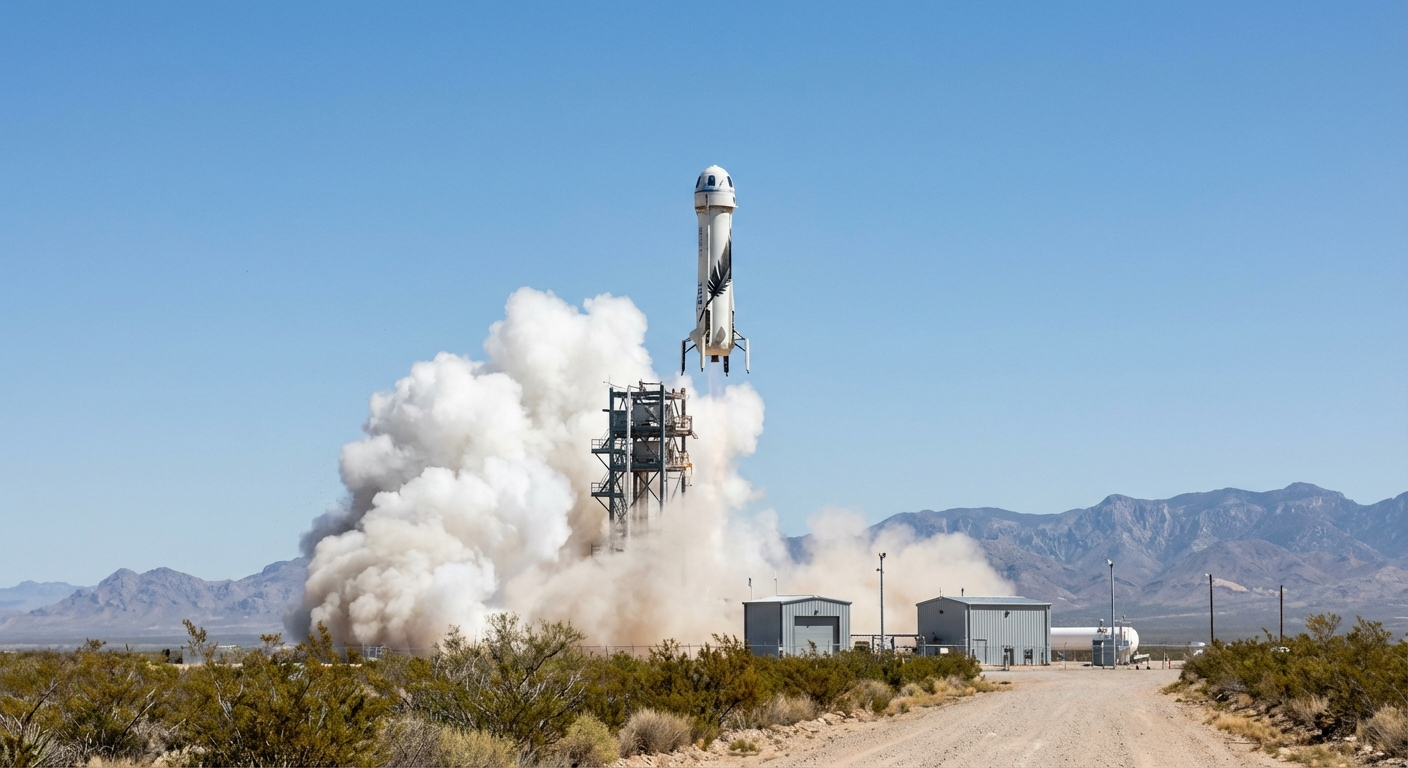
Benthaus became the first person who uses a wheelchair and the first with paraplegia to cross the Kármán Line, the internationally recognized boundary of space at 100 kilometers (about 62 miles) above Earth. Her flight aboard Blue Origin’s New Shepard capsule lasted roughly 10 minutes from liftoff to landing in the West Texas desert, but the implications could reshape who gets to call themselves an astronaut.
“It was the coolest experience,” Benthaus said shortly after the capsule touched down, according to PBS News. “I really hope it’s opening up for people like me. I hope I’m only the start.”
From Mountain Bike Crash to the Edge of Space
Seven years ago, Benthaus was an able-bodied engineer and avid mountain biker. A downhill biking accident in 2018 left her with a spinal cord injury that paralyzed her from the waist down. Many people in her situation might have retreated from physically demanding pursuits. Benthaus went in the opposite direction.
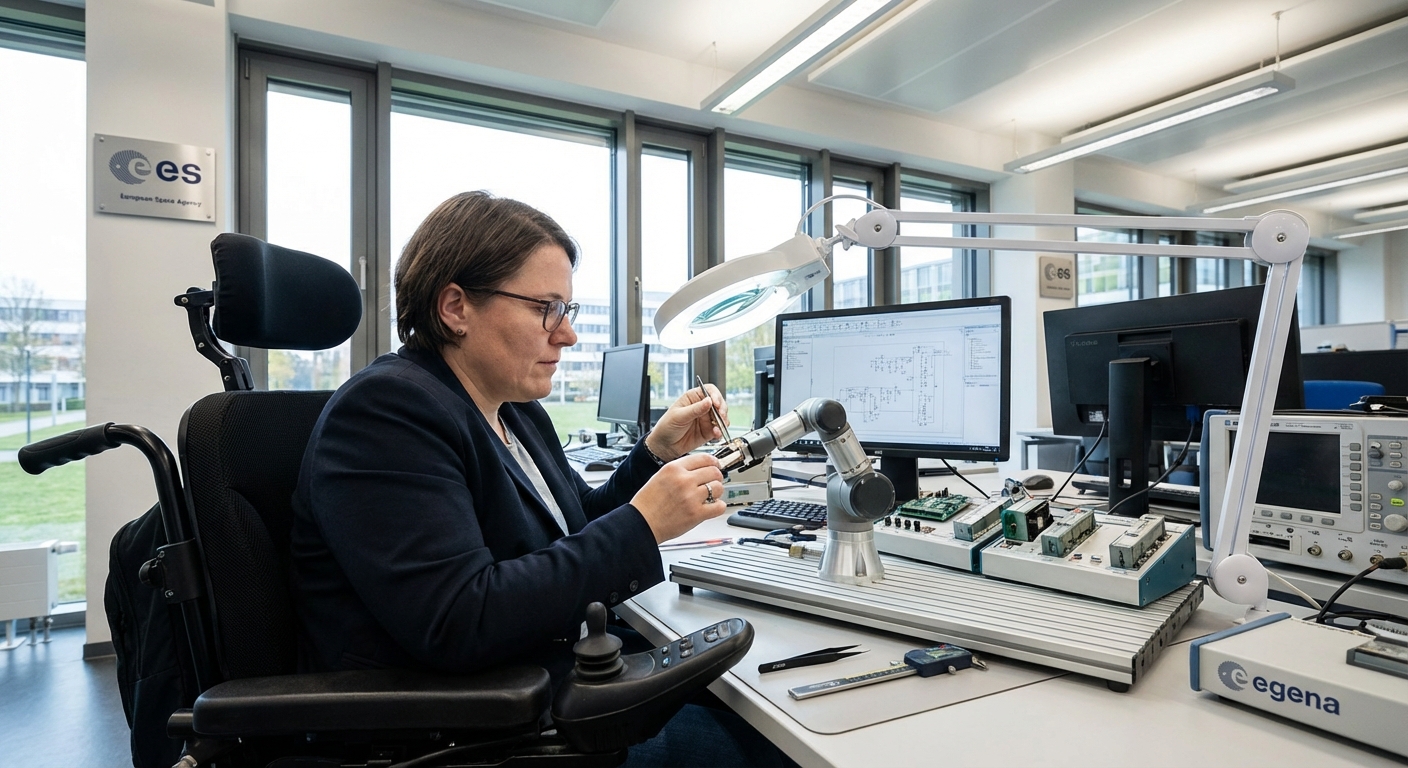
She continued working as an aerospace and mechatronics engineer at the European Space Agency, where her expertise in robotics and spacecraft systems put her at the center of some of the most ambitious projects in space exploration. The wheelchair became part of her life, but it didn’t define the boundaries of what she believed possible.
The opportunity to fly came through Hans Koenigsmann, a former SpaceX executive who helped develop the Falcon 9 rocket and became a close friend of Benthaus. The same company Koenigsmann helped build is now valued at $800 billion and dominates the commercial launch market. Koenigsmann had been thinking about how to make spaceflight more accessible and saw in Benthaus both the technical knowledge to understand what modifications would be needed and the determination to actually make the flight happen.
According to CNN’s reporting, Koenigsmann helped organize and sponsor Benthaus’s trip, working with Blue Origin to figure out what accommodations would be necessary. The answer turned out to be surprisingly minimal.
Less Modification Than You Might Expect
One of the most striking aspects of Saturday’s flight was how little needed to change. Space tourism vehicles like New Shepard aren’t designed with accessibility in mind, but they’re also not designed with stairs, ladders, or the kind of physical obstacles that make so many earthbound environments inaccessible to wheelchair users.
Blue Origin added a patient transfer board so Benthaus could scoot between the capsule’s hatch and her seat. The recovery team brought a carpet to roll out on the desert floor after landing, giving her wheelchair a smooth surface to roll on immediately after touchdown. Beyond that, the accommodations were minimal.
Benthaus designed her own solution for the microgravity portion of the flight. She used a special strap to keep her legs bound together as she unbuckled from her seat to float freely in the cabin. Without the strap, her paralyzed legs would have floated in unpredictable directions, potentially making movement difficult and creating safety concerns in the confined space. NBC News reported that after landing, Benthaus noted the strap worked “quite well.”
The relative simplicity of the accommodations raises an obvious question: if it’s this straightforward to fly a wheelchair user to space, why hasn’t it happened before? The answer has less to do with technical barriers than with assumptions about who belongs in space and who gets access to the expensive, exclusive world of human spaceflight.
What This Means for Space Accessibility
The history of disability in space programs is mostly a history of exclusion. NASA’s astronaut selection criteria have traditionally screened out candidates with significant physical disabilities, prioritizing what the agency calls “anthropometric” requirements that effectively mandate able-bodied applicants. The logic was that spacecraft were designed for specific body types and capabilities, and deviating from those parameters introduced risk.
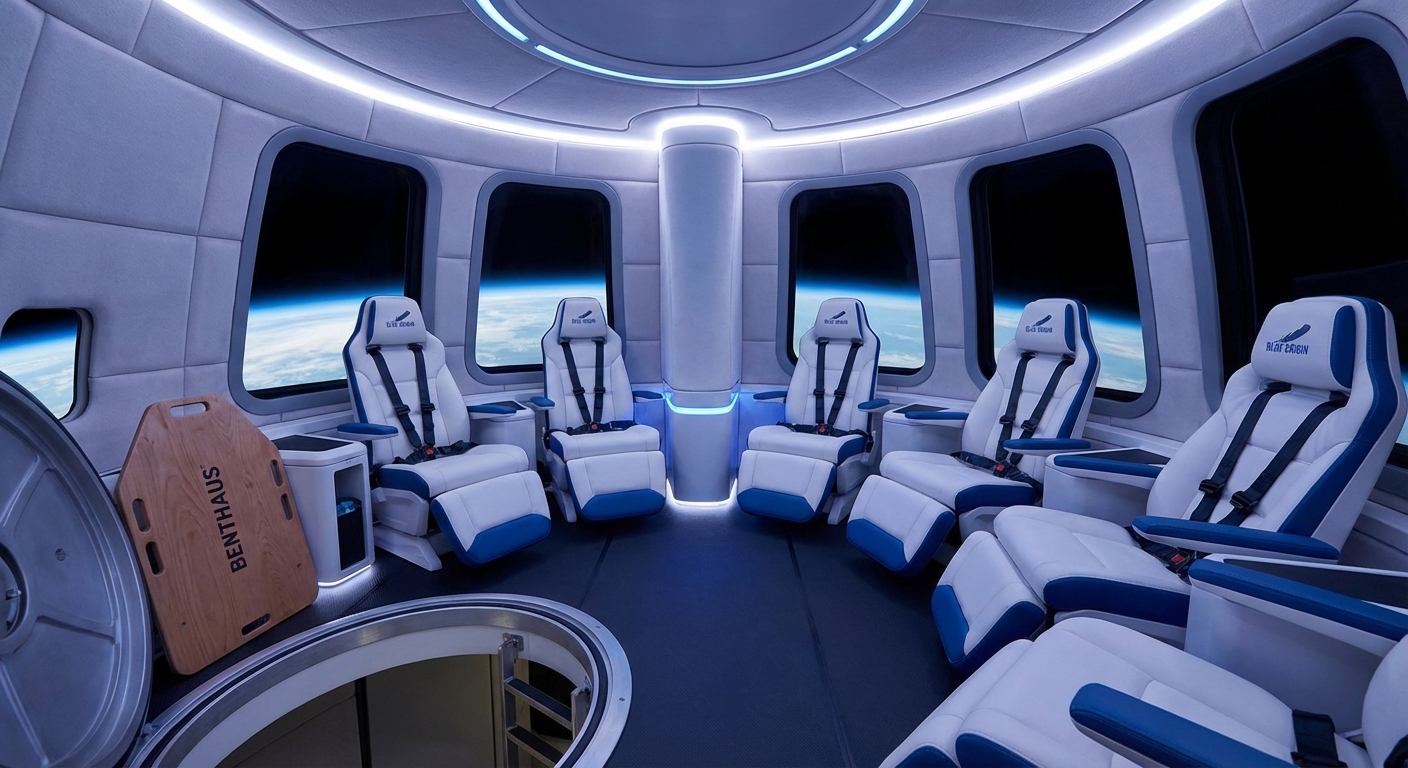
But commercial spaceflight operates by different rules. Companies like Blue Origin and SpaceX aren’t bound by government selection criteria, and the paying customers on tourist flights don’t need to pass the same physical requirements as career astronauts. This creates an unexpected pathway: the commercialization of space, often criticized for turning exploration into a playground for the wealthy, may actually democratize who gets to go. It’s a pattern we’ve seen elsewhere: women’s sports saw a breakthrough when investment followed demand rather than outdated assumptions about who the audience was.
ABC News coverage noted that Benthaus’s flight could encourage space tourism companies to actively market to disabled travelers, a population that’s been largely ignored by the industry. The modifications required are minimal, the experience is just as meaningful (perhaps more so, given the barriers overcome), and the publicity value of inclusive flights is substantial.
There’s also a practical research angle. Understanding how different bodies function in microgravity has scientific value, and the disabled community offers a range of physiological variations that haven’t been studied in space. NASA has recently shown more interest in this area, though the agency’s progress toward actually flying astronauts with disabilities remains slow.
Beyond the Symbolism
Benthaus is using her flight to raise money for Wings for Life, a spinal cord injury research nonprofit that funds work toward eventual cures for paralysis. The organization supports research projects around the world focused on regenerating damaged nerve tissue, and Benthaus’s high-profile flight has already generated significant attention for their work.
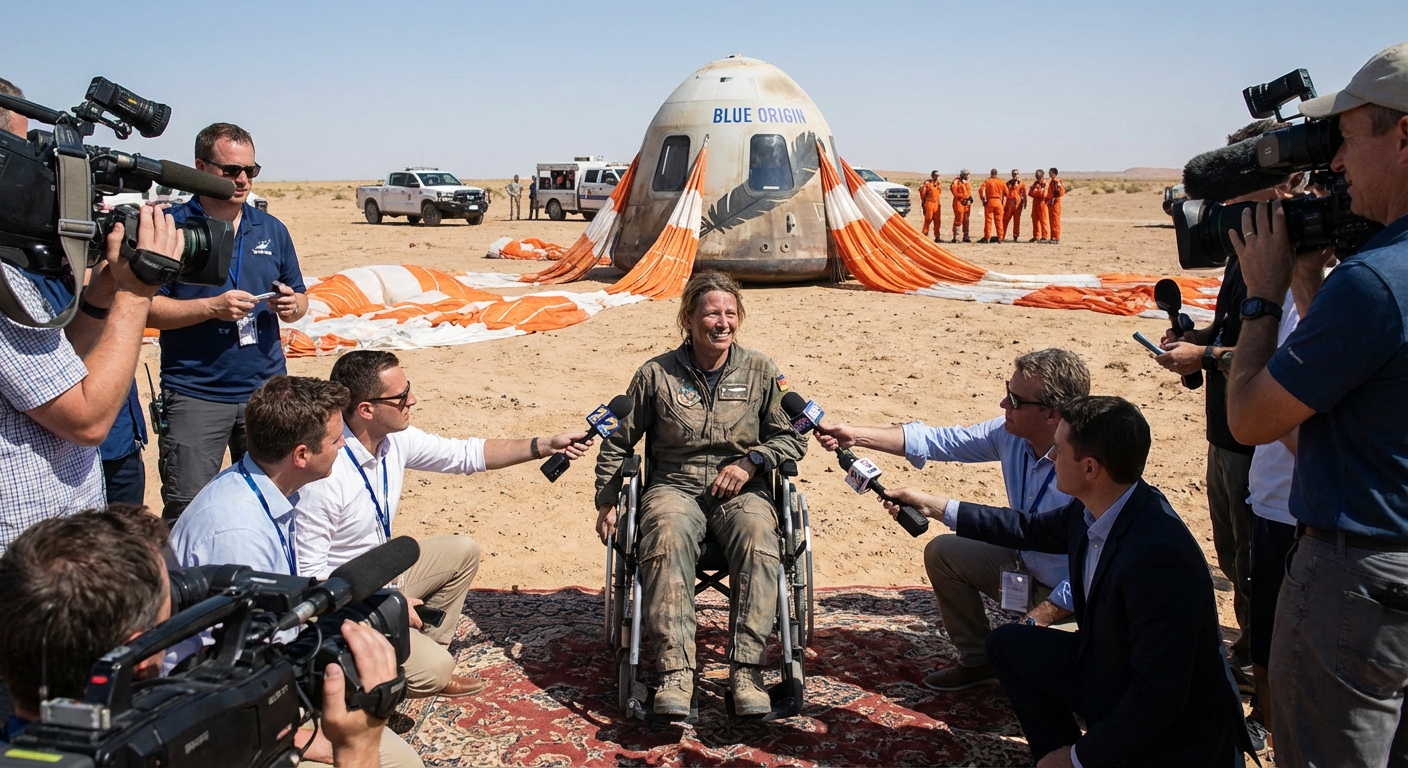
But the flight’s significance goes beyond charitable fundraising. Fortune reported that Benthaus was “laughing all the way up,” a detail that captures something important about what she accomplished. This wasn’t just an achievement to be checked off or a barrier to be overcome. It was fun. It was joyful. It was a disabled person doing something extraordinary and having a great time doing it.
That matters because disability is so often framed in terms of limitation and struggle. Benthaus’s flight reframes the conversation: she didn’t go to space despite her disability. She went to space as a disabled person, using her engineering skills to solve the practical challenges and her determination to make it happen. The wheelchair was part of the story, not an obstacle to it. Her background at the European Space Agency, working on the kind of advanced technology that increasingly drives the modern economy, made her uniquely qualified to engineer her own accessibility solutions.
The Bottom Line
Michaela Benthaus spent about three minutes floating weightless above the Earth on Saturday, the culmination of years of work by a woman who refused to accept that a spinal cord injury meant the end of ambitious dreams. Her flight won’t single-handedly transform space accessibility, but it demonstrated something that can’t be easily dismissed: the barriers keeping disabled people out of space are more about assumption than engineering.
Blue Origin’s New Shepard program has now shown that flying wheelchair users requires a transfer board and a carpet. That’s it. The technology exists. The accommodations are minimal. What’s been missing is the imagination to try.
For Benthaus, the 10-minute flight was just the beginning. “I really hope it’s opening up for people like me,” she said after landing. If space tourism companies are paying attention, it should be. The market of potential customers just got significantly larger, and the first person to show them it was possible is an engineer who spent her career figuring out how to make complex systems work. That’s exactly the kind of person you’d want designing the future of inclusive spaceflight.
Sources: CNN, PBS News, ABC News, NBC News, Fortune, Space.com.