

The 98th Academy Awards delivered one of the most historic nights in Oscar history on Sunday, March 15, splitting its top honors between two Warner Bros. films that could hardly be more different. Paul Thomas Anderson's sprawling crime epic "One Battle After Another" dominated with six wins, including Best Picture and Best Director, while Ryan Coogler's supernatural thriller "Sinners" collected four Oscars, headlined by Michael B. Jordan's electrifying Best Actor victory for his dual performance as twin brothers in 1930s Mississippi. The ceremony, hosted for the second consecutive year by Conan O'Brien at the Dolby Theatre in Hollywood, also introduced the first new Oscar category in 25 years, crowned the first woman to ever win Best Cinematography, and saw Jessie Buckley become the first Irish woman to take home Best Actress. By the time the lights dimmed on Hollywood Boulevard, the night had produced more historic firsts than any Oscar ceremony in recent memory.
Jordan's win carried particular emotional weight. When presenter Halle Berry called his name, the 39-year-old actor clutched the hand of his mother Donna, kissed her on the cheek, and rose to a standing ovation that lasted nearly a minute. His first words on stage were simple and direct: "Man, God is good. God is good." Those four words, uttered before any studio executive or agent received thanks, went viral within minutes and dominated social media for the rest of the evening.
Anderson Finally Gets His Due
For Paul Thomas Anderson, the night erased decades of near-misses. Before Sunday, the filmmaker behind "Boogie Nights," "There Will Be Blood," "Phantom Thread," and "Licorice Pizza" had gone 0-for-11 at the Academy Awards across six different ceremonies. His films lost to "Good Will Hunting," "No Country for Old Men," and "The Shape of Water," among others. That streak ended emphatically when "One Battle After Another" collected Best Picture, Best Director, Best Adapted Screenplay (Anderson), Best Supporting Actor (Sean Penn), Best Film Editing (Andy Jurgensen), and the inaugural Best Achievement in Casting (Cassandra Kulukundis).
Anderson's acceptance speech for Best Director was characteristically dry. "You make a guy work hard for one of these," he told the Dolby Theatre audience, looking down at the statuette with what reporters described as genuine disbelief. When the film later won Best Picture to cap the evening, Anderson kept it short: "Let's have a martini." The line drew one of the biggest laughs of the night and immediately joined the pantheon of memorable Oscar one-liners.
The film's dominance was not a surprise to awards prognosticators. "One Battle After Another" had already swept the BAFTAs, Golden Globes, and Producers Guild Awards entering Oscar night. But the scale of its haul, six wins from its multiple nominations, confirmed Anderson as the defining American filmmaker of his generation. According to film historian Mark Harris, who has covered the Oscars for over two decades, "Anderson's body of work already spoke for itself, but the Academy had never quite caught up. Tonight they did, all at once."
Jordan's Path from Fruitvale to Oscar Glory
Michael B. Jordan's victory for "Sinners" completed a 13-year arc that began in 2013, when he starred in Coogler's debut feature "Fruitvale Station" at age 26. The two have now collaborated on five films, including the "Creed" franchise and both "Black Panther" entries. In "Sinners," Jordan plays Stack and Smoke, twin brothers who return to their Mississippi Delta hometown in the 1930s and open a juke joint, only to encounter a supernatural evil tied to the region's history of racial violence. Jordan performed both roles using motion-capture technology and meticulous physicality to distinguish the brothers, a technical achievement that drew comparisons to Jeremy Irons in "Dead Ringers."
In his acceptance speech, Jordan honored the Black actors who preceded him in the category. "I stand here because of the people that came before me," he said, naming Sidney Poitier, Denzel Washington, Jamie Foxx, Forest Whitaker, Will Smith, and Halle Berry. He became only the sixth Black man to win Best Actor in the award's 98-year history, a statistic that underscores how slowly the Academy has expanded its recognition of Black leading performances. Jordan also praised Coogler directly: "You're an amazing, amazing person. Thank you for betting on the culture."
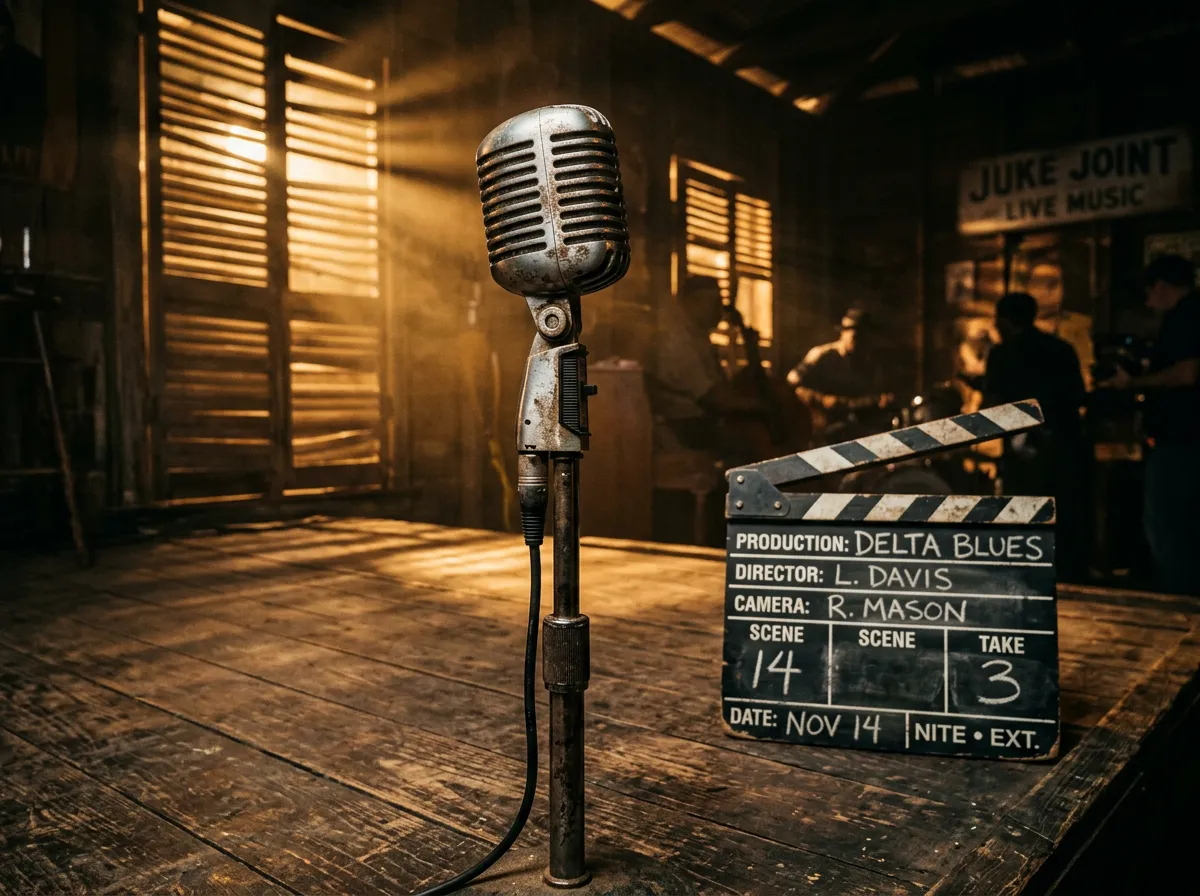
The film arrived at the Oscars with a record 16 nominations, the most for any single film in Academy history. Beyond Jordan's Best Actor win, "Sinners" collected Original Screenplay for Coogler (his first Oscar), Original Score for Ludwig Goransson (his third Oscar and second for a Coogler collaboration after "Black Panther"), and Best Cinematography for Autumn Durald Arkapaw. The film also earned nominations for Best Picture, Best Director, Best Supporting Actress (Wunmi Mosaku), and numerous technical categories, though the top prizes ultimately went to Anderson's film.
Historic Firsts in Cinematography and Casting
Two of Sunday's most significant moments had nothing to do with the major acting or directing categories. Autumn Durald Arkapaw's Best Cinematography win for "Sinners" shattered a barrier that had stood since the category was introduced in 1929. In 97 years of Academy Awards, no woman had ever won the prize. Only three women had even been nominated: Rachel Morrison for "Mudbound" in 2018, Ari Wegner for "The Power of the Dog" in 2022, and Mandy Walker for "Elvis" in 2023. Arkapaw, who is of Filipino and African American Creole descent, also made history as the first woman of color to receive a nomination in the category. Her work on "Sinners," which was shot on IMAX 65mm and Ultra Panavision, captured the oppressive heat and spiritual weight of the Mississippi Delta with a visual language that critics called unlike anything else released in 2025.
The other landmark was the inaugural Best Achievement in Casting award, the first new Oscar category since Best Animated Feature was added in 2001. The Academy announced the category in February 2024, giving the Casting Directors Branch (established in 2013 with roughly 160 members) its own recognition for the first time. Cassandra Kulukundis won the prize for assembling the ensemble of "One Battle After Another," beating out Nina Gold ("Hamnet"), Jennifer Venditti ("Marty Supreme"), Francine Maisler ("Sinners"), and Gabriel Domingues ("The Secret Agent"). The addition of the casting category acknowledges what industry professionals have long argued: that the person who selects the right actors for each role shapes a film's identity as much as the director or editor does.

Buckley, Penn, and Madigan Round Out the Acting Wins
Jessie Buckley's Best Actress victory for "Hamnet," a Chloe Zhao-directed adaptation of Maggie O'Farrell's novel about Shakespeare's wife and the death of their young son, completed her own awards-season sweep after wins at the BAFTAs and Golden Globes. Buckley became the first Irish woman to win Best Actress, defeating Rose Byrne ("If I Had Legs I'd Kick You"), Kate Hudson ("Song Sung Blue"), Renate Reinsve ("Sentimental Value"), and Emma Stone ("Bugonia").
Her speech focused on motherhood, fitting for both her role and the timing: it was Mother's Day in the UK and Ireland that evening. "To get to know these incandescent women and journey to understand the capacity of a mother's love is the greatest collision of my life," she said, referencing her collaboration with Zhao and novelist O'Farrell. She thanked her husband Fred, their 8-month-old daughter Isla, and her Irish family, noting with a laugh that "Ireland bought them flights." Buckley closed with Gaelic: "Go raibh maith agaibh, slan" ("Thank you very much, goodbye"), a sign-off that charmed the international audience and trended on social media in Ireland within seconds.
Sean Penn's Best Supporting Actor win for "One Battle After Another" came with its own drama. Penn was not at the Dolby Theatre. When presenter Kieran Culkin opened the envelope, he announced the result with a deadpan aside: "Sean Penn couldn't be here this evening, or didn't want to, so I'll be accepting the award on his behalf." The New York Times later reported that Penn was in Ukraine meeting with President Volodymyr Zelenskyy, who posted a photograph of the two together on X. Penn's third acting Oscar ties him with Jack Nicholson and Daniel Day-Lewis for the most acting wins by a male performer. He had also skipped the BAFTAs and SAG Awards, though he attended the Golden Globes, where he was nominated but did not win.
Amy Madigan's Best Supporting Actress win for "Weapons" produced one of the night's most emotional moments. At 75, Madigan set a record for the longest gap between a first nomination and a first win: 40 years and one month, dating back to her 1986 nod for "Twice in a Lifetime." Her performance as the terrifying Aunt Gladys, on screen for fewer than 15 minutes, was the film's only nomination. She beat Elle Fanning and Inga Ibsdotter Lilleaas ("Sentimental Value"), Wunmi Mosaku ("Sinners"), and Teyana Taylor ("One Battle After Another").
Animated History and Genre Breakthroughs
"KPop Demon Hunters," Netflix's most-watched animated film ever, took home two Oscars: Best Animated Feature and Best Original Song for "Golden." The wins were historic on multiple fronts. Directors Maggie Kang and Chris Appelhans became the first female Asian winners in the Best Animated Feature category. "Golden" became the first K-pop song to win an Oscar, with EJAE (the singing voice of the character Rumi), songwriter Mark Sonnenblick, and South Korean production team the Black Label (Yu Han Lee, Hee Dong Nam, and Zhun) making Academy history. The film defeated "Arco," Pixar's "Elio," "Little Amelie or the Character of Rain," and "Zootopia 2" in a category that increasingly reflects the global reach of animation. A sequel has already been announced for 2029 with Kang and Appelhans returning.
Elsewhere on the winners' list, "Frankenstein" collected three awards (Production Design, Costume Design, Makeup and Hairstyling), "F1" won Best Sound, and "Avatar: Fire and Ash" took Best Visual Effects. The documentary feature went to "Mr. Nobody Against Putin," and the live action short category produced a rare tie between "The Singers" and "Two People Exchanging Saliva." Norway's "Sentimental Value" won Best International Feature Film.
The broader pattern of the evening points to an Academy increasingly comfortable honoring genre filmmaking alongside prestige drama. Jordan's win for a supernatural horror film, Madigan's for a deeply unsettling genre performance, and the animated feature going to a K-pop action-comedy all suggest a voting body that has expanded its definition of Oscar-worthy work. Film critic Anne Thompson, who has covered the Oscars for IndieWire and other outlets for over 30 years, observed that "the old firewall between genre films and Oscar films has been crumbling for years, but tonight it fell completely."
Coogler, Conan, and What Hollywood Learned
The night belonged to two filmmakers who took very different paths to the same stage. Anderson, the auteur who spent three decades building an unimpeachable body of work before the Academy finally acknowledged it, and Coogler, the 39-year-old Oakland native who turned a $90 million vampire film into a $369 million global phenomenon and the most-nominated film in Oscar history. Both won their first Oscars on the same night. Coogler's Best Original Screenplay win, widely expected, still carried enormous significance: it validated a filmmaker who has consistently made Black stories central to mainstream American cinema, from "Fruitvale Station" through the "Black Panther" franchise.
Conan O'Brien's hosting performance earned praise for threading the needle between entertainment and topicality. His opening line, "I am Conan O'Brien, and I'm honored to be the last human host of the Academy Awards," set the tone for a monologue that touched on AI's expanding role in creative industries, Hollywood's political tensions, and the Jeffrey Epstein fallout. He closed the ceremony with a tribute to Martin Short, his friend who has been grieving a personal loss, in a moment that humanized an evening often criticized for its corporate polish.
The 98th Academy Awards will be remembered for the barriers it broke more than the films it crowned. A woman won Best Cinematography for the first time ever. A casting director received an Oscar for the first time. A Black actor won Best Actor for a horror film. A K-pop song won Best Original Song. An Irish woman won Best Actress. These are not incremental shifts. They reflect an Academy that has been slowly but materially changing its membership, its tastes, and its willingness to recognize work outside traditional prestige categories.
For an industry navigating shifting workplace dynamics, streaming disruption, and questions about AI's role in content creation, the 2026 Oscars offered something valuable: evidence that Hollywood can still surprise, still evolve, and still produce a night where the awards feel genuinely earned. Whether that momentum carries into 2027 depends on the films being greenlit now, but for one night, the Academy got it right.
Sources
- Oscars 2026: The complete winners list - NPR
- 'Sinners' Wins 4 Oscars After Record-Breaking 16 Nominations - The Hollywood Reporter
- Oscars 2026: 5 takeaways from the night - NPR
- Autumn Durald Arkapaw Makes Oscar History as First Woman to Win Best Cinematography - Variety
- Jessie Buckley Closes Her Best Actress Oscar Acceptance Speech With Gaelic Message - The Hollywood Reporter