
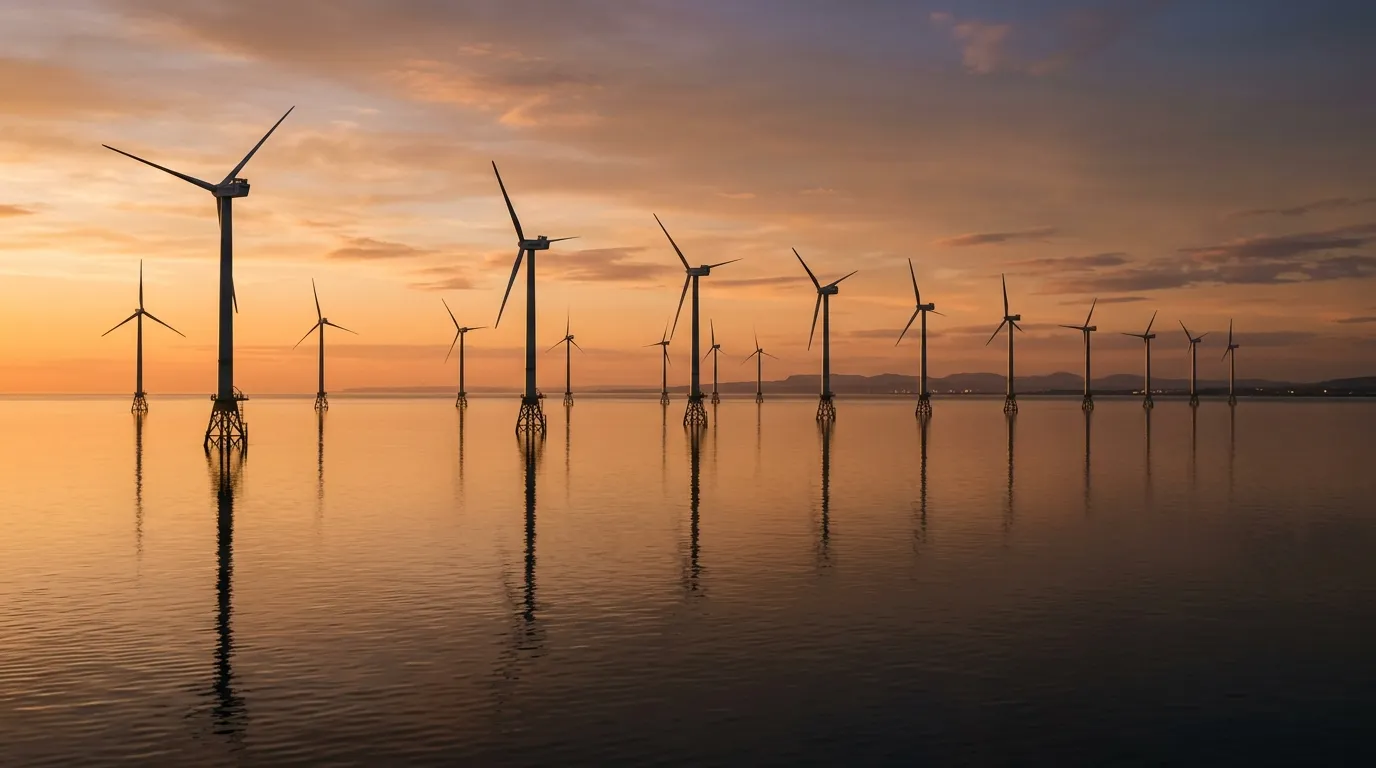
The federal government just agreed to pay a French energy giant nearly $1 billion to walk away from two offshore wind farms it was planning to build off the coasts of New York and North Carolina. In return, TotalEnergies will plow that money into a liquefied natural gas plant in Texas and oil drilling in the Gulf of Mexico.
The deal, announced Sunday at the CERAWeek energy conference in Houston, is the first time the U.S. government has actively reimbursed a company for abandoning renewable energy projects. It marks a sharp escalation in the Trump administration's campaign against offshore wind, moving beyond permit denials and regulatory slowdowns into direct financial incentives to kill clean energy development.
The Terms: $928 Million for Two Leases
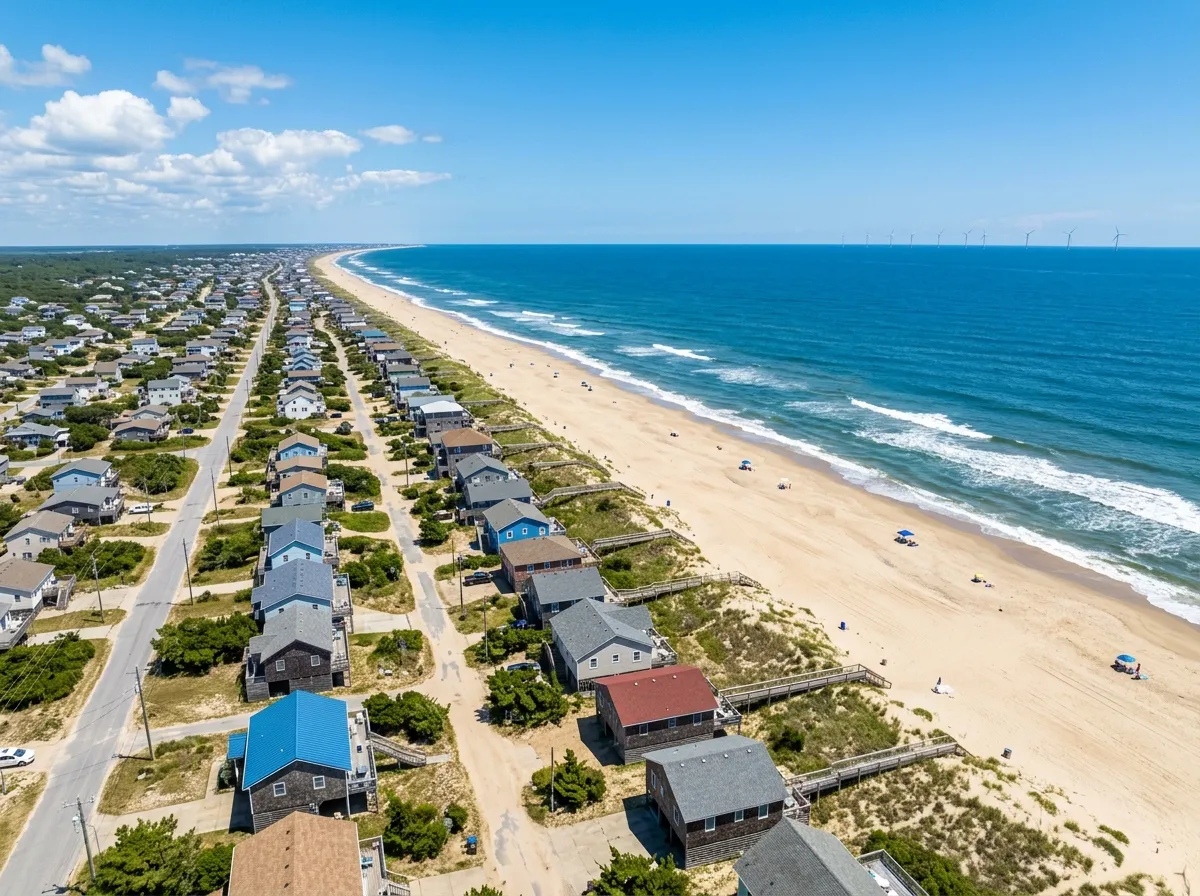
The agreement centers on two offshore wind leases that TotalEnergies purchased during the Biden administration in 2022. The first, Lease OCS-A 0538 in the New York Bight, cost TotalEnergies' subsidiary Attentive Energy $795 million. The second, Lease OCS-A 0535 in the Carolina Long Bay area off North Carolina, cost $133.3 million. The Department of the Interior will reimburse both amounts in full, dollar for dollar, totaling $928 million.
Together, those two projects would have generated more than 4 gigawatts of clean electricity. The New York project alone could have powered roughly 1 million homes. The Carolina project would have served about 300,000. Neither will be built.
Where the Money Goes
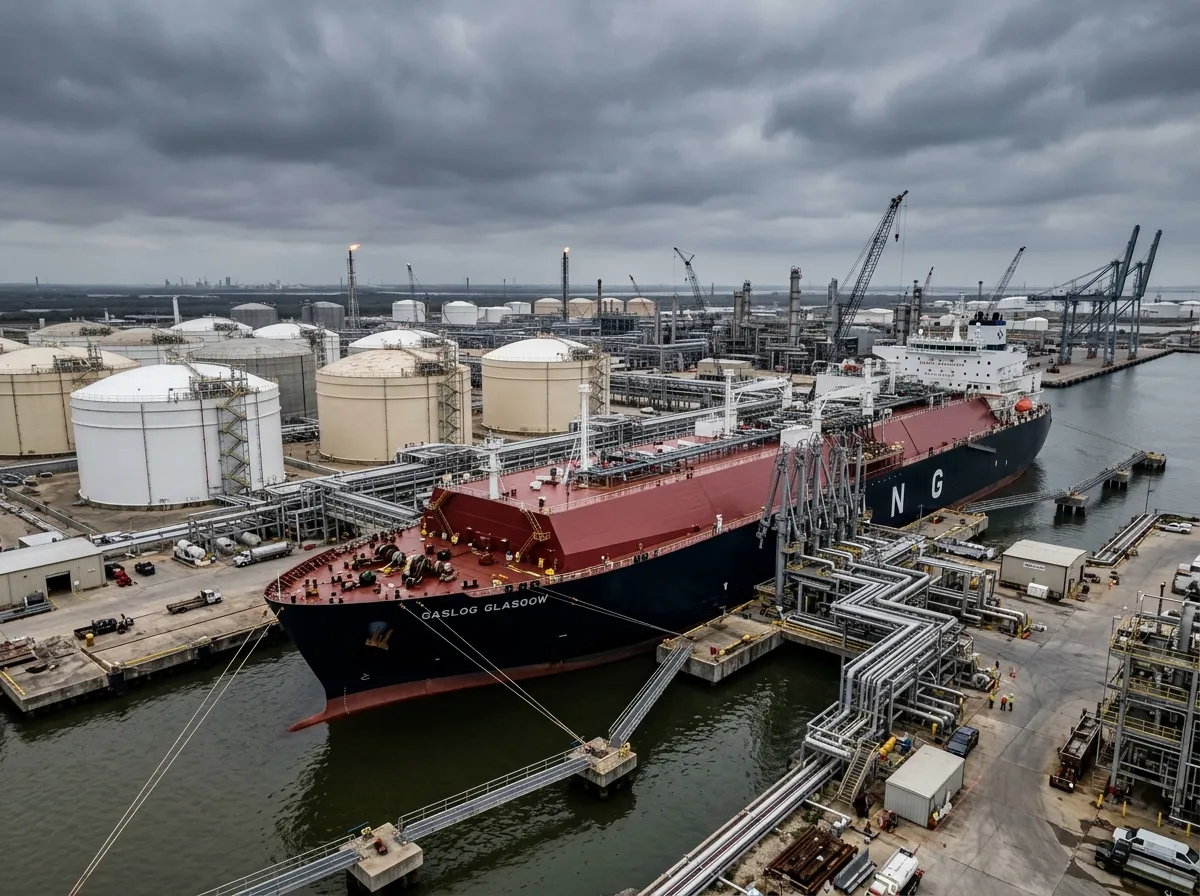
TotalEnergies CEO Patrick Pouyanné made the company's pivot explicit. "We have decided to renounce offshore wind development in the United States," he said in a statement, adding that offshore wind "is not in the country's interest." The company will redirect the $928 million into three fossil fuel priorities for 2026: development of Trains 1 through 4 at the Rio Grande LNG plant in southern Texas (where TotalEnergies holds a 17% stake in NextDecade's facility), conventional oil production in the Gulf of Mexico, and shale gas extraction elsewhere in the country.
The company also pledged to support European LNG supply and U.S. data center energy development. TotalEnergies already operates the Cameron LNG facility in Louisiana and has investments in Alaska LNG, making it one of the largest foreign gas producers on American soil.
Pouyanné framed the decision as pragmatic rather than ideological: "not to litigate, but to make pragmatic solutions." But the framing from Interior Secretary Doug Burgum was anything but neutral. He called offshore wind "expensive, unreliable, environmentally disruptive, and subsidy-dependent," adding, "We are not driven by a climate fantasy."
A Policy Tool Without Precedent
This deal is worth stepping back to understand, because it represents something genuinely new in American energy policy. Previous administrations have blocked drilling permits, slowed pipeline approvals, or tightened emissions standards. The Trump administration has done all of those things in reverse for renewables, revoking offshore wind permits and pausing lease sales. But paying a company not to build clean energy, using taxpayer funds to actively dismantle projects that were already permitted and paid for, crosses a line that hasn't been crossed before.
The closest historical parallel is agricultural subsidies, where the government pays farmers not to grow certain crops to stabilize prices. But those programs aim to prevent market collapse and protect food security. Here, the government is paying to prevent energy production that would reduce carbon emissions and lower long-term electricity costs for consumers, while simultaneously subsidizing the fossil fuel infrastructure that competes with it.
The timing matters, too. The administration has lost repeated court challenges to its attempts to block offshore wind. Federal judges have allowed all five targeted East Coast wind projects to resume construction. This deal sidesteps the courts entirely. You can't litigate a voluntary agreement.
The Political Fallout
The reaction split along predictable lines, but the intensity was notable.
New York Governor Kathy Hochul called it "a pay-not-to-play scheme" and "an outrageous abuse of taxpayer dollars." She noted that New York has committed to obtaining 70% of its electricity from renewable sources by 2030, and the loss of 3 gigawatts of offshore wind capacity makes that target significantly harder to reach.
North Carolina Governor Josh Stein was equally blunt, calling the agreement "a terrible deal" and "wasteful." Ted Kelly of the Environmental Defense Fund described it as "an outrageous misuse of taxpayer dollars."
On the other side, the Department of the Interior framed the deal as a victory for American consumers, arguing that offshore wind drives up electricity costs. That claim is contested. The National Renewable Energy Laboratory's most recent analysis found that offshore wind's levelized cost of energy has dropped 40% since 2016 and is projected to reach cost parity with new natural gas plants by 2030 in several East Coast markets.
The Broader Energy War
This deal doesn't exist in isolation. The Trump administration eliminated federal subsidies for wind and solar through legislation passed last year. It has paused new offshore wind lease sales indefinitely. And it has moved to open previously protected federal waters to oil and gas drilling.
But the TotalEnergies agreement introduces a new mechanism: direct cash payments to make renewable projects disappear. If other offshore wind leaseholders see this as a template, the roughly 30 gigawatts of offshore wind capacity currently in various stages of development along the East Coast could be at risk. Developers like Orsted, Equinor, and BP all hold federal leases purchased at auction prices that the government could, in theory, refund.
The question is whether those companies want out. TotalEnergies was already cooling on offshore wind globally, citing cost overruns and permitting delays. Other developers remain committed to their projects. But if the administration starts making offers, some may find a guaranteed refund more attractive than years of regulatory uncertainty and legal battles.
What Changes
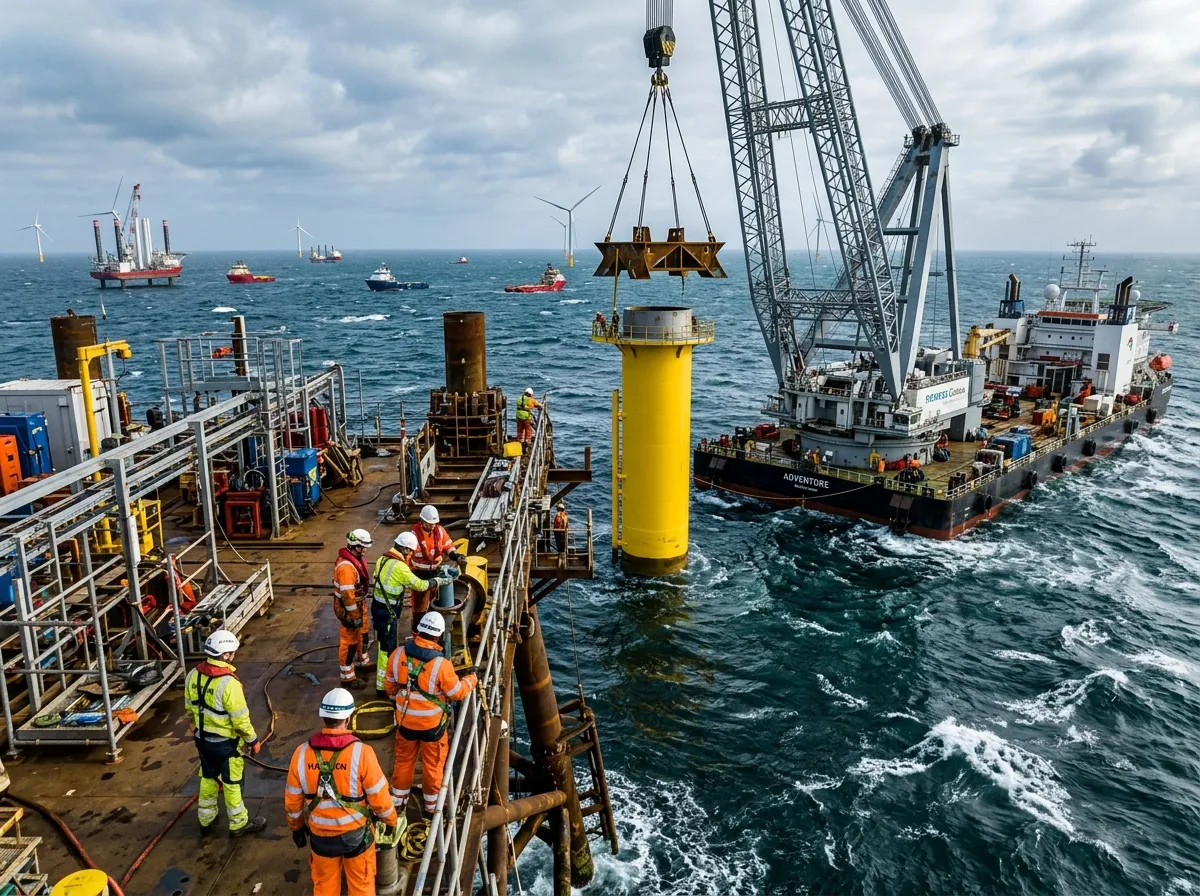
The immediate impact is clear: 4 gigawatts of clean energy that would have served 1.3 million homes will not be built. Nearly $1 billion in taxpayer money will flow from the federal treasury to a French energy company's fossil fuel operations.
The longer-term impact depends on whether this becomes a template or an anomaly. If the administration offers similar deals to other leaseholders, the U.S. could lose its position in what is projected to be a $1.4 trillion global offshore wind market by 2040, according to Bloomberg New Energy Finance. Countries that once looked to America as a partner in offshore wind development are already rethinking their energy alliances. Europe and Asia are accelerating offshore wind deployment while the U.S. retreats.
For consumers, the picture is mixed. Natural gas prices are volatile, tied to global markets and geopolitical conflicts that have already pushed oil above $100 a barrel. Wind, once built, produces electricity at a fixed cost with no fuel price risk. Every megawatt of offshore wind that doesn't get built is a megawatt that remains exposed to whatever the global energy market does next.
The administration is betting that fossil fuels will keep America's lights on more cheaply than offshore wind. That bet now has a price tag: $928 million, paid by taxpayers, to a company that took the money and walked away.
Sources
- U.S. Department of the Interior Press Release: Interior and TotalEnergies Agree to End Offshore Wind Projects
- NPR: Trump Administration to Pay TotalEnergies $1B to Drop U.S. Offshore Wind Leases
- Fortune: Why Trump Is Paying a French Energy Giant Almost $1 Billion to Abandon U.S. Offshore Wind Projects
- CNBC: White House to Pay TotalEnergies $1 Billion to Kill Off East Coast Wind Projects