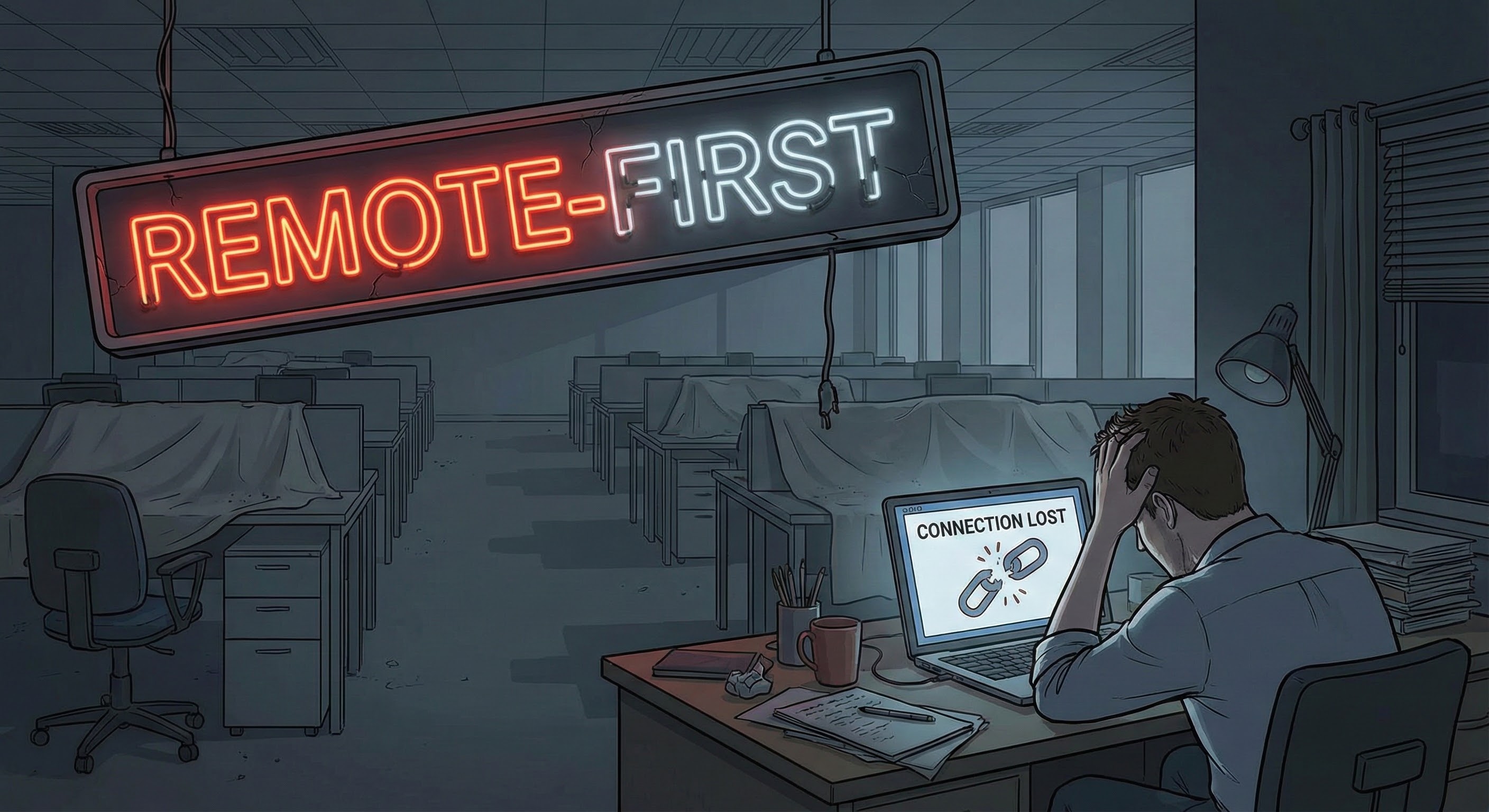
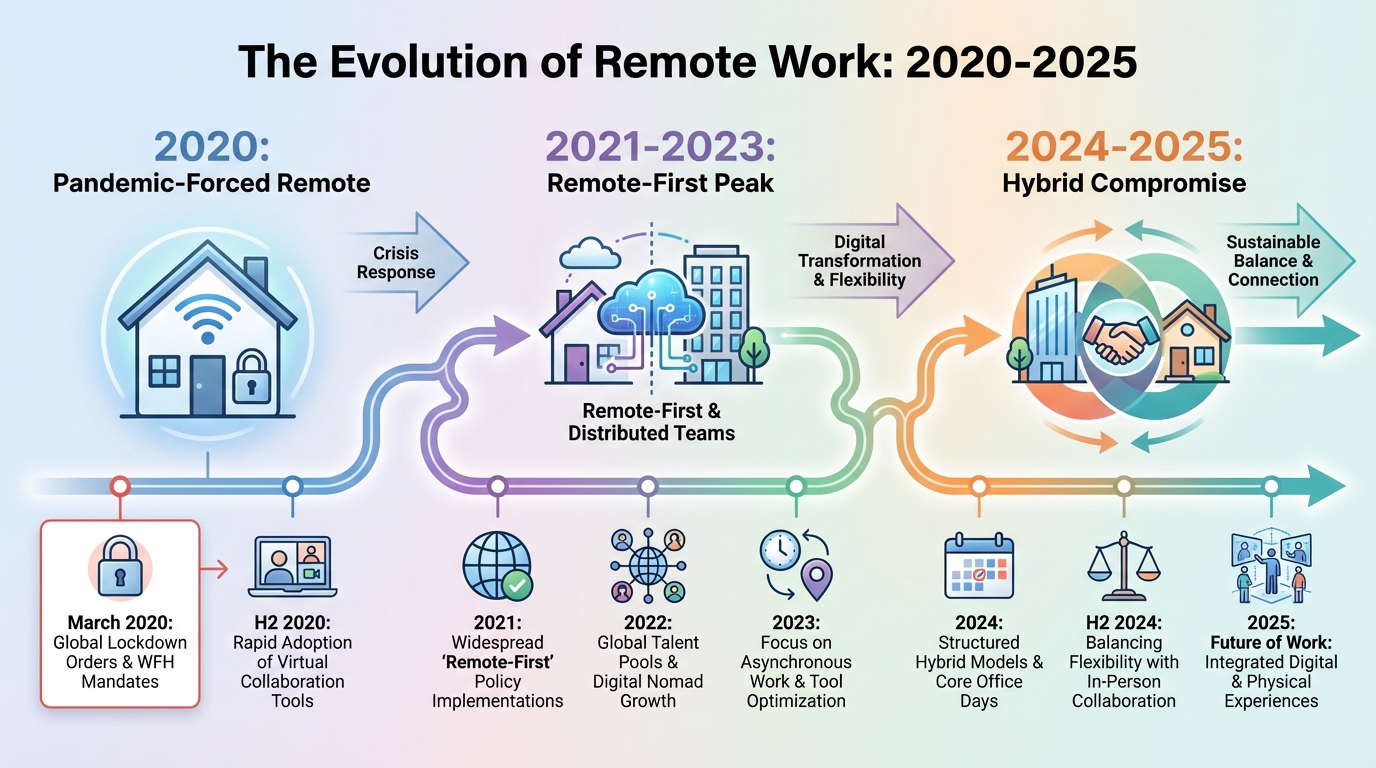
GitLab was fully remote before the pandemic made it cool. Over 2,000 employees spread across 65 countries, no headquarters, remote work as their identity and competitive advantage. In September 2024, they announced a “collaboration hubs” policy requiring employees to work from shared spaces at least two days weekly.
It’s not quite a return-to-office mandate, but it’s a retreat from the pure remote-first model they pioneered. They’re not alone. Zapier, Automattic (WordPress), and Basecamp, companies that were remote-first icons, are all implementing policies requiring more in-person presence.
These companies proved remote work could work at scale. They wrote the playbooks everyone else followed. So why are they backing away from it? After years of data, these companies discovered that pure remote-first creates real problems around culture, collaboration, innovation, and career development that Zoom and Slack don’t fully solve.
The Friction of Distance
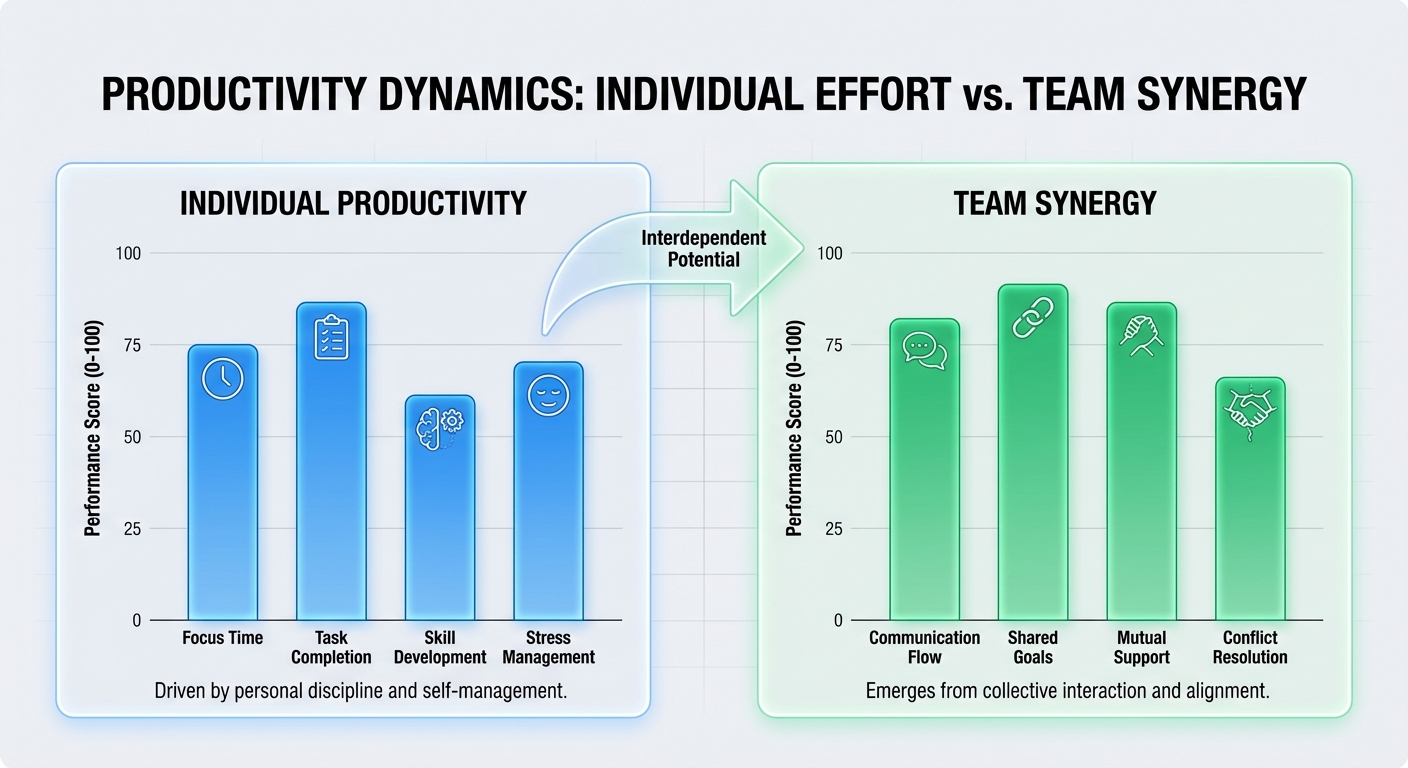
Remote-first companies discovered that while individual productivity often remained high, collective creativity suffered. Brainstorming and complex problem-solving proved difficult over video calls, where the fluid, overlapping dialogue of a physical room is replaced by awkward turn-taking.
“Serendipitous ideas,” the accidental hallway conversations that spark new directions, happened far less frequently. Innovation didn’t collapse, but it measurably slowed, leading executives to worry about long-term stagnation. The data showed teams could execute well remotely, but they struggled to ideate and pivot quickly when circumstances changed.
Culture also eroded over time. Company culture is built in the informal moments between work: hallway chats, lunches, shared laughs. Remote-first companies tried to replicate this with virtual happy hours and “water cooler” channels, but scheduled fun rarely feels authentic.
The Career Development Gap
The shift revealed a stark reality for junior employees. Those in remote-first companies reported significantly worse career progression than their office-based peers. They missed out on the osmosis of learning by watching senior people work, the casual mentorship of quick questions, and the relationship-building that happens naturally in person.
Data shows remote employees reporting lower career satisfaction and receiving promotions at lower rates. For seniors with established networks, remote work is fine. For juniors trying to build them, it’s a handicap. Companies focused on workplace trends are recognizing that career development requires more than scheduled one-on-ones.
Cynics often attribute return-to-office mandates to wasted real estate, but for remote-native companies like GitLab, that argument fails. They never had the real estate to justify. Their shift toward physical hubs is driven by operational assessment, not sunk cost fallacy. They’re investing in space because they genuinely believe the lack of it is hurting their business.
The Hybrid Equilibrium
Most former remote-first companies aren’t returning to 1950s office norms. They’re landing on a hybrid compromise. This typically looks like collaboration hubs for 2 days a week, quarterly in-person gatherings, or optional office space that encourages but doesn’t strictly mandate attendance.
The narrative is shifting from “remote vs. office” to finding the right tool for the task. Deep work happens best at home. Collaborative, messy, creative work happens best in person. The future isn’t binary. It’s flexible, contextual, and likely hybrid for most organizations that want to balance individual freedom with collective innovation.
The Bottom Line
The remote-first experiment at scale has been running for five years, and the data is in. Pure remote works for some roles and some seniors, but it struggles to support juniors, innovation, and culture over the long term. This mirrors broader shifts in how companies are organizing around AI, where physical presence enables faster adaptation.
The companies that pioneered this model aren’t failing, they’re adapting based on evidence. Employees are split, some relieved to have human connection back, others feeling betrayed by the loss of location freedom. But the trend is clear: remote work is here to stay as a flexibility option, not as an absolute religion.
The revolution happened, and now we’re settling into the practical reality of what actually works. For most companies, that’s something in the middle.
Sources: Company policy announcements, workplace productivity research, remote work industry analysis.