For decades, anyone who suggested a four-day workweek was dismissed as unrealistic, naive, or bad at math. Well, the results are in from the world’s largest trial, and it turns out the skeptics were wrong. Dead wrong.
Between 2023 and 2024, 61 companies across the UK, employing 2,900 workers, tested a four-day workweek with no reduction in pay. Employees worked 32 hours instead of 40, typically taking Fridays off, while receiving their full salary. Bosses were nervous. Investors were skeptical. Financial analysts predicted disaster.
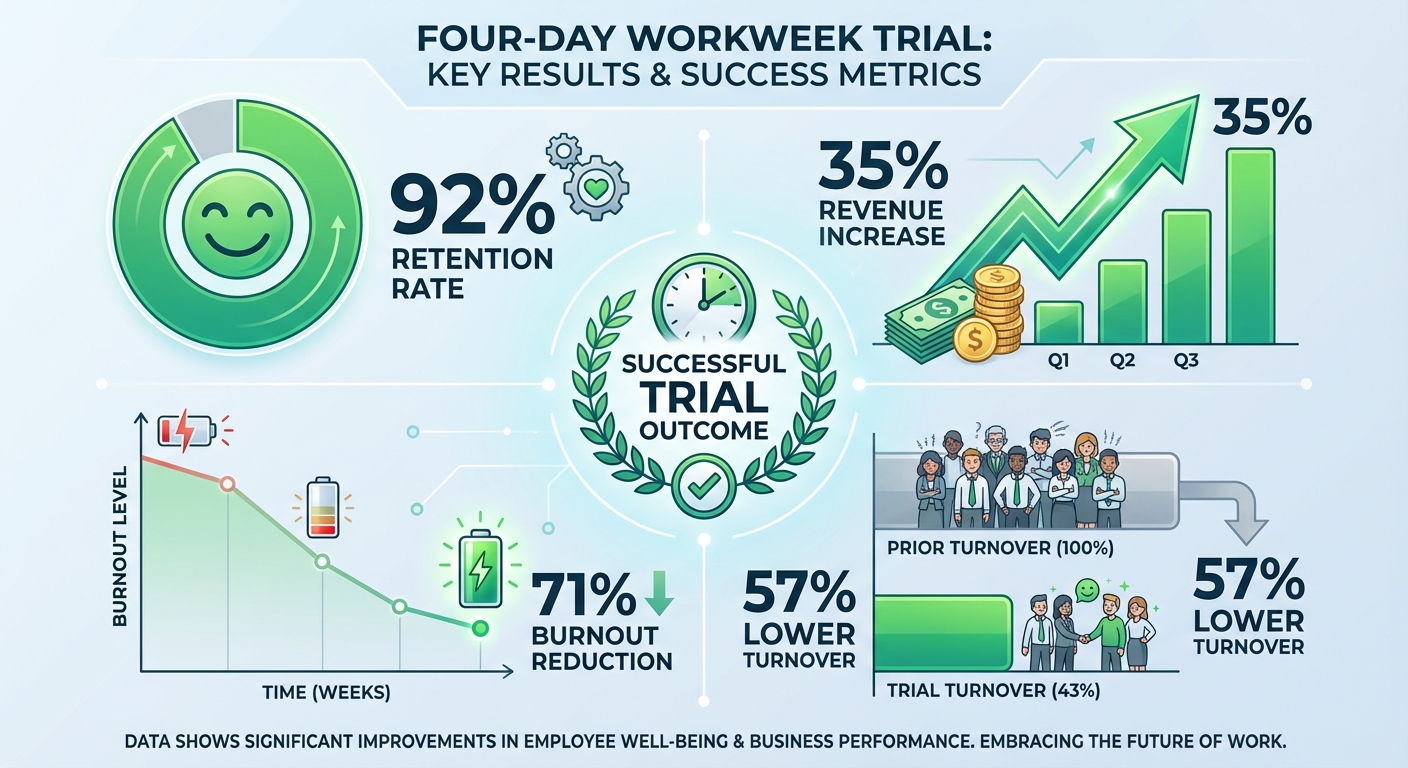
Instead, productivity didn’t drop. In many cases, it actually increased. And 92% of companies are continuing the four-day week after the trial ended.
The Numbers Are Wild
Revenue increased by 35% on average compared to similar periods in previous years. Employee burnout dropped by 71%, based on self-reported stress assessments. Staff turnover fell by 57%, saving companies massive recruitment costs. Sick days decreased by 23%, as employees had more time to rest and recover.
Even more striking: when asked if they’d go back to a five-day week for a 25% raise, 97% of employees said no. They’d literally rather have the extra day off than more money. That tells you something about what workers actually value.
How It Actually Works
The key wasn’t just cutting hours, it was rethinking how work gets done. Companies that succeeded made fundamental changes. Meetings got ruthless. One company cut meetings from an average of 12 hours per week down to 4. Turns out, most meetings really could have been emails.
Focus time became sacred. Businesses implemented “no interruption” blocks where employees could actually concentrate without Slack messages or impromptu desk visits. Priorities got clearer. When you only have four days, you can’t waste time on busywork. Teams started asking “Is this actually necessary?” and the answer was often no.
Companies also invested in better project management software, automation, and async communication. The tech they should have been using all along. Unlike remote work debates where companies struggled with culture, the four-day week forced operational improvements that benefited everyone.
The Industries Making It Work
You might think four-day weeks only work for tech companies or creative agencies. Nope. The trial included manufacturing plants (which adjusted shifts and improved efficiency), marketing agencies (which batched client meetings and deep work), financial services firms (which cross-trained staff for coverage), healthcare providers (which staggered schedules to maintain service), and retail operations (which redesigned staffing models).
Even a fish-and-chips shop in England made it work, and reported their best financial year ever. The common thread wasn’t the industry, it was the willingness to fundamentally rethink processes rather than just cramming five days of work into four.
Why Bosses Became Converts
The managers who were most skeptical pre-trial became the biggest advocates afterward. Retention became cheaper than recruitment. With turnover cut in half, companies saved thousands per employee on hiring and training costs. Healthier, less burned-out employees meant fewer last-minute absences that disrupted operations.
Companies offering four-day weeks got 3-5x more applicants per job posting. Talent attraction went through the roof. One CEO put it bluntly: “I thought this would be a disaster. Instead, it’s the best business decision I’ve made in 20 years. Our people are happier, our clients are happier, and our profits are up. Why would I go back?”
The Bottom Line
The five-day, 40-hour workweek was invented in the 1920s. Maybe it’s time for an update. Just as AI is transforming how companies operate, the four-day week is reshaping when and how we work. The success of this trial is creating a ripple effect. Belgium and Iceland have already implemented national policies supporting four-day weeks. Companies in the US, Canada, Australia, and Japan are launching their own trials.
Not every company succeeded. About 8% returned to five-day schedules, citing client expectations and coverage issues. The companies that failed typically tried to cram five days of work into four days without changing anything else. Unsurprisingly, that didn’t work.
But for the vast majority, the four-day workweek delivered on its promise: happier employees, better retention, and improved productivity. The data is clear. The question now is whether more companies have the courage to try it.
Sources: 4 Day Week Global trial results, Autonomy research, workplace productivity studies.