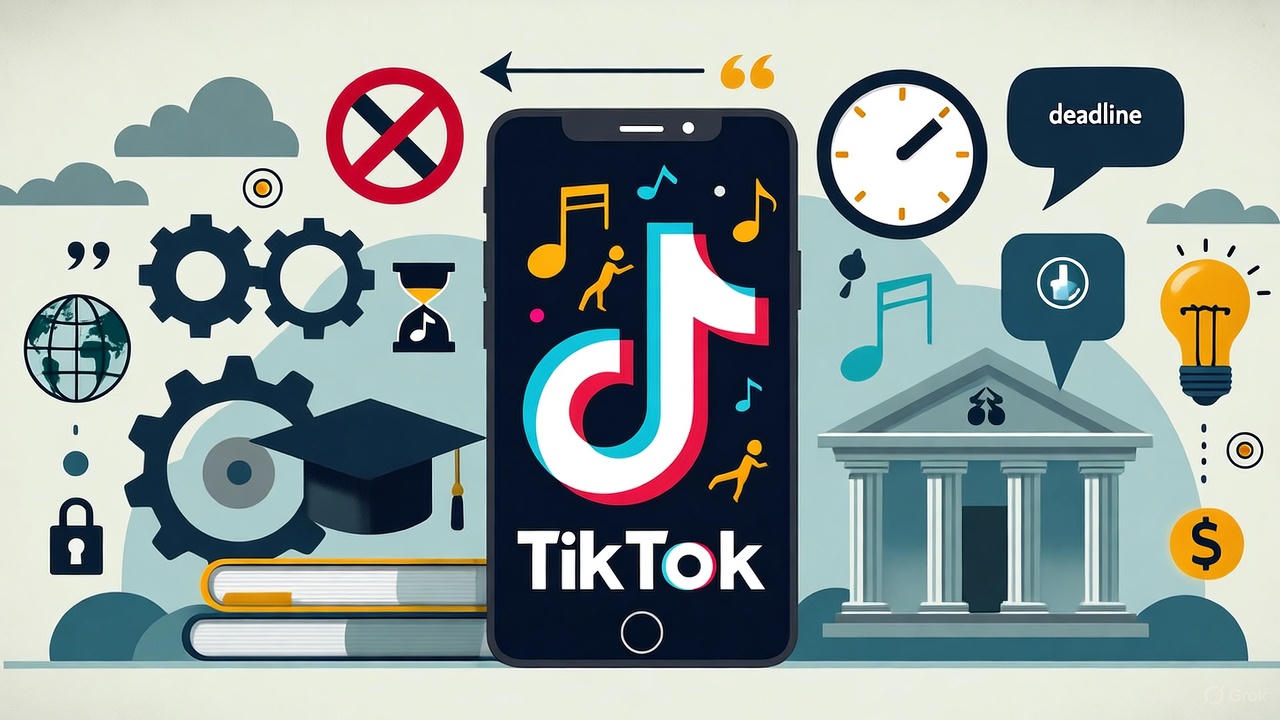
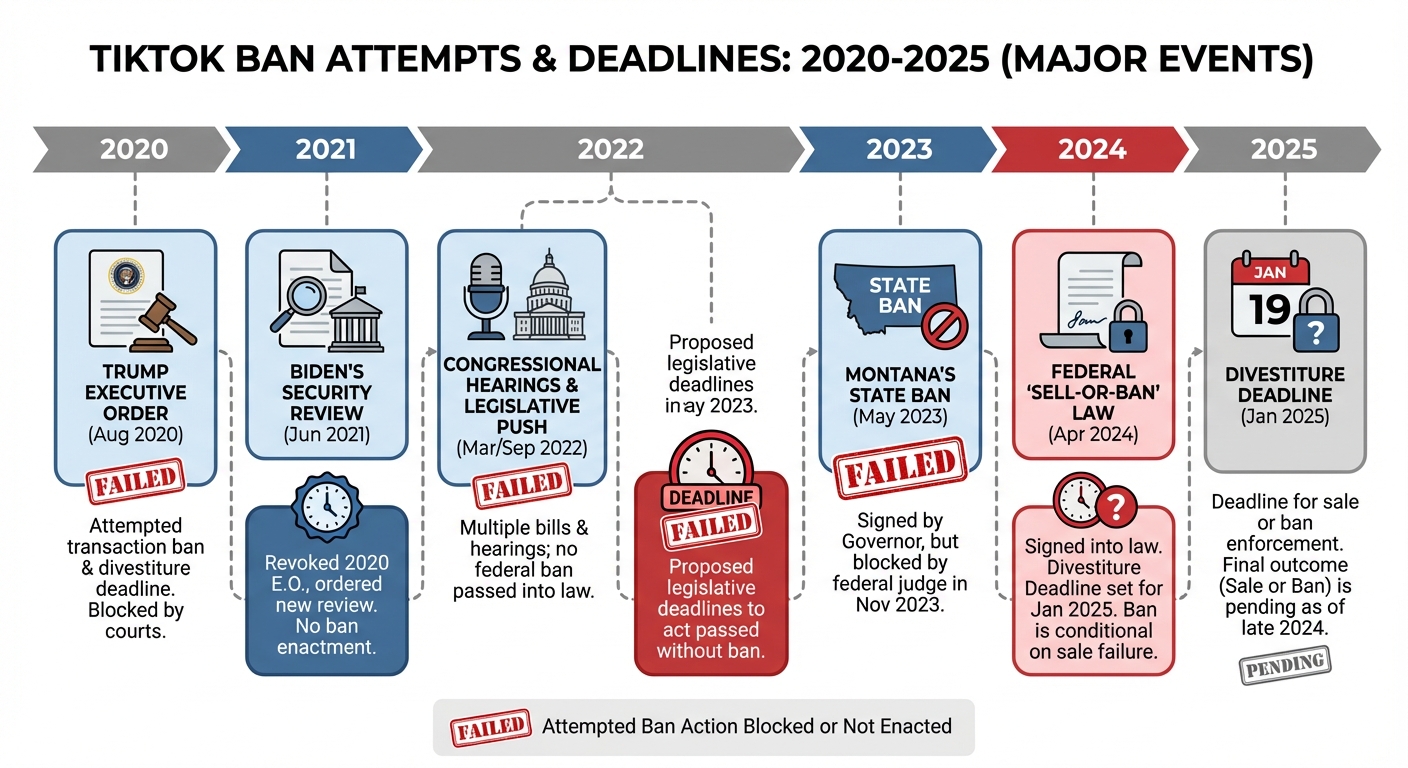
Remember when TikTok was definitely getting banned? August 2020: President Trump gives ByteDance 45 days to sell or face shutdown. The deadline passes. Then another deadline. Then another. Different presidents, same threats, same app still on your phone.
Five years later, TikTok has 170 million American users and is growing. The ban everyone predicted never materialized. The story of why tells you more about how tech policy actually works in Washington than any congressional hearing ever could.
Why Every Ban Failed
The timeline reads like a case study in political theater. Trump’s executive order, Biden’s review that went nowhere, congressional hearings where TikTok’s CEO got grilled for five hours, Montana’s state-level ban that courts immediately blocked. The pattern is identical: loud threats, performative outrage, zero enforcement.
Turns out banning a popular app in a democracy is hard. First, there’s the Constitution. Blocking a communication platform used by 170 million Americans raises immediate First Amendment issues, which civil liberties groups successfully argued in court. Second, the political math is terrible. TikTok users vote, and politicians quickly realized that banning young people’s favorite app is electoral suicide. Third, ByteDance spent $7.5 million on lobbying in 2024 alone, successfully muddying the waters with arguments about small businesses and pointing out that China can buy American data elsewhere anyway.
The Real Security Question
Here’s the actual debate: can China use TikTok to spy on Americans or manipulate what they see? The spying concern is probably overblown. TikTok data isn’t uniquely valuable compared to what hackers already stole from Equifax or the Office of Personnel Management. The manipulation concern is more valid. An algorithm feeding content to 170 million people is a powerful propaganda tool, though we have no evidence it’s being used that way at scale.
This creates genuine tension in American policy. We want protection from foreign influence, but not if it means becoming like the authoritarian regimes we oppose. Banning apps is what China does. The fact that TikTok survived shows the U.S. system ultimately prioritizes free speech over preemptive security theater. It’s messy and frustrating, but it’s principled.
What Washington Learned
The TikTok saga taught some hard lessons. First, bans don’t work when people can VPN around them. Second, data localization (forcing companies to store U.S. data on U.S. servers, like TikTok’s “Project Texas”) is a more realistic compromise. Third, politicians care more about headlines than outcomes. They got their soundbites threatening TikTok, then moved on when actual legislation proved too complicated.
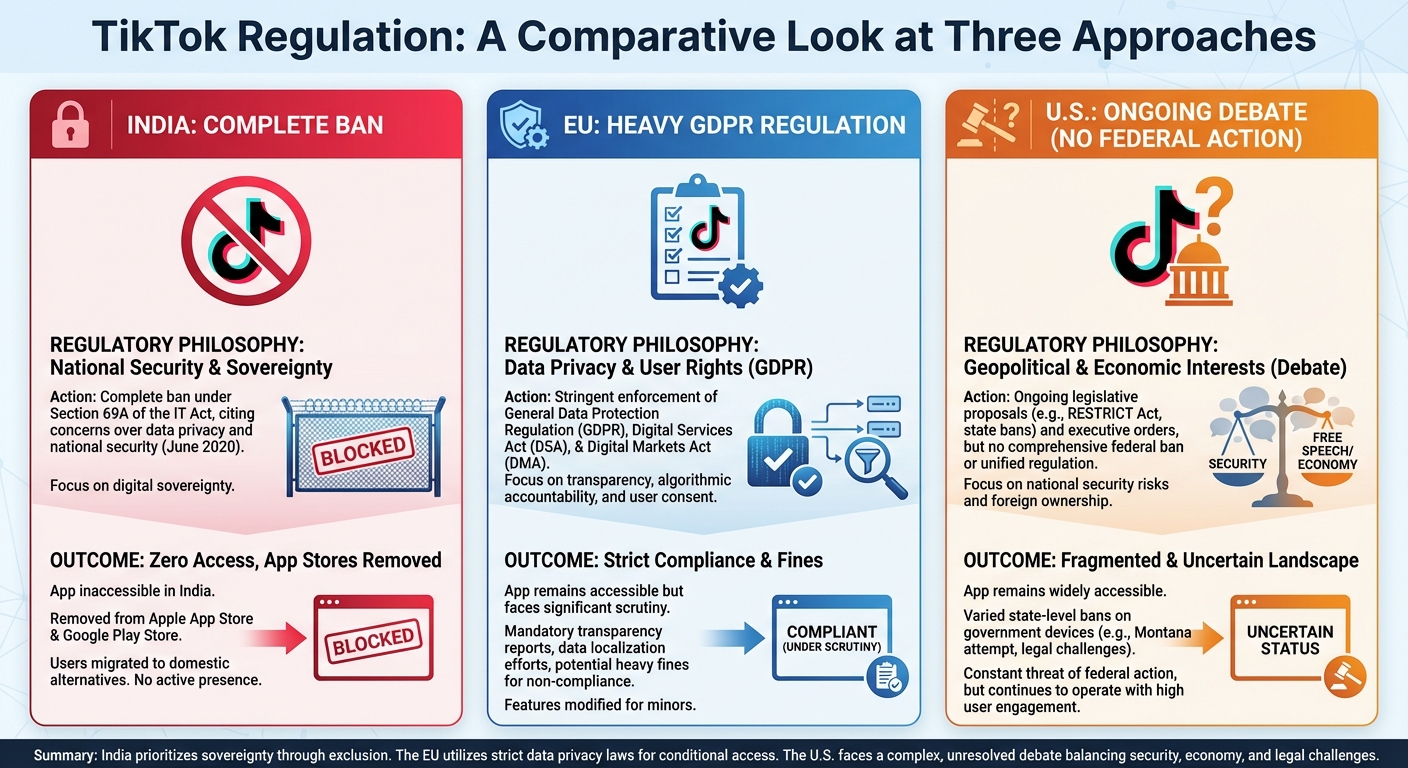
The international contrast is stark. India banned TikTok successfully because it lacks strong civil liberties protections for internet access. The EU regulated it heavily under GDPR without banning it. The U.S. is stuck in the middle: can’t ban, can’t regulate comprehensively, just shouting loudly while the app grows.
The Bottom Line
The TikTok ban that never happened reveals something important about American governance: you can’t just ban things because they’re foreign-owned and popular. You need constitutional authority, political will, and enforcement mechanisms. We had none of those. Future tech policy battles will likely shift from app-specific bans to comprehensive federal privacy legislation covering everyone, Facebook and Google included. That’s the only serious solution. But if the TikTok saga is any guide, don’t hold your breath.
The lesson is clear: don’t promise what you can’t deliver. Without a legal framework for digital privacy, targeting specific foreign apps is whack-a-mole the government is destined to lose. For more on how technology is reshaping political campaigns, see how AI is being used to win elections. And for another case of tech regulation reaching the Supreme Court, check out the Section 230 case that could change the internet.
Sources: Congressional records, federal court filings, technology policy analysis, lobbying disclosure data.