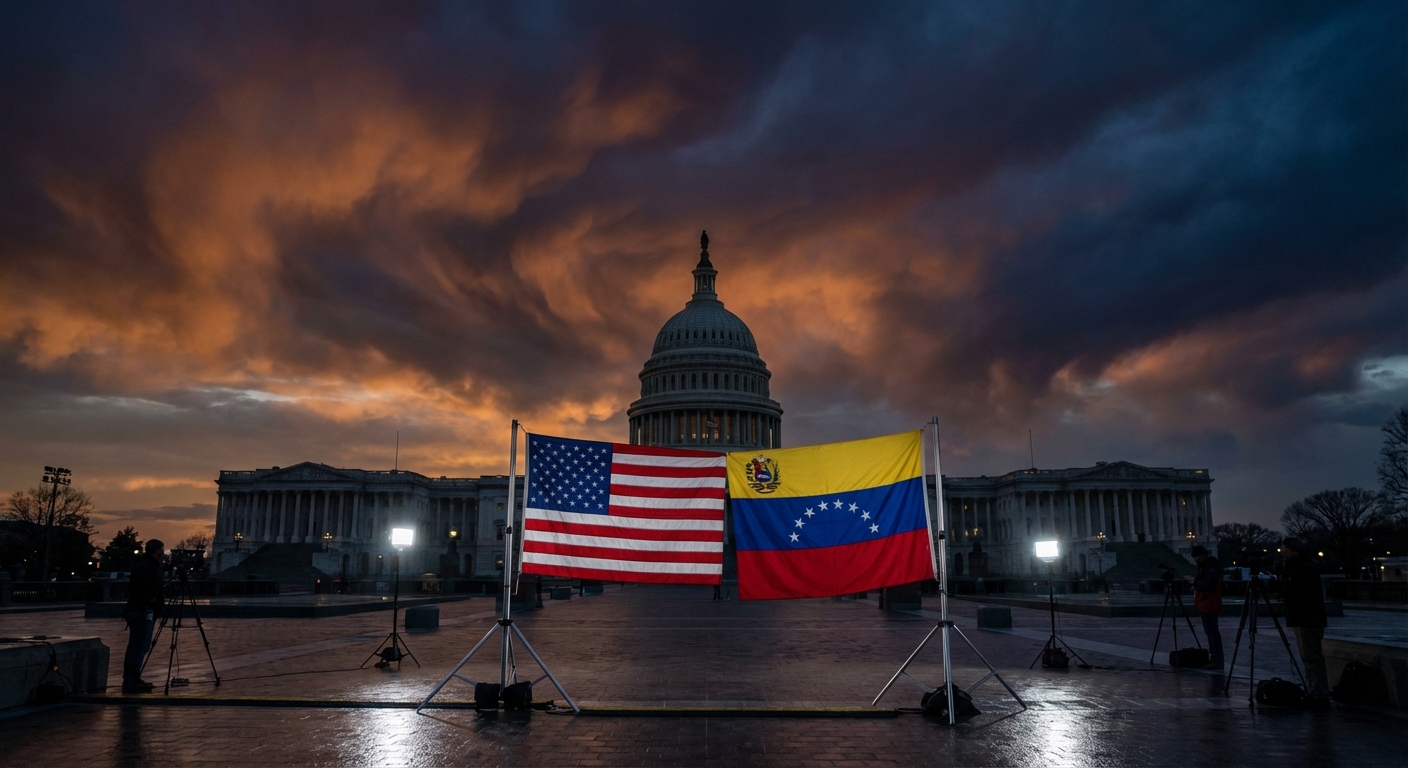
The Capitol was busier than usual for a Monday in January. By 9 AM, the hallways outside the House Intelligence Committee’s secure briefing room had filled with lawmakers demanding information about the weekend’s events in Venezuela. The capture of Nicolás Maduro by U.S. special operations forces had dominated Sunday news coverage, but for members of Congress, the real questions were just beginning. How did this operation come together? What happens to Maduro now? And perhaps most pressing: what comes next for a country of 28 million people whose government just ceased to exist?
The Trump administration’s decision to extract Maduro from Venezuelan territory represents the most significant U.S. military intervention in Latin America since the 1989 Panama invasion that removed Manuel Noriega. Unlike that operation, which involved 27,000 troops and weeks of combat, the Maduro capture was surgical: a small team, limited casualties, and a high-value target secured within hours. But the clean execution of the military phase only begins the messy political reality that Congress must now confront.
Lawmakers Demand Briefings
The first classified briefing began at 10 AM in the Hart Senate Office Building, where members of the Senate Foreign Relations Committee gathered to hear from State Department and Pentagon officials. Senator Jim Risch of Idaho, the committee’s ranking member, emerged two hours later declining to discuss specifics but acknowledging the gravity of the moment.
“This is the kind of action that fundamentally reshapes our relationship with the entire hemisphere,” Risch told reporters gathered in the hallway. “We need to understand not just what happened, but what the plan is going forward. You can’t just remove a government and walk away.”
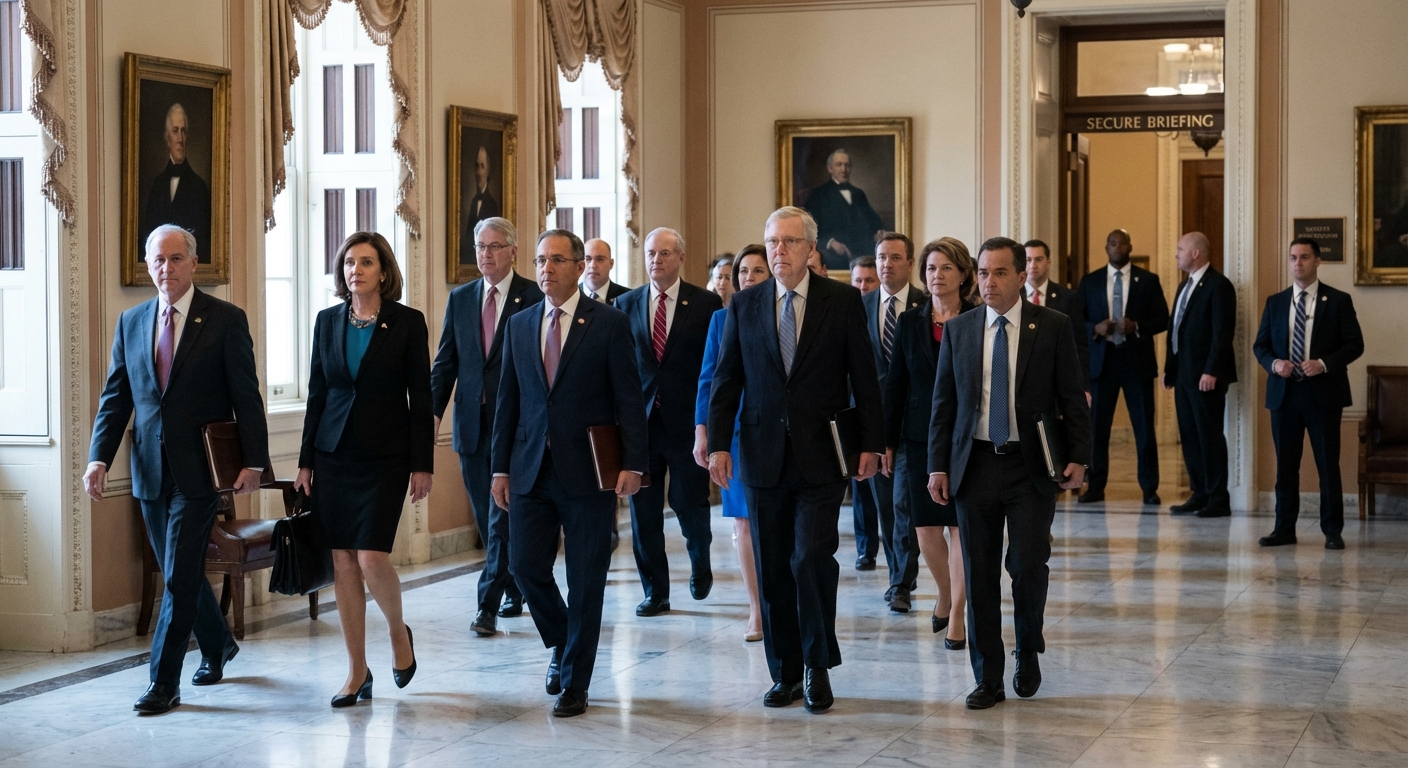
The House side saw similar activity. Speaker Mike Johnson convened an emergency meeting of the House Republican conference at noon, where President Trump himself appeared to address questions from his party’s members. The closed-door session lasted nearly two hours, an unusual length that suggested significant internal debate about how to proceed.
Democrats, largely excluded from pre-operation consultations, expressed frustration at being informed of the capture only after it was complete. Representative Gregory Meeks of New York, the ranking Democrat on the House Foreign Affairs Committee, called the lack of advance notification “deeply troubling” and demanded an immediate classified briefing for minority members.
“The War Powers Act exists for a reason,” Meeks said in a statement. “Military action of this magnitude requires congressional consultation, not notification after the fact.”
The Legal Questions Multiply
The legal framework surrounding Maduro’s capture remains contested, with constitutional scholars and international law experts offering conflicting assessments. The administration has cited the $15 million bounty placed on Maduro by the Justice Department in 2020, when he was indicted on drug trafficking charges, as sufficient legal authority for the operation. But critics argue that an arrest warrant, however serious the underlying charges, does not authorize military invasion of a sovereign nation.
Senator Chris Murphy of Connecticut, a member of the Foreign Relations Committee known for his focus on executive war powers, raised pointed questions about the legal basis during Monday’s briefing. “We have extradition treaties for a reason,” Murphy noted to reporters. “We have diplomatic channels. The idea that a DOJ indictment gives the President authority to send special forces into any country in the world sets a precedent that should concern everyone.”
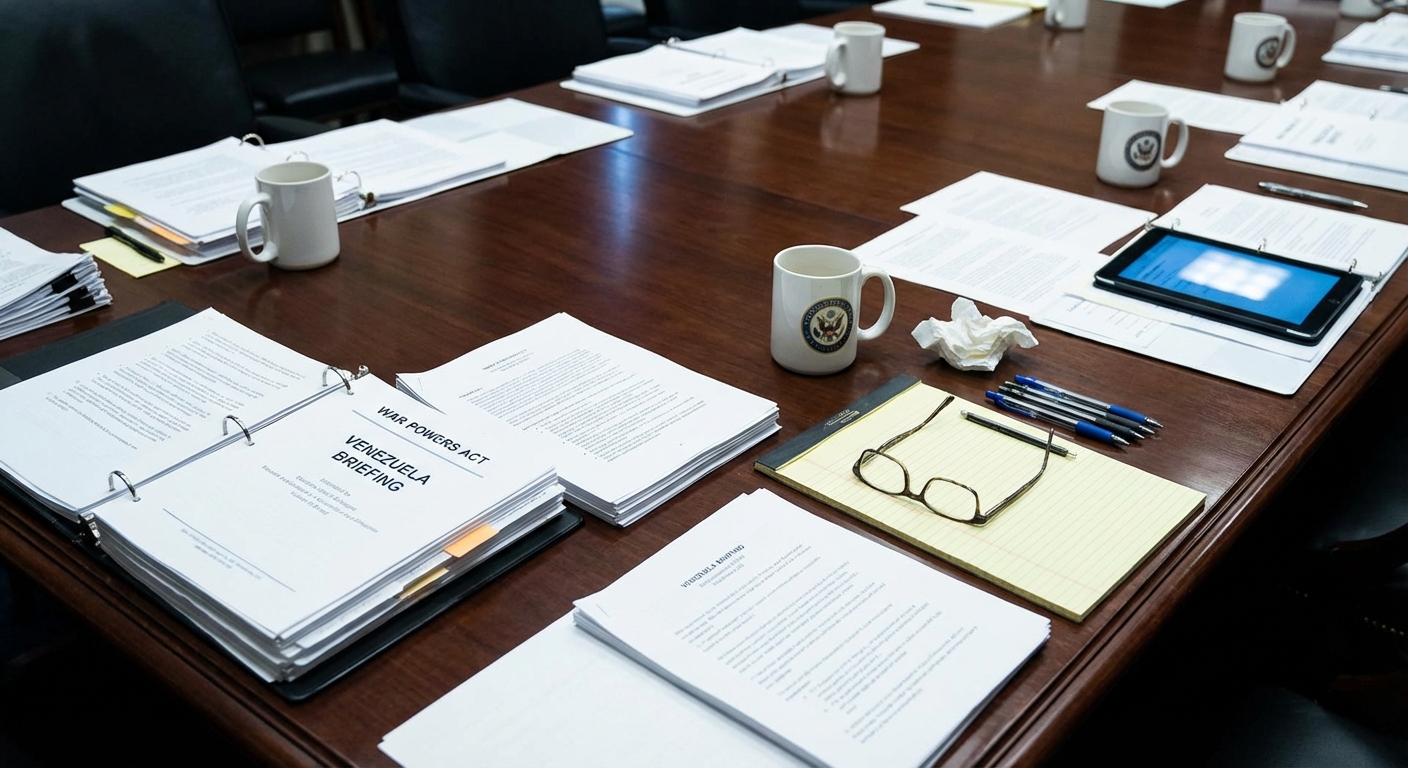
The administration’s position rests on several overlapping justifications. Beyond the drug trafficking indictment, officials point to Maduro’s alleged role in facilitating migration flows that have strained U.S. border resources, his government’s threats against neighboring Colombia, a U.S. treaty ally, and the 2024 election fraud that the United States never recognized. Whether these rationales collectively satisfy domestic or international law remains an open question that courts may eventually decide.
International law scholars have noted that even if the United States had legitimate grievances against Maduro, unilateral military action violates the United Nations Charter’s prohibition on the use of force except in self-defense or with Security Council authorization. Neither condition applies here, creating potential exposure to international legal challenges that could complicate U.S. diplomatic relations for years.
The Venezuela Power Vacuum
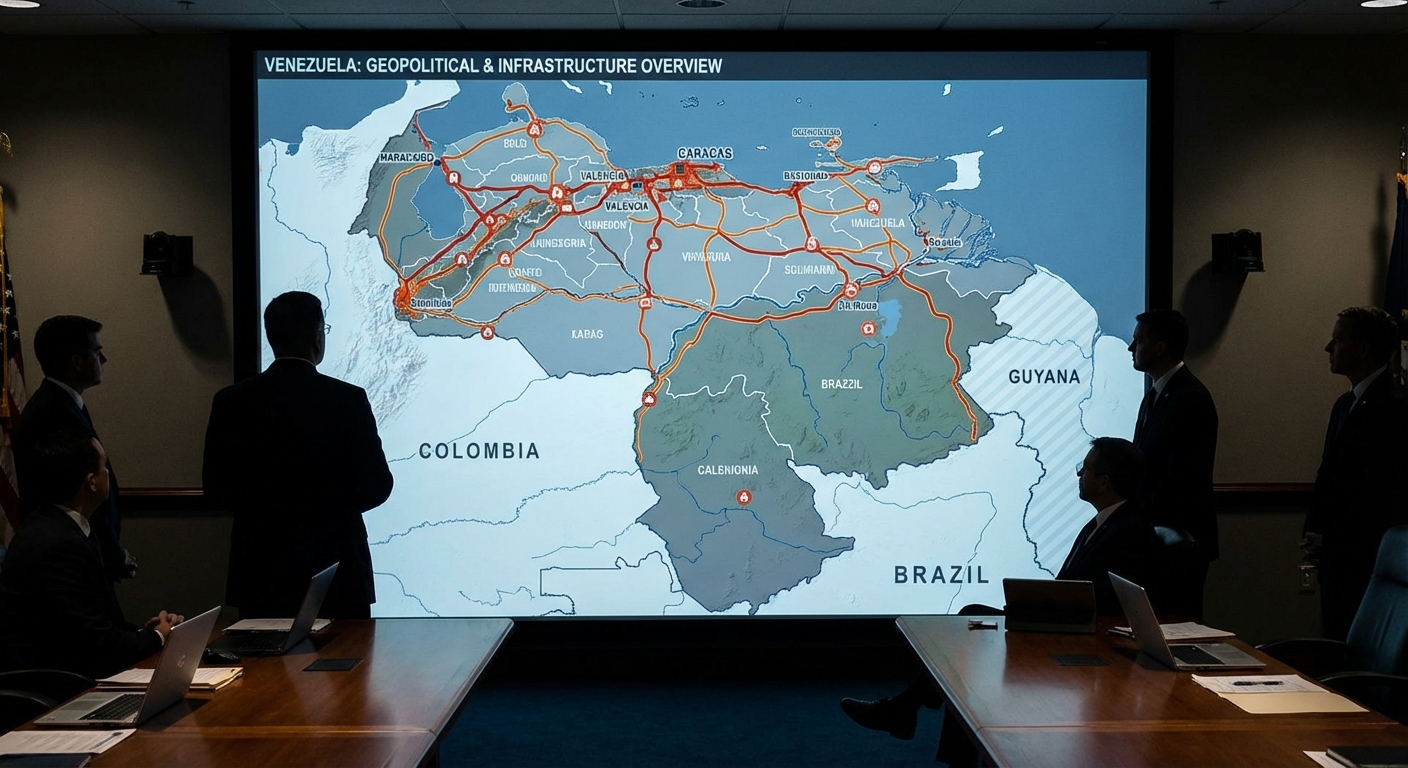
While Congress debates the operation’s legality, a more immediate crisis is unfolding in Caracas. Maduro’s capture has created a power vacuum that multiple factions are now attempting to fill. The legitimate opposition, led by María Corina Machado and President-elect Edmundo González Urrutia, has called for immediate implementation of the July 2024 election results that international observers believe González won decisively.
But the Maduro regime’s infrastructure, built over a decade of authoritarian consolidation, doesn’t simply vanish with its leader’s removal. Military commanders, intelligence officials, and regional political bosses who benefited from the old system face uncertain futures under any democratic transition. Some have already begun maneuvering for position in whatever comes next.
The State Department has dispatched a team to Bogotá, Colombia, to coordinate with regional partners on transition planning. Secretary of State Marco Rubio, himself a child of Cuban exiles and longtime advocate for democratic change in Latin America, is expected to travel to the region later this week.
“We are in close contact with democratic leaders throughout the hemisphere,” State Department spokesperson Matthew Miller said at Monday’s briefing. “The United States supports a peaceful, democratic transition that reflects the will of the Venezuelan people as expressed in the July election.”
Republican Unity, Democratic Division
The partisan dynamics surrounding the capture reveal complex cross-currents within both parties. Republicans have largely rallied behind the President, framing the operation as a decisive response to years of failed diplomacy and Maduro’s continued defiance of international norms. Senator Marco Rubio’s confirmation as Secretary of State last week, followed immediately by this operation, suggests a coordinated rollout designed to establish the administration’s foreign policy credentials.
“For too long, we talked while Maduro consolidated power, crushed dissent, and drove millions of his own people into exile,” said Senator Ted Cruz of Texas. “This President acts. That’s the difference.”
But even some Republicans have expressed concern about the precedent and the open-ended commitment that regime change implies. Senator Rand Paul of Kentucky, long skeptical of military interventionism, questioned whether the United States has the resources or political will for another nation-building exercise.
“We’ve seen this movie before,” Paul said. “Iraq, Afghanistan, Libya. We remove the bad guy and then spend twenty years trying to put the pieces back together. Where’s the plan for Venezuela? Where’s the exit strategy?”
Democrats find themselves in an awkward position. Many have spent years denouncing Maduro as a dictator who stole elections and brutalized his people. Celebrating his removal while criticizing the method of that removal requires rhetorical contortions that some lawmakers are struggling to execute.
Representative Alexandria Ocasio-Cortez of New York attempted to thread this needle in a lengthy social media post. “Maduro was a brutal authoritarian who denied his people basic human rights,” she wrote. “But the solution to authoritarianism cannot be unilateral American military action that bypasses international law and our own Constitution. We’ve replaced one form of lawlessness with another.”
What Happens to Maduro?
The immediate question of Maduro’s fate remains unresolved. He is currently being held at an undisclosed location, reportedly in the southeastern United States, awaiting initial court proceedings on the 2020 drug trafficking indictment. Legal experts expect the government to seek pretrial detention, arguing that Maduro’s resources and international connections make him an extreme flight risk.
But the criminal case, however strong, may be the least complicated aspect of Maduro’s future. He possesses enormous intelligence value: knowledge of drug trafficking networks, Russian and Chinese influence operations in Latin America, Cuban security cooperation, and the inner workings of the Bolivarian regime’s extensive corruption. Whether the United States attempts to leverage this knowledge through plea negotiations or other arrangements remains to be seen.
There’s also the question of international justice. The International Criminal Court has an ongoing investigation into potential crimes against humanity committed under Maduro’s government. Venezuela’s opposition has called for Maduro to eventually face trial in The Hague, which would require navigating complex jurisdictional issues given that the United States itself is not a party to the ICC’s founding treaty.
The Weeks Ahead
Congress returns to full session this week with the Venezuela situation dominating the agenda. The Senate Foreign Relations Committee has scheduled a public hearing for Thursday featuring testimony from regional experts and human rights organizations. The House is expected to consider a resolution formally authorizing the continued U.S. presence in the Venezuela transition process, though whether Democrats will support such a measure remains uncertain.
The administration, meanwhile, is moving quickly to shape the narrative and establish facts on the ground. A U.S. delegation is expected in Caracas within days to meet with opposition leaders and begin discussions about electoral timelines, security arrangements, and humanitarian assistance. The Treasury Department has signaled flexibility on sanctions relief for Venezuelan oil exports if a democratic transition proceeds smoothly.
For the millions of Venezuelans who fled their country during the Maduro years, many now living in Colombia, Peru, Chile, and the United States itself, the capture opens possibilities that seemed unimaginable just weeks ago. The prospect of returning to a democratic Venezuela, of rebuilding the country their families left behind, has suddenly become real.
Whether that promise is fulfilled depends on decisions being made this week in Washington, Caracas, and capitals throughout the hemisphere. Congress’s role in shaping those decisions has never been more important, or more contested. The capture of Nicolás Maduro took hours. The aftermath will take years.