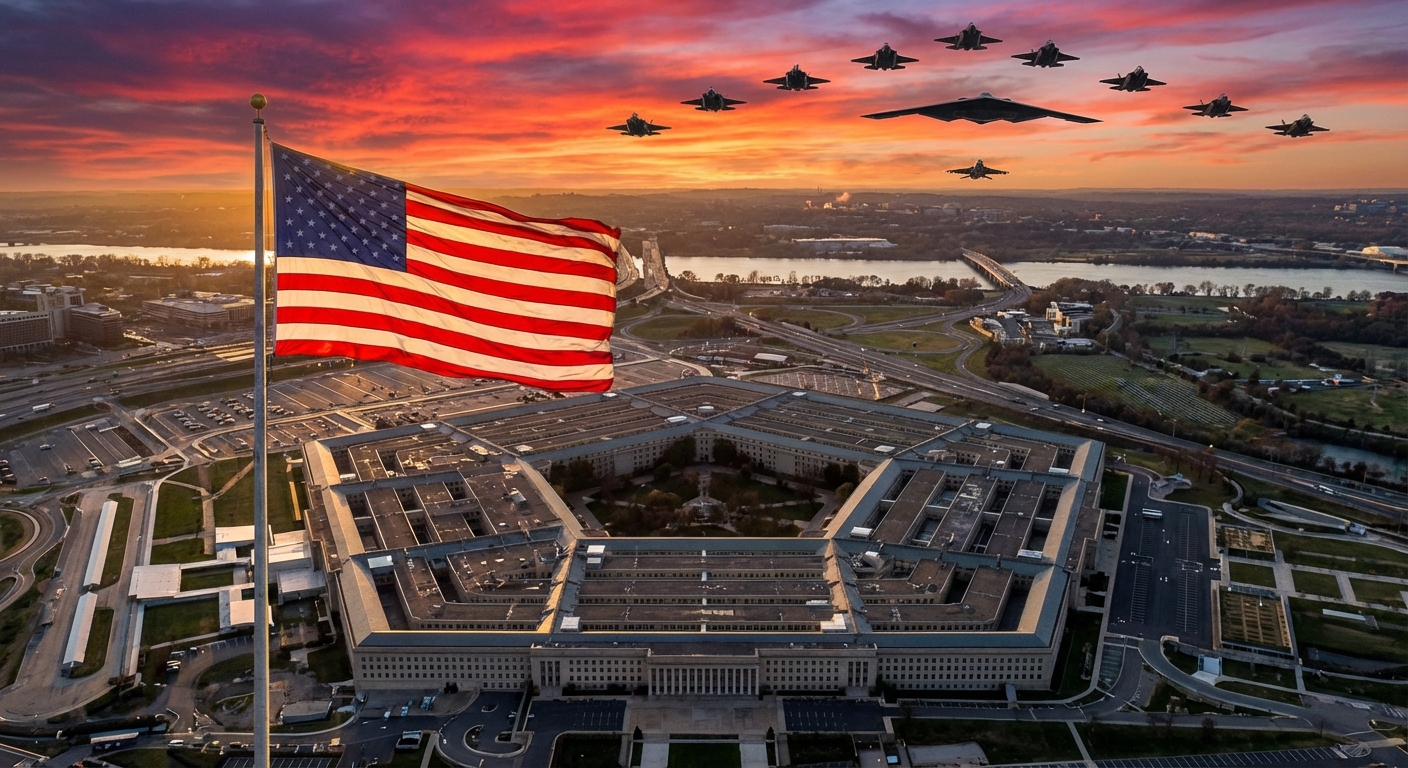
President Donald Trump dropped a fiscal bombshell on Wednesday that has defense contractors celebrating and budget hawks reaching for their calculators. In a social media post that arrived without warning, Trump called for setting the 2027 military budget at $1.5 trillion, a staggering 66% increase from the current $901 billion allocation.
“I have determined that, for the Good of our Country, especially in these very troubled and dangerous times, our Military Budget for the year 2027 should not be $1 Trillion Dollars, but rather $1.5 Trillion Dollars,” Trump wrote, framing the proposal as essential to building what he calls America’s “Dream Military.”
The announcement immediately rattled markets and set off a fierce debate about fiscal responsibility during an era of already-ballooning national debt. Defense stocks surged on the news, with Lockheed Martin jumping roughly 5% and Northrop Grumman climbing more than 3%. But the question that matters most to taxpayers remains unanswered: How exactly would America pay for this?
What the Proposal Actually Means
Let’s put $1.5 trillion in perspective. The current 2026 military budget of $901 billion already represents about 3.4% of America’s gross domestic product. Trump’s proposal would push that figure well beyond 5% of GDP, a level the United States hasn’t seen since the height of the Cold War in the 1980s.
The jump from $901 billion to $1.5 trillion represents an additional $599 billion in annual spending. To contextualize that number, the entire annual budget for the Department of Education is roughly $80 billion. The proposed increase alone could fund more than seven Education Departments. It’s also more than double what the federal government spends on transportation infrastructure annually.
Trump’s proposal arrives just days after he ordered a military operation to capture Venezuelan leader Nicolás Maduro and transport him to the United States to face drug trafficking charges. The timing suggests the president may be preparing for an era of more aggressive military interventions abroad. Whether Congress and the American public have the appetite for such an expansion remains an open question.

Wall Street’s Immediate Reaction
The market response to Trump’s announcement was swift and predictable. Defense stocks across the board posted significant gains on Wednesday and continued climbing Thursday morning.
Lockheed Martin, America’s largest defense contractor and manufacturer of the F-35 fighter jet, saw its shares jump approximately 5%. The company has been struggling with production delays and cost overruns on several major programs, and investors clearly see the proposed budget increase as a potential lifeline. Northrop Grumman, which builds the B-21 Raider stealth bomber and various missile defense systems, gained more than 3%.
Perhaps the most dramatic movement came from smaller defense firms. Kratos Defense, a company specializing in drone technology and satellite communications, surged a remarkable 18% following Trump’s announcement. The company’s focus on unmanned systems aligns with the military’s stated priorities for future warfare. RTX (formerly Raytheon), another major contractor, advanced more than 1%.
The defense sector’s enthusiasm contrasts sharply with the broader market, where technology stocks continued their recent struggles. While defense names rallied, the Nasdaq Composite dropped 0.6% as investors rotated out of AI and semiconductor stocks that had dominated gains throughout 2025.
The Tariff Funding Question
Trump’s proposal rests on a financing mechanism that has economists raising their eyebrows. The president claims the additional spending would be covered by revenues from tariffs he has imposed on trading partners worldwide.
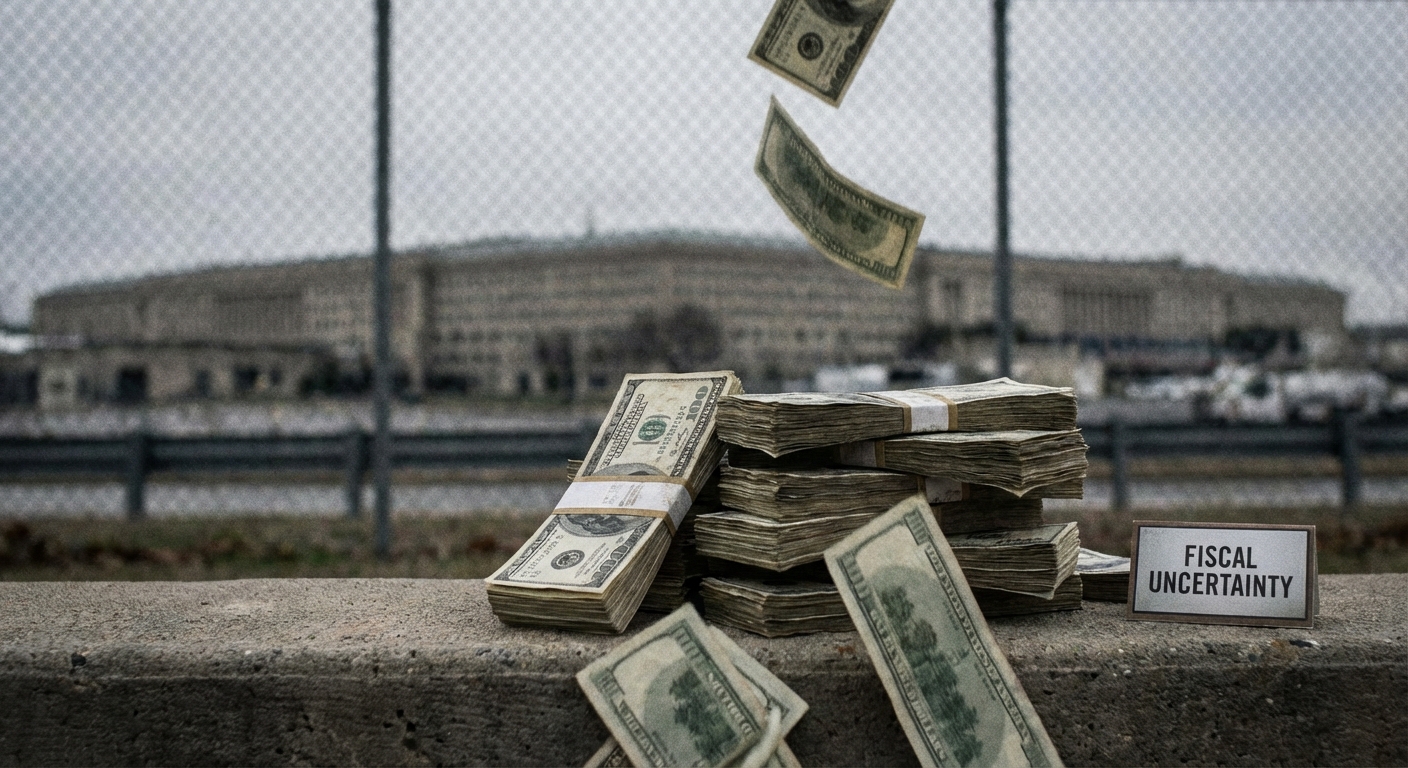
The math here gets complicated quickly. According to most estimates, current tariffs generate somewhere between $200 billion and $300 billion annually for the federal government. That’s substantial, but it falls far short of the $599 billion in additional annual spending Trump’s proposal would require.
The Committee for a Responsible Federal Budget, a nonpartisan fiscal watchdog, estimates that Trump’s defense proposal would cost approximately $5 trillion through 2035. When interest payments on the additional debt are included, that figure balloons to $5.8 trillion. The committee noted that current tariff revenues could cover only about half of the proposal’s cost, leaving a gap of nearly $3 trillion over the decade.
This matters because the United States already carries a national debt exceeding $34 trillion. Adding several trillion more would push debt-to-GDP ratios into territory that typically concerns bond markets and credit rating agencies. The Congressional Budget Office has repeatedly warned that the current fiscal trajectory is unsustainable, and Trump’s proposal would accelerate that trajectory considerably.
Congressional Hurdles Ahead
Here’s the reality that defense executives and investors need to understand: Trump can propose whatever budget he wants, but Congress controls the purse strings. Article I of the Constitution grants Congress the exclusive power to appropriate federal funds, and a 66% increase in military spending would require significant bipartisan support to become law.
The current Congress is closely divided, with Republicans holding narrow majorities in both chambers. While many Republicans have historically supported robust defense spending, the Freedom Caucus wing of the party has increasingly focused on fiscal restraint and reducing the national debt. Convincing deficit hawks to support a $600 billion annual increase in discretionary spending will require considerable political capital.
Democrats, meanwhile, have shown mixed feelings about defense spending increases. Some centrist Democrats from districts with defense industry jobs may support targeted increases, but progressive members have pushed for cuts to military budgets in favor of domestic priorities. Getting a $1.5 trillion defense budget through the House and Senate would require Trump to assemble a coalition that may not currently exist.
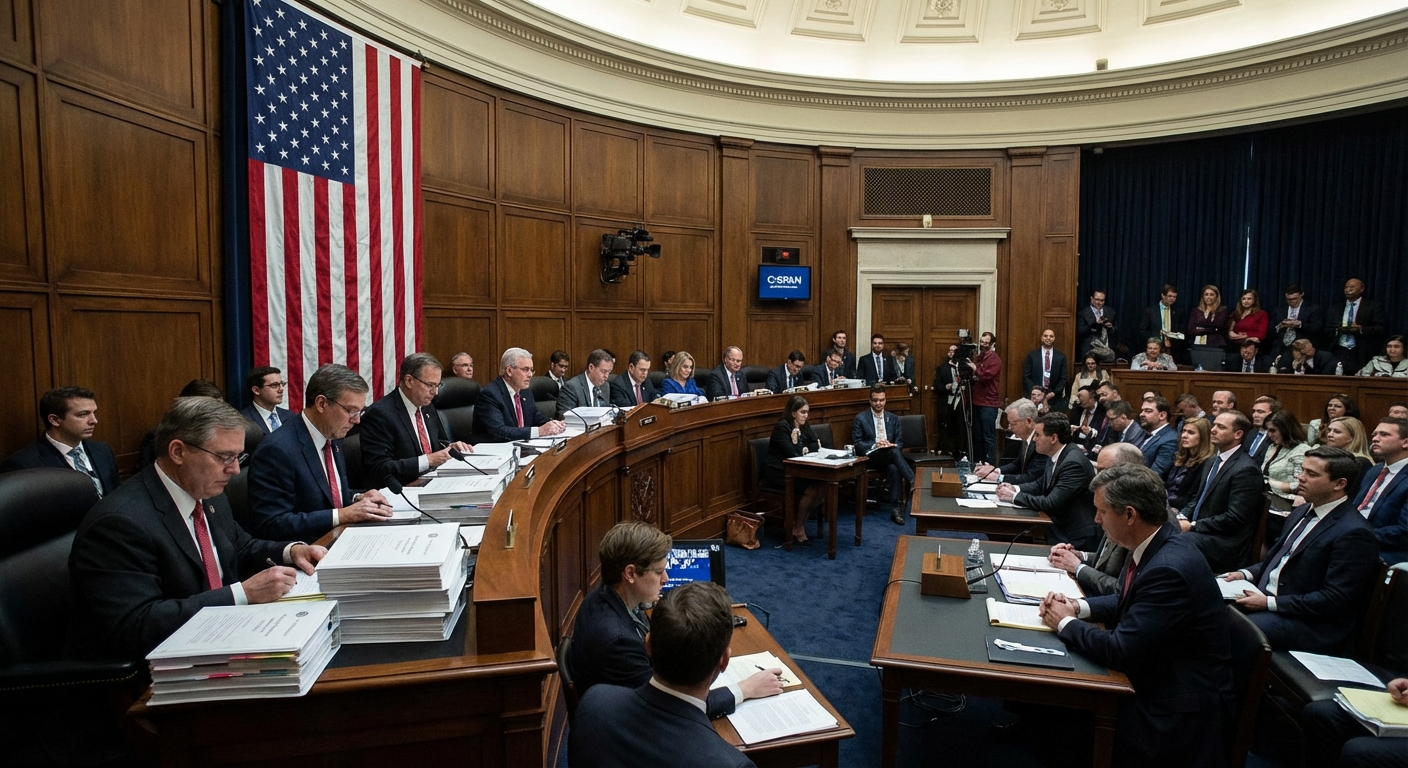
The budget process itself presents additional complications. The proposal would need to work its way through the House and Senate Armed Services Committees, then the Budget Committees, before reaching the floor for votes. Each step provides opportunities for amendments, delays, and negotiations that could significantly alter the final numbers.
Trump’s Warning to Contractors
Buried within the celebration on Wall Street was a stern warning that should give defense executives pause. Trump issued what can only be described as a threat to contracting companies, suggesting he would seek to limit stock buybacks and executive compensation unless they improve their delivery of weapons systems.
This matters because defense contractors have a troubled track record when it comes to cost overruns and schedule delays. The F-35 program, run by Lockheed Martin, has exceeded its original budget by hundreds of billions of dollars and remains plagued by maintenance issues. The Navy’s new Gerald R. Ford-class aircraft carriers cost roughly double their initial estimates. Boeing’s KC-46 tanker program has been a parade of problems.
Trump’s message appears designed to preempt criticism that defense companies will simply pocket additional taxpayer dollars without delivering improved capabilities. Whether he has the legal authority to impose compensation limits on private companies remains unclear, but the threat signals that the administration may attach significant strings to any budget increase.
For investors, this creates an interesting dynamic. A much larger defense budget should be unambiguously positive for contractor revenues and profits. But if the administration simultaneously restricts how companies can deploy those profits, particularly buybacks that have supported stock prices across corporate America, the net impact becomes murkier.
What This Means for Taxpayers
If you’re not a defense contractor executive or shareholder, you might be wondering what a $1.5 trillion military budget means for you. The answer depends heavily on how Congress ultimately decides to pay for it.
If tariff revenues truly cover the increase, consumers would effectively foot the bill through higher prices on imported goods. Tariffs function as taxes paid by importers, who typically pass those costs along to customers. A study by the Federal Reserve found that Trump’s first-term tariffs cost the average American household approximately $1,200 per year in higher prices. Expanding tariffs to fund a much larger defense budget would likely increase that burden.
If Congress instead chooses to borrow the money, the costs become less immediately visible but no less real. Increased government borrowing tends to push up interest rates across the economy, making mortgages, car loans, and credit card debt more expensive. It also creates obligations that future taxpayers, including today’s children and grandchildren, will eventually need to address.
There’s also the opportunity cost to consider. Every dollar spent on defense is a dollar not spent on infrastructure, education, healthcare, or other domestic priorities. Americans will need to decide whether a 66% increase in military spending aligns with their vision for the country’s future.
The Bottom Line
Trump’s $1.5 trillion defense budget proposal is audacious, controversial, and faces enormous practical obstacles. It has delighted defense contractors and their investors while alarming fiscal conservatives and budget experts. The proposal represents the most aggressive push for military spending since the Reagan era and would fundamentally reshape federal budget priorities if enacted.
The coming months will reveal whether this proposal represents a genuine policy initiative or a negotiating position designed to secure a more modest but still substantial increase. Congressional leaders from both parties will need to weigh military preparedness against fiscal responsibility, with trillions of taxpayer dollars hanging in the balance.
For now, the numbers tell a clear story: Trump wants to spend $599 billion more per year on the military, he says tariffs will pay for it, and budget experts say the math doesn’t work. What happens next depends on whether Congress agrees that these are indeed times dangerous enough to justify such an extraordinary commitment of national resources.
Sources
- PBS News: Trump proposes massive increase in 2027 defense spending to $1.5 trillion
- DefenseScoop: Trump calls for $1.5T in defense spending in 2027
- CNN Politics: Trump threatens defense contractors with restrictions
- CNBC: Stock market live updates
- Military.com: Trump Proposes Massive Increase in 2027 Defense Spending