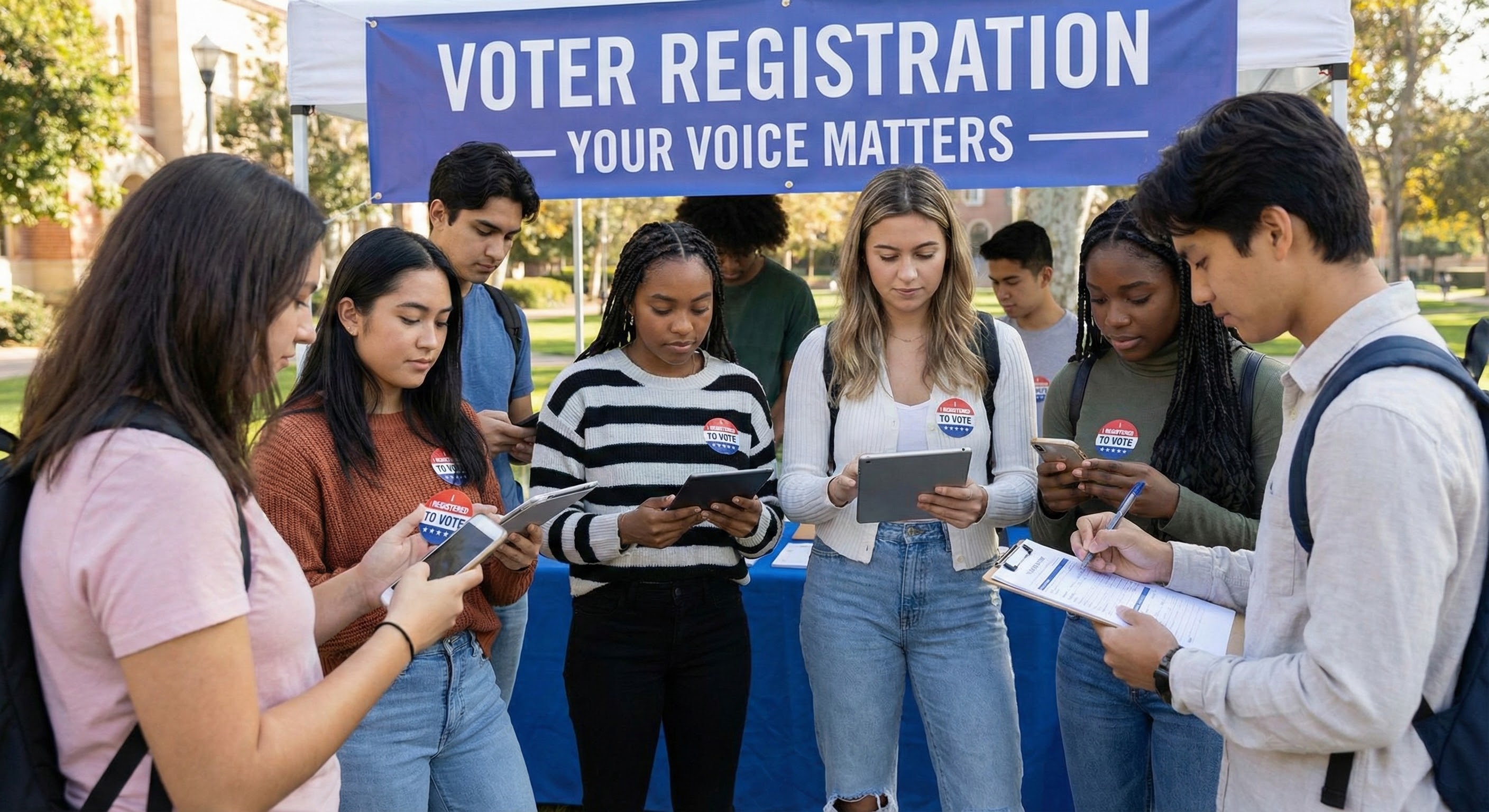
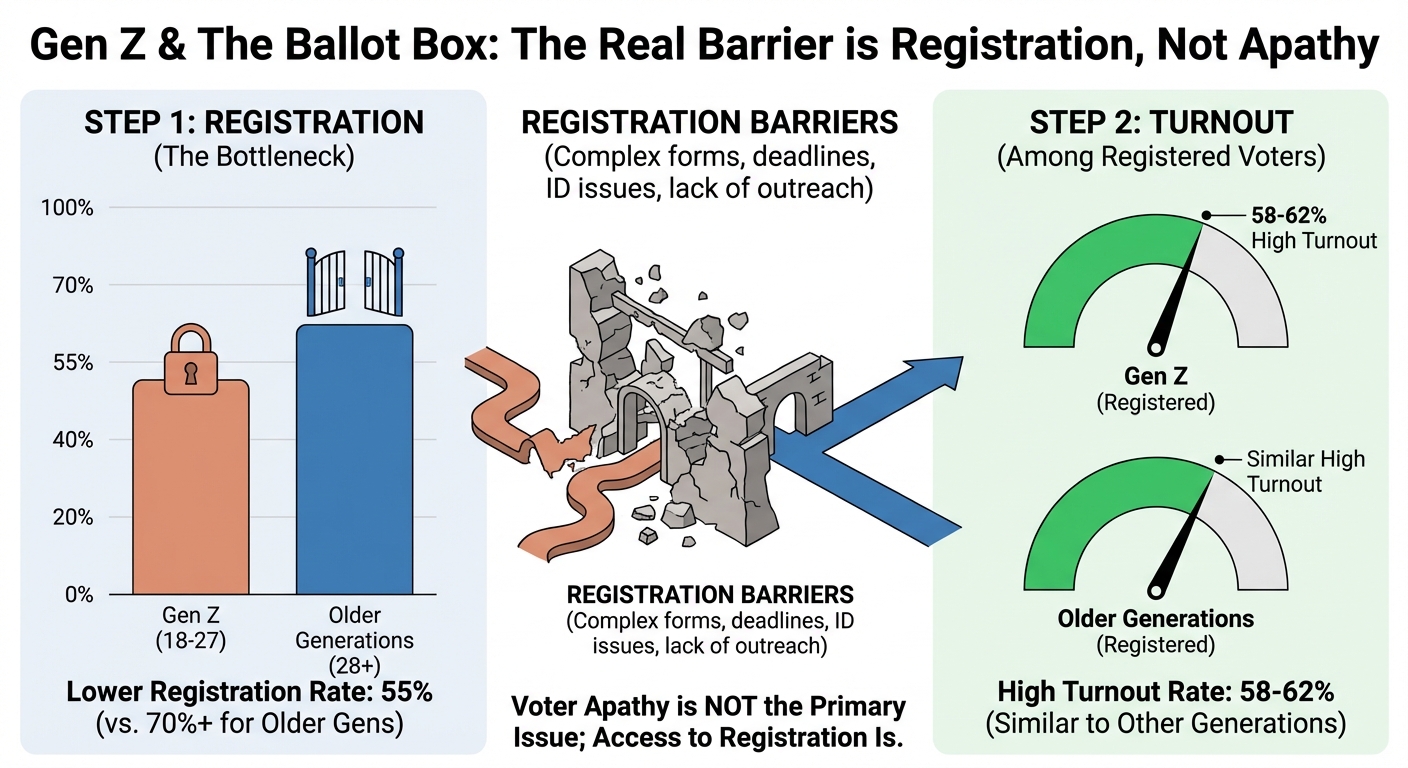
Gen Z has the lowest voter registration rate in decades. Only 55% of eligible voters aged 18-27 are registered, compared to over 70% for older generations. The easy conclusion: young people don’t care about politics. The data says otherwise.
When Gen Z voters are registered, they turn out at rates matching or exceeding older generations. And they vote decisively, 60-70% Democratic in recent elections, flipping close races in swing states. The problem isn’t apathy. It’s that the registration system wasn’t designed for people who move three times a year and live their entire lives online.
The Registration Barrier
Gen Z faces unique obstacles that older generations didn’t. They move constantly for college, jobs, and roommates. Each move invalidates their registration, but unlike Boomers with stable addresses, many don’t realize they’re unregistered until Election Day. Registration deadlines weeks before elections clash with young people’s tendency to make decisions at the last minute. Requirements for utility bills or leases exclude those in informal living arrangements.
Here’s the real problem: traditional registration drives happen in libraries, post offices, and on local news. Gen Z doesn’t go to any of those places. They live online, where algorithmic bubbles often exclude civic information unless campaigns pay to target them. The “apathy” narrative is really a bureaucracy problem.
When They Vote, They Matter
Here’s the crucial stat: registered Gen Z voters turn out at 58-62% in presidential elections, rivaling Millennials and Gen X. The narrative that “kids don’t vote” is wrong. Unregistered kids don’t vote. Once they clear the registration hurdle, they’re highly engaged.
Youth registration spiked in 2024, driven by issues like abortion access and climate anxiety. This proves engagement is high when stakes feel real. The challenge is converting passion into completing paperwork that seems designed to make voting harder.
Solutions That Work
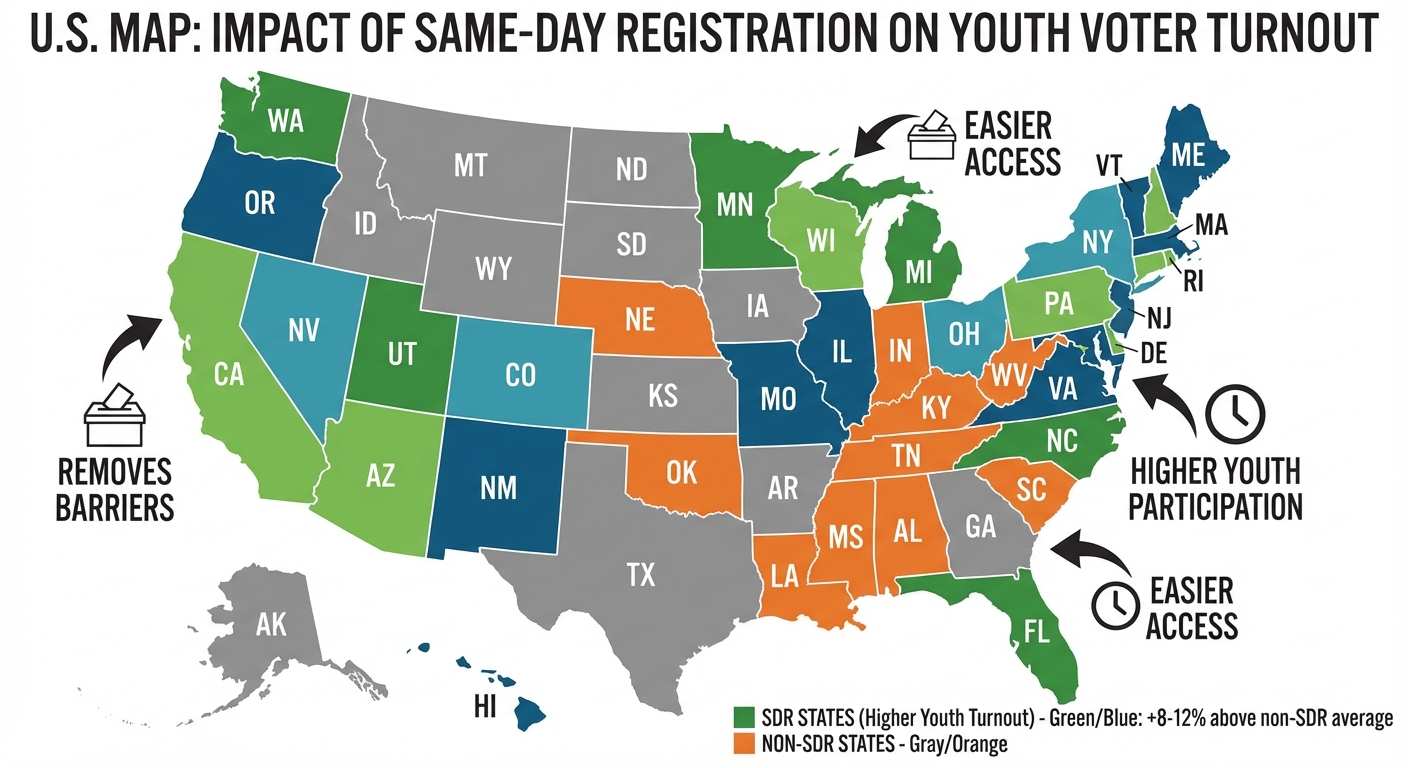
Same-Day Registration (SDR) states see youth turnout 8-12 percentage points higher than states without it. SDR accommodates the mobile lifestyle of young voters who might not realize they need to re-register until they’re at the polls. Automatic Voter Registration (AVR) at DMVs has added millions to the rolls by making registration the default rather than opt-in.
Digital campaigns work better than clipboards. TikTok ads, influencer partnerships, and text banking reach young people where they actually are. A registration drive that takes 30 seconds on your phone beats a table in a library lobby every time.
The Partisan Fight
This isn’t just about efficiency. It’s about power. Gen Z votes 2:1 Democratic, so Democrats push for SDR and AVR while Republicans largely resist, citing fraud concerns but benefiting electorally from lower youth turnout. The battle over registration rules is really a battle over who gets to vote.
Some GOP strategists quietly admit that making registration easier would hurt their electoral chances. Some Democratic organizers focus more on registration drives than persuasion because they know the demographics favor them if turnout increases. Both sides understand the math.
The Bottom Line
Gen Z wants to vote. The system makes it unnecessarily hard. Removing barriers through Same-Day Registration and Automatic Voter Registration isn’t about partisan advantage, it’s about ensuring the electorate reflects the population. The generation that will live longest with today’s policy decisions deserves an equal voice in making them. For more on how young voters are changing politics when they do participate, see the independent voter surge. And for another example of systemic barriers to civic participation, check out why participatory budgeting is gaining ground.
Sources: U.S. Census voter registration data, CIRCLE youth voter research, National Conference of State Legislatures.