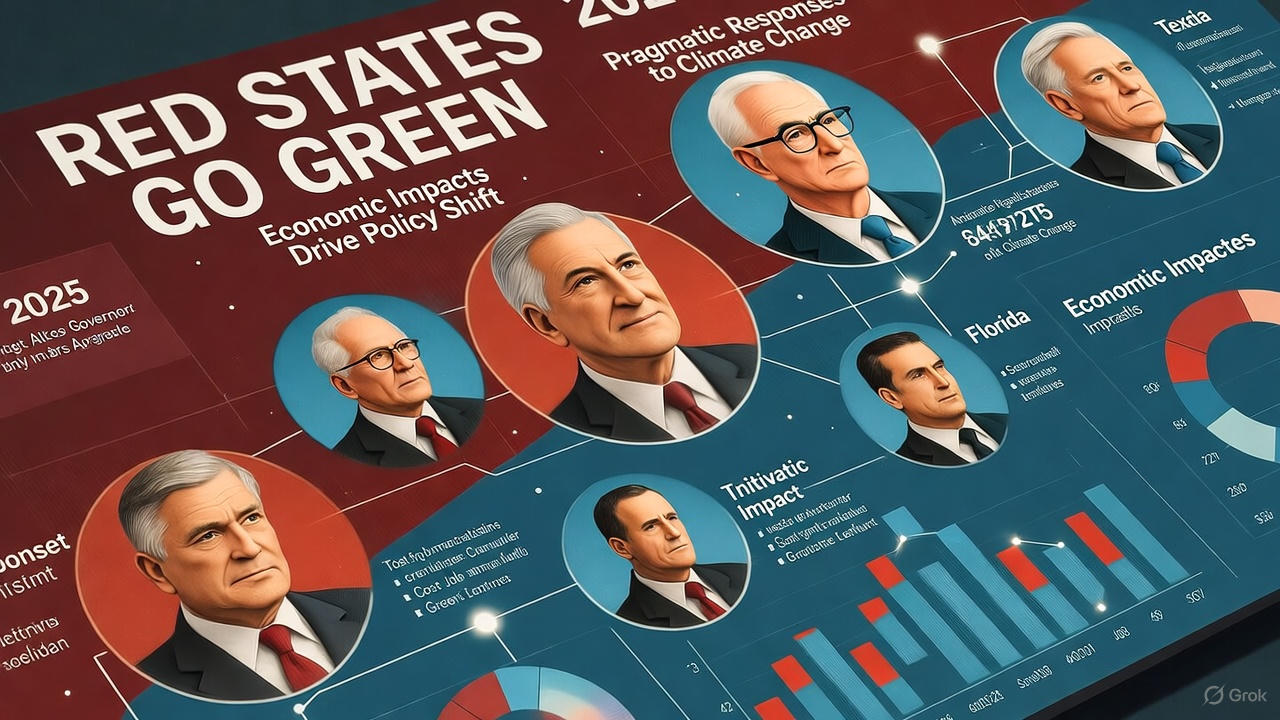
If you follow climate politics, you know the script: Blue states push green policies, red states resist, Congress argues, nothing happens. Except that script is outdated. Republican governors in some of America’s reddest states are implementing climate policies that would impress California, not because they’ve embraced environmentalism, but because climate change is hitting their economies hard and they’re pragmatic enough to respond.
Welcome to the post-partisan reality of climate adaptation.
Florida’s $4 Billion Bet
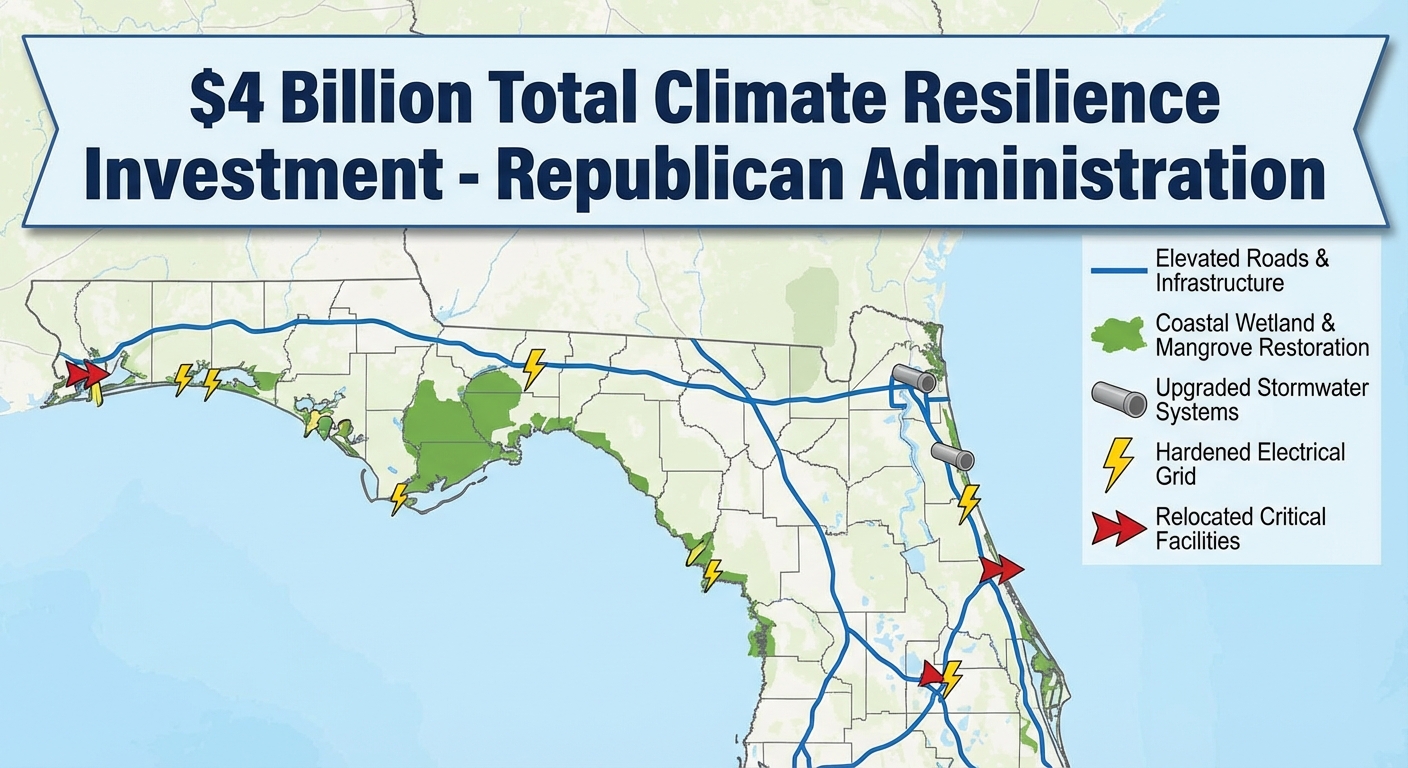
Florida Governor Ron DeSantis might avoid the phrase “climate change” in public speeches, but his administration just allocated $4 billion for climate resilience, one of the largest state-level climate investments in U.S. history. The money goes toward elevating roads in flood-prone areas, restoring coastal wetlands and mangroves, upgrading stormwater systems, hardening the electrical grid against hurricanes, and relocating critical facilities away from rising seas.
Why the shift? Insurance companies. Major insurers have either fled Florida or raised premiums 300-400%, making homeownership increasingly unaffordable. When real estate values tank and insurance becomes unavailable, ideology takes a back seat to economic survival. One Florida county commissioner said it perfectly: “I don’t care what you call it. My constituents’ homes are flooding, and I need to fix it.”
Texas: Renewable Energy Leader
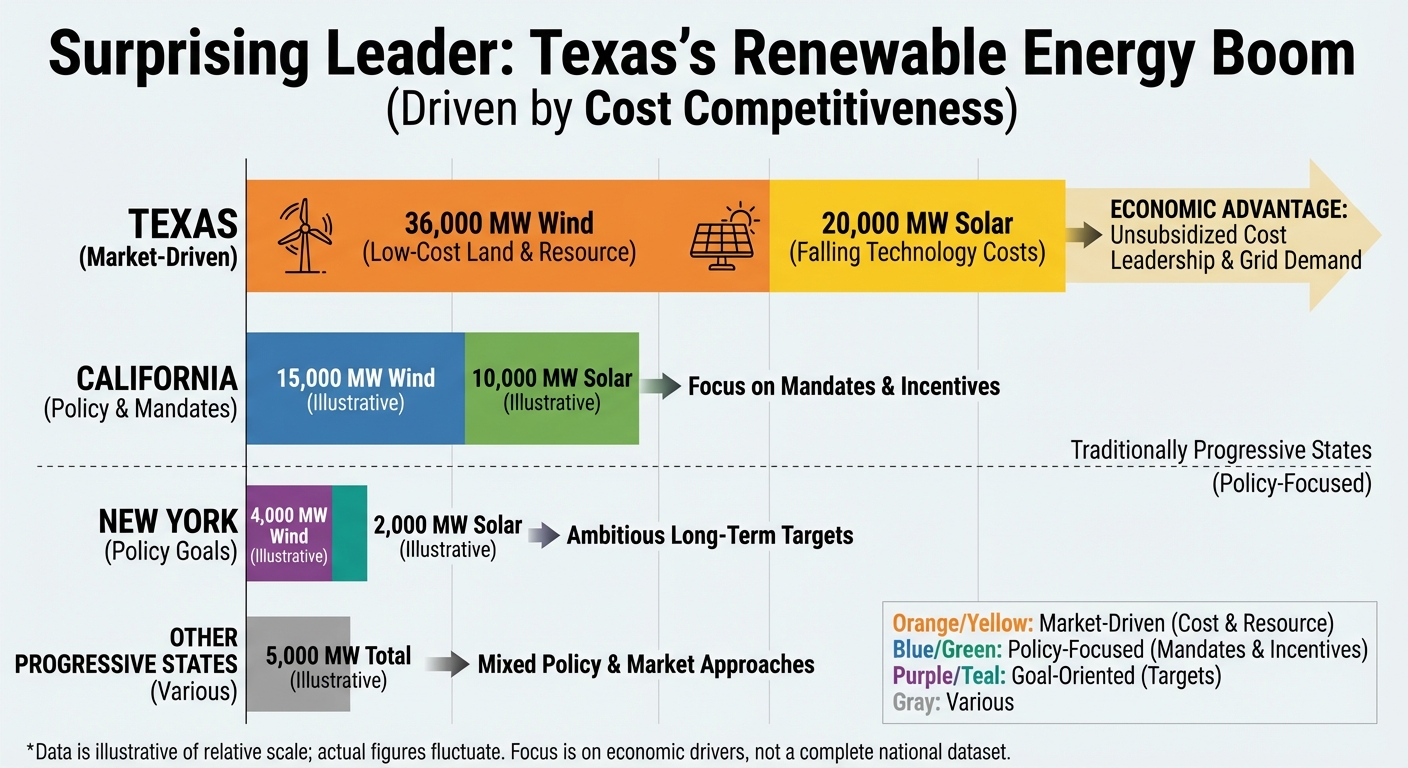
Here’s a fact that breaks assumptions: Texas generates more renewable energy than any other state. Not California. Not New York. Texas. The state now produces 36,000 megawatts of wind power and 20,000 megawatts of solar, enough to power 15 million homes. By 2030, renewables are projected to provide over half of Texas’s electricity.
This isn’t progressive fantasy, it’s capitalism. Wind and solar are cheaper than coal and natural gas in Texas, and oil and gas executives are investing billions in renewable infrastructure because they see where the market is heading. Texas Republicans don’t talk about “fighting climate change.” They talk about “energy independence,” “job creation,” and “cheap electricity.” Different language, same result.
The Insurance Crisis Driving Change
From Louisiana to North Carolina to Arizona, the climate-insurance crisis is forcing policy changes federal legislation never could. Home insurance premiums have doubled or tripled in climate-risk areas over five years. In some coastal regions, insurance is unavailable at any price. This creates a cascade: banks won’t issue mortgages without insurance, property values plummet when homes become uninsurable, local tax revenues crater, economic development grinds to a halt.
State governments respond with practical policies: building codes accounting for extreme weather, zoning restrictions in high-risk areas, public insurance programs of last resort, and massive infrastructure investments to protect existing development. None mention “climate action,” but all are direct responses to climate impacts.
The Vocabulary of Pragmatism
Climate policies succeed in red states when framed as economic development (not environmental protection), infrastructure investment (not climate action), disaster preparedness (not carbon reduction), and energy independence (not renewable transition). One Texas Republican legislator explained: “My constituents don’t want to hear about polar bears. But they do want cheap electricity, good jobs, and infrastructure that doesn’t collapse in storms. If renewable energy and resilient infrastructure deliver that, I’m all in.”
Iowa is a wind energy powerhouse because farmers make more leasing land for turbines than growing corn. Oklahoma invests in carbon capture to extend the oil industry’s life. South Carolina protects coastal wetlands because they’re the cheapest hurricane protection. Arizona implements strict water conservation because the Colorado River is drying up and suburbs can’t expand without water.
The Bottom Line
While Congress remains gridlocked on federal climate legislation, states are moving ahead with practical solutions. Red states and blue states are arriving at similar policies through different philosophical paths, and that’s good. Climate adaptation doesn’t require ideological agreement about causes. It requires acknowledging reality and responding pragmatically. The most effective climate policies over the next decade won’t come from federal mandates or international agreements. They’ll come from governors and mayors too busy dealing with problems to argue about terminology. For more on states leading where the federal government can’t, see Houston’s homelessness solution. And for another example of local innovation, check out participatory budgeting.
Sources: State climate policy data, renewable energy statistics, insurance industry analysis.