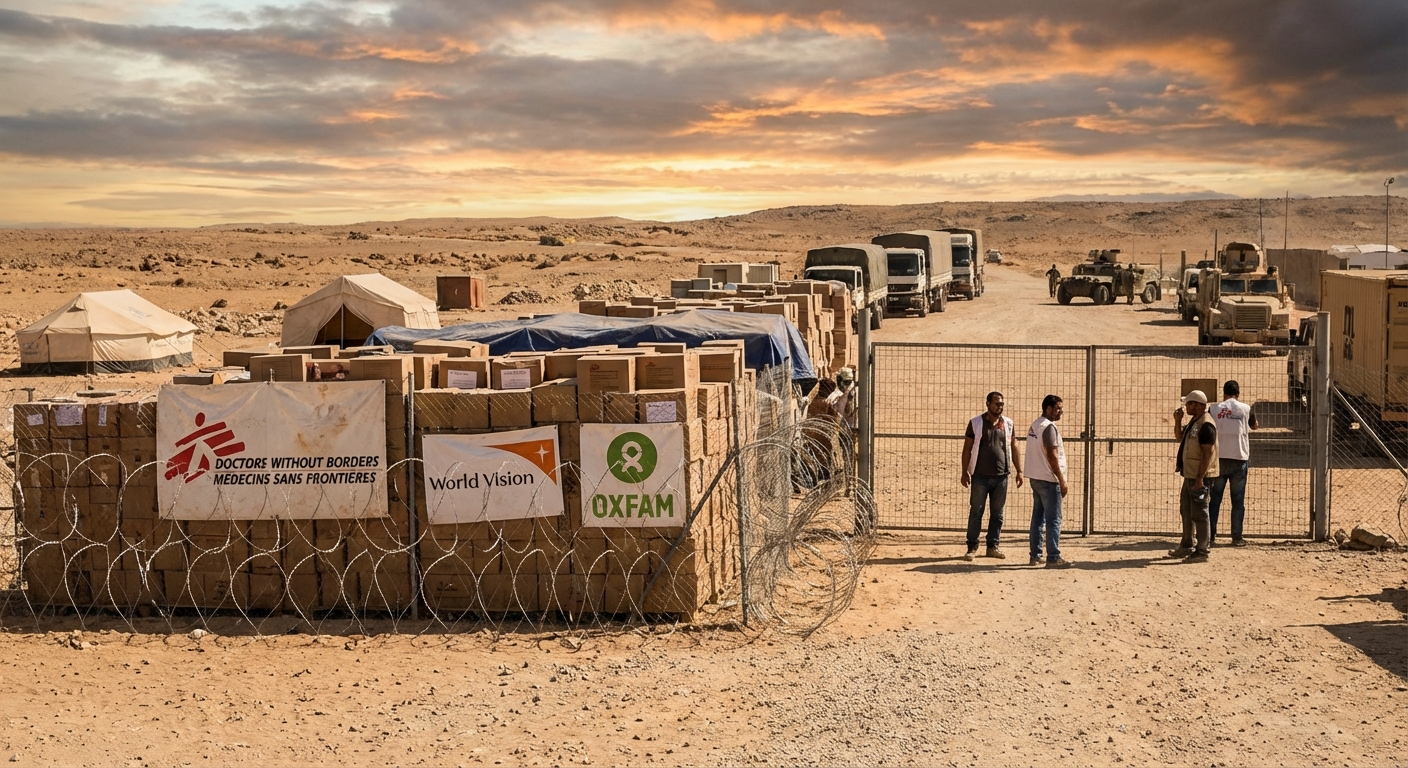
Starting January 1st, 37 international humanitarian organizations, including some of the most experienced and well-resourced aid groups in the world, can no longer bring staff or supplies into Gaza. Doctors Without Borders, World Vision, Oxfam, and dozens of other organizations that have provided medical care, food, water, and shelter to Gaza’s population for years have had their licenses revoked under new Israeli regulations. They have until March 1st to complete the cessation of their activities.
The immediate human impact is staggering. Doctors Without Borders alone supports one in five hospital beds in Gaza and assists one in three mothers during childbirth. The organization’s activities reach nearly half a million people through medical care, water distribution, and support for Gaza’s devastated healthcare system. When those services disappear, there is no obvious replacement waiting to step in.
The ban has drawn condemnation from the United Nations, European governments, and human rights organizations worldwide. But Israel maintains that the new regulations are necessary security measures to prevent Hamas from infiltrating aid operations. Here’s what happened, why it matters, and what comes next for Gaza’s civilian population.
The New Regulations and Why Organizations Failed Them
Israel introduced new registration requirements for international NGOs operating in Gaza in late 2024, framing them as a security measure to ensure aid organizations were not facilitating Hamas activities. The regulations required organizations to submit detailed information about their operations, staff, and activities for Israeli government review.
But the requirements went beyond operational transparency. Organizations that had called for boycotts against Israel, expressed support for international court cases against Israeli soldiers or leaders, or failed to acknowledge the October 7th Hamas attack in ways Israel deemed acceptable found their applications rejected. The criteria were, in the assessment of most international observers, ideological rather than purely security-focused.
Doctors Without Borders, known internationally by its French initials MSF, faced an additional concern that many organizations shared. The registration process required submitting personal information about Palestinian staff to Israeli authorities. Given that 15 MSF colleagues have been killed by Israeli forces since October 2023, the organization had legitimate fears about sharing information that could put remaining staff at risk.
MSF’s formal response was emphatic on one point: the organization would never knowingly employ anyone engaged in military activity. But it refused to accept registration requirements that could endanger its workers or compromise its operational independence. Israel rejected the application, and MSF joined 36 other organizations on the banned list when the deadline passed on January 1st.
The Humanitarian Situation Before the Ban
To understand what this ban means, you need to understand what Gaza looked like before it took effect. According to UN data, nearly 80 percent of buildings in Gaza have been destroyed or damaged since the war began in October 2023. About 1.5 million of Gaza’s more than two million residents have lost their homes. The official death toll reported by Gaza authorities exceeds 70,000, though the actual figure may be higher given the difficulty of documenting casualties amid ongoing conflict.
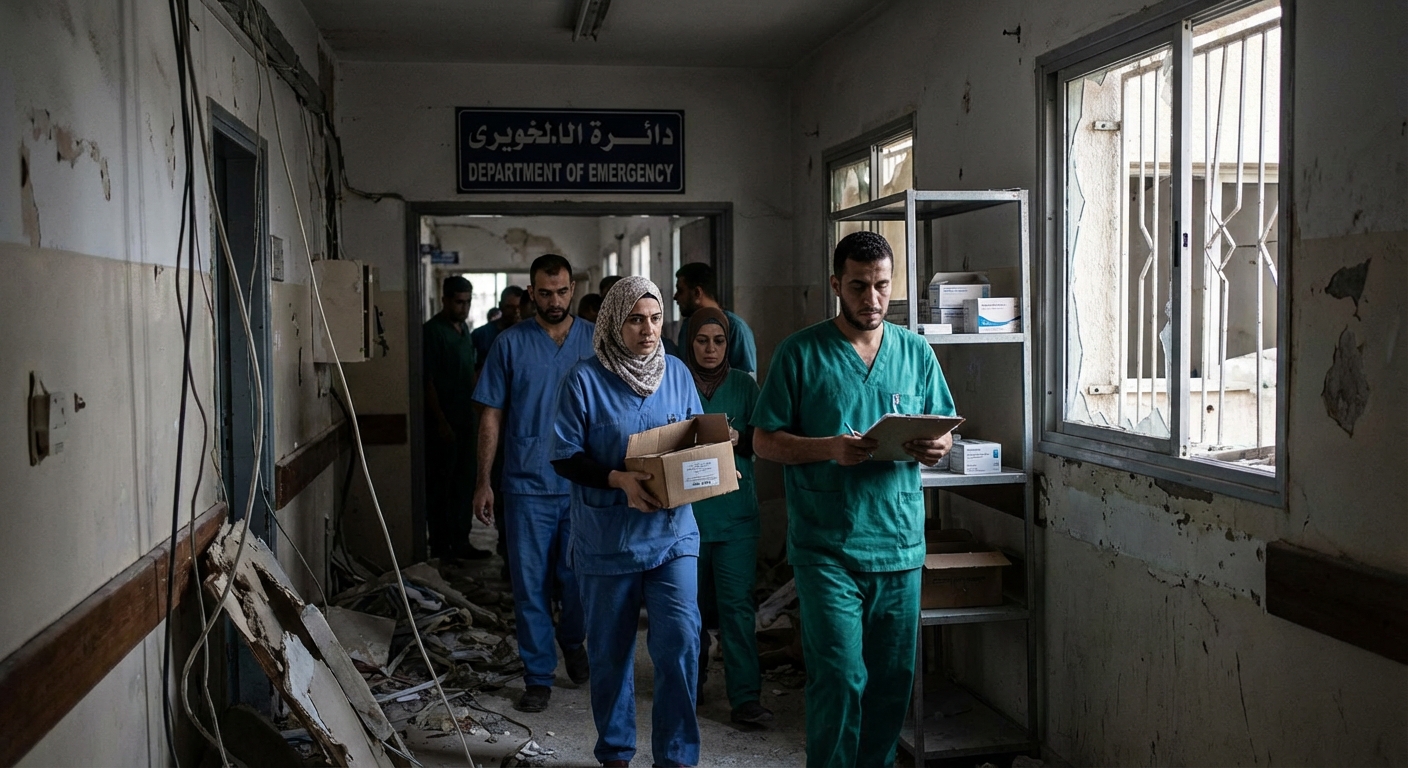
The healthcare system was already operating in crisis mode. Hospitals functioned without reliable electricity or clean water. Medical supplies were perpetually short. Surgeons performed procedures without adequate anesthesia. Infections spread through overcrowded facilities that couldn’t maintain proper sanitation. The international NGOs now being banned were often the difference between these hospitals functioning at all and complete collapse.
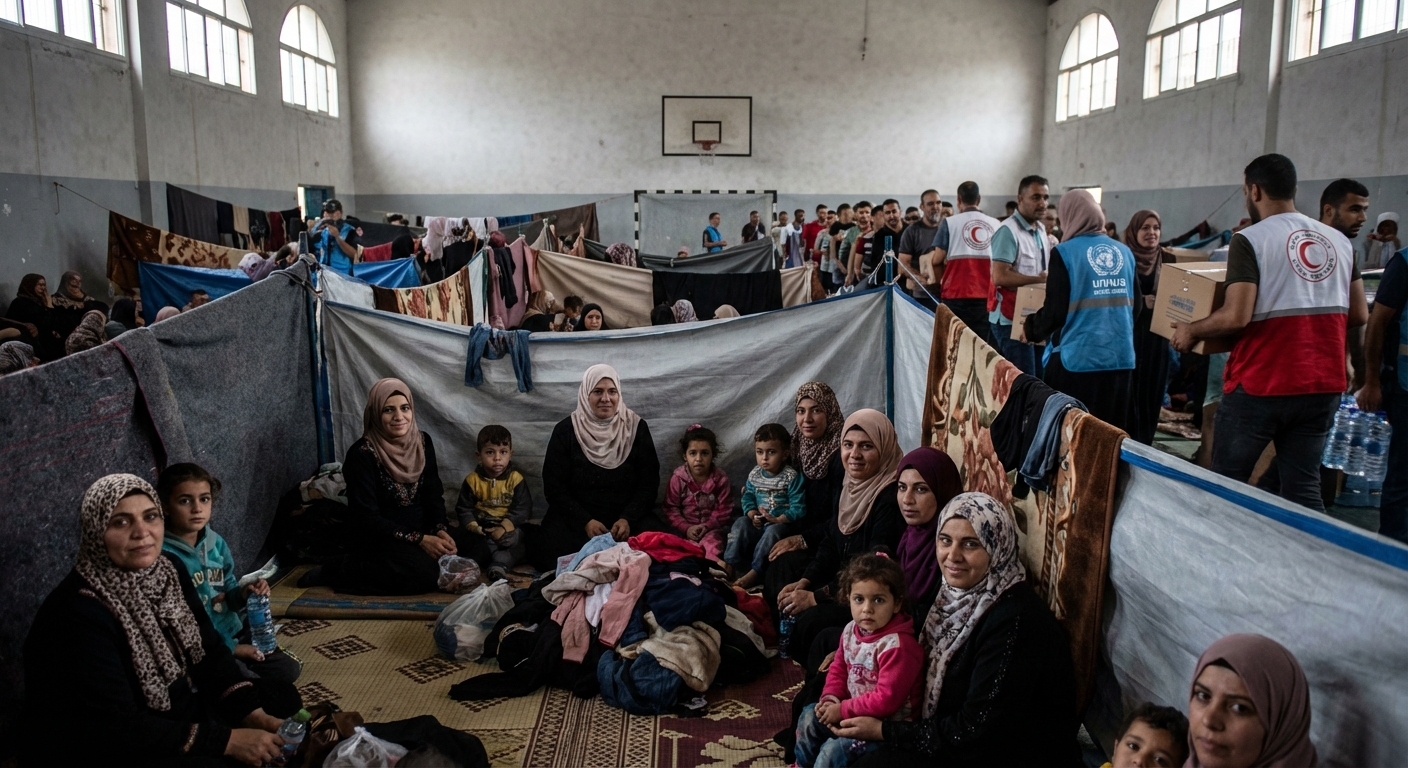
Food security was equally dire. The UN has warned repeatedly that famine conditions exist or are imminent in parts of Gaza. International aid organizations provided the distribution networks that moved food from border crossings to hungry families. They operated the kitchens that fed people who had lost everything. They maintained the water systems that prevented disease outbreaks from becoming even worse.
MSF’s operations alone reached nearly half a million people. Their programs included direct medical care in hospitals and clinics, mental health support for traumatized populations, water and sanitation projects, and distribution of essential supplies. Multiply that impact across 37 organizations, and the scale of what Gaza is losing becomes clear.
Israel’s Position and Security Concerns
Israeli officials frame the NGO regulations as a necessary response to Hamas’s documented history of exploiting humanitarian operations. The Israeli government has long argued that Hamas uses civilian infrastructure, including hospitals and aid distribution points, for military purposes. International aid organizations have been accused, though rarely with public evidence, of having their operations infiltrated by Hamas operatives.
The Israeli Foreign Ministry stated that the regulations aim to ensure aid reaches its intended recipients without being diverted to Hamas. Organizations that comply with the new requirements and pass security vetting can continue operating. The government emphasized that the majority of international organizations that applied for registration received approval.
The rejected organizations, Israel argues, either failed to provide required information, have histories of activism that call their neutrality into question, or refused to cooperate with security procedures designed to prevent aid diversion. From Israel’s perspective, organizations that prioritize their operational independence over security cooperation cannot be trusted to operate in a conflict zone where Hamas remains active.
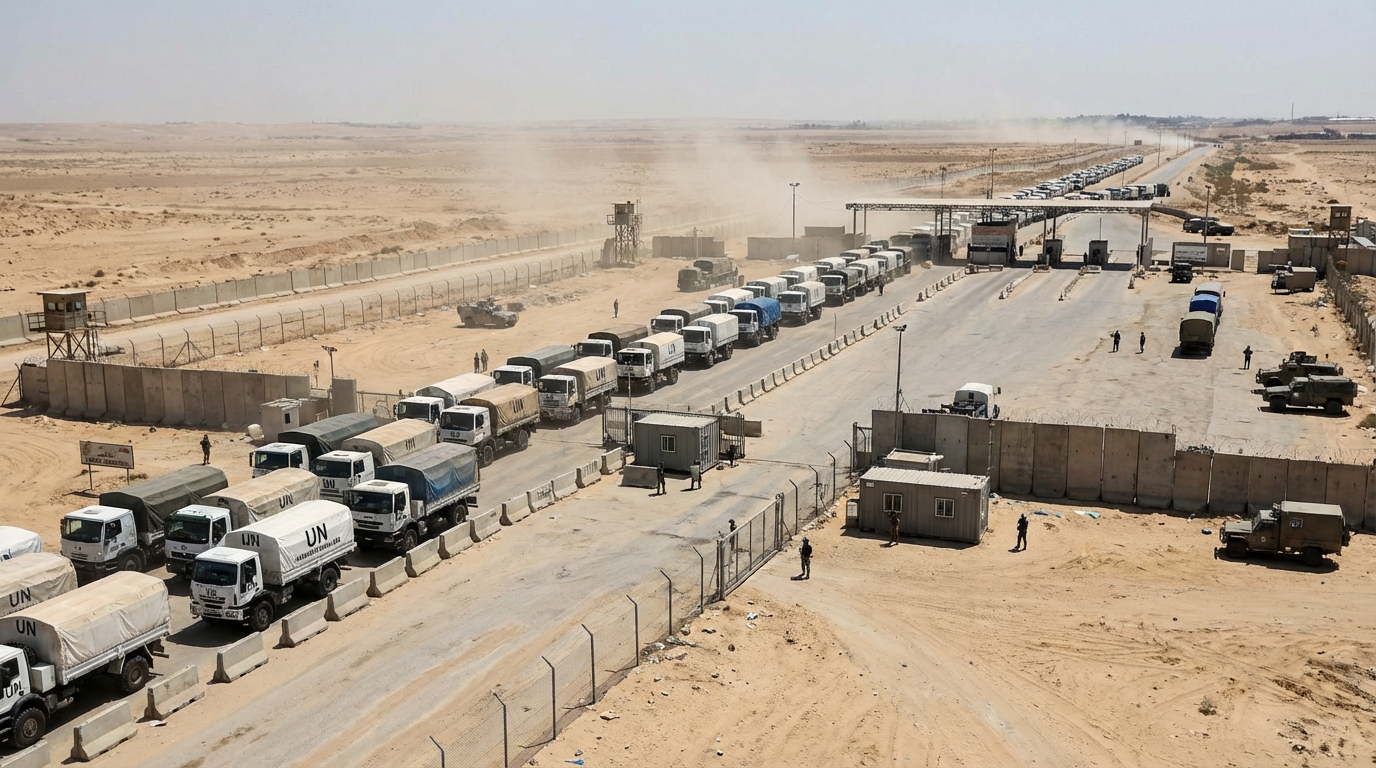
This position has some support among Israeli security analysts who point to documented cases of Hamas using civilian cover for military operations. But it faces intense criticism from the humanitarian community, which argues that the regulations effectively punish organizations for their advocacy positions rather than any actual security violations. The requirement to affirm Israel’s narrative about October 7th, critics say, crosses from security vetting into ideological conformity.
International Condemnation
The global response has been swift and largely critical. UN Secretary General Antonio Guterres called for Israel to reverse the ban, describing international NGOs as “indispensable to life-saving humanitarian work.” UN High Commissioner for Human Rights Volker Turk went further, calling the decision “outrageous” and urging member states to pressure Israel to reverse course. The response highlights ongoing debates about the effectiveness of UN institutions in addressing modern crises.
Foreign ministers from ten countries, including the United Kingdom, France, and Canada, issued a joint statement calling for the ban to be lifted. European Union officials expressed similar concerns, though they stopped short of threatening specific consequences. The diplomatic language was careful, but the message was clear: the international community considers this decision dangerous and unjustified.
Humanitarian organizations themselves have been blunt. MSF’s response characterized the ban as a decision that will cost lives. World Vision warned that children who depend on their programs for food and medical care will suffer. Oxfam described the decision as collective punishment of Gaza’s civilian population. None of these organizations accepted Israel’s framing that the ban reflects their own failure to comply with reasonable security requirements.
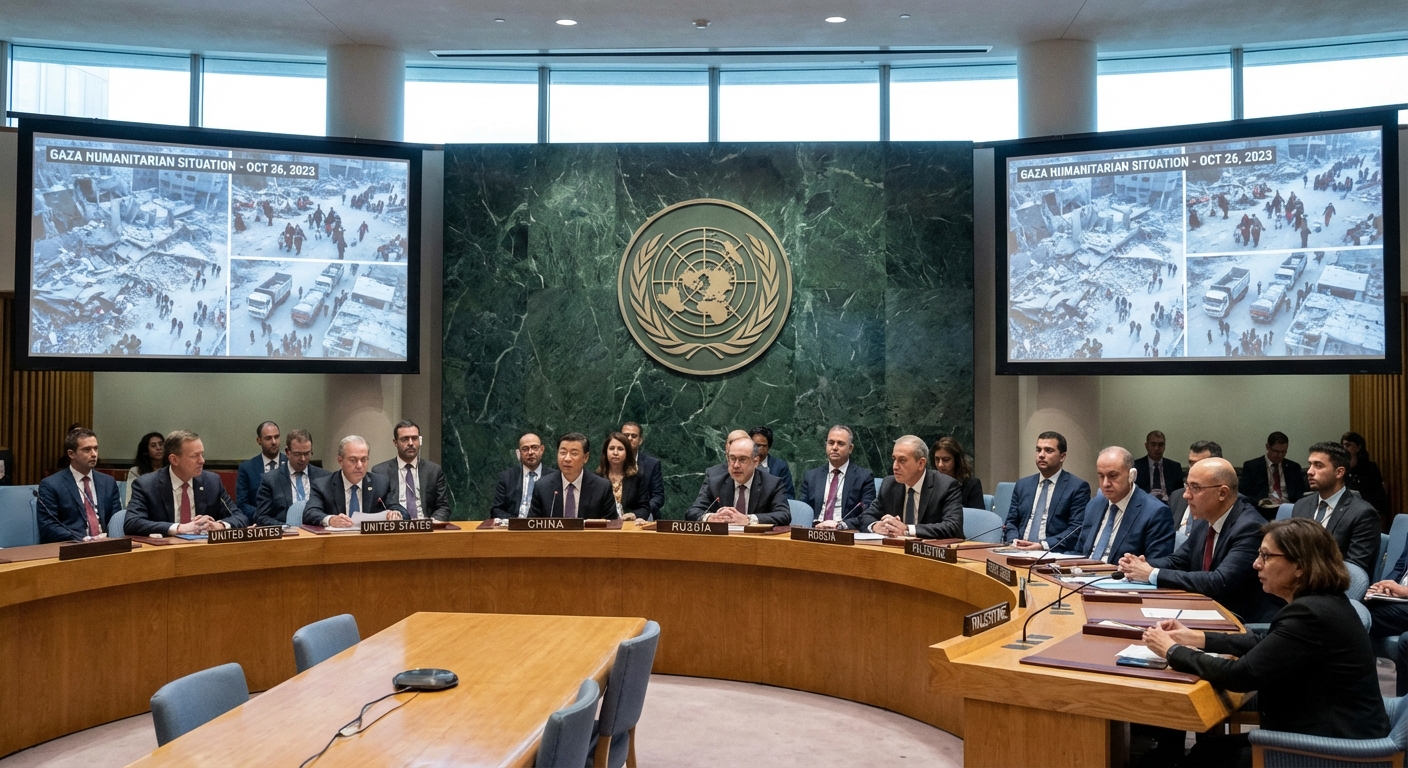
The practical question is whether international pressure will matter. Israel has historically resisted external criticism of its security policies, particularly when it perceives existential threats from Hamas. The Trump administration, which has generally supported Israeli security decisions and shown willingness to take dramatic unilateral military action in Latin America, is unlikely to pressure Jerusalem to reverse course. European governments may issue statements but have limited leverage. The ban appears likely to stand at least through its March implementation deadline.
What Comes Next
The organizations facing expulsion have until March 1st to wind down operations. That process will itself be traumatic for the populations they serve. Medical programs will transfer patients to already overwhelmed local facilities. Food distribution networks will collapse. Water and sanitation projects that require ongoing maintenance will deteriorate. The organizations will try to hand off what they can to local partners, but those partners lack the resources and expertise to fill the gap.
Some organizations may attempt to continue operating through local staff already inside Gaza, though the regulations restrict international staff from entering and limit the ability to bring in supplies. MSF has indicated it will rely entirely on local staff for its remaining operations, but this significantly constrains what it can accomplish. International staff bring specialized medical skills, equipment, and the ability to rotate teams to prevent burnout among personnel working in crisis conditions.
The broader cease-fire negotiations continue amid this humanitarian deterioration. The first phase of the Trump-designed cease-fire plan has faced challenges, with Israel controlling more than half of Gaza’s territory and Hamas refusing to disarm. The regional instability mirrors challenges seen elsewhere in the Middle East, including the ongoing reconstruction efforts in post-Assad Syria. The NGO ban complicates peace prospects by intensifying the humanitarian crisis that any post-conflict reconstruction must address.
The Bottom Line
Israel’s ban on 37 international aid organizations represents one of the most significant restrictions on humanitarian access in the Gaza conflict. The security rationale, preventing Hamas from exploiting aid operations, addresses real concerns but does so through measures that most observers consider disproportionate and ideologically motivated. The humanitarian consequences will be severe: hospitals that lose critical support, families that lose access to food and clean water, children who lose medical care they desperately need.
The international community has condemned the decision but appears unlikely to force a reversal. Organizations like Doctors Without Borders will continue operating with whatever capacity remains, relying on local staff and limited resources. The people of Gaza, already enduring one of the world’s worst humanitarian crises, will bear the burden of a decision made far from the hospital beds and aid distribution points where its impact will be felt.
For those watching from outside, the situation raises uncomfortable questions about the limits of humanitarian protection in modern conflicts. International aid organizations exist to serve civilians regardless of the political contexts surrounding them. When their access is restricted based on ideological positions rather than operational misconduct, the principle of neutral humanitarian action itself comes under threat. What happens in Gaza over the coming months will determine whether that principle survives intact.
Sources: Doctors Without Borders, PBS News, NPR, Al Jazeera, Times of Israel.