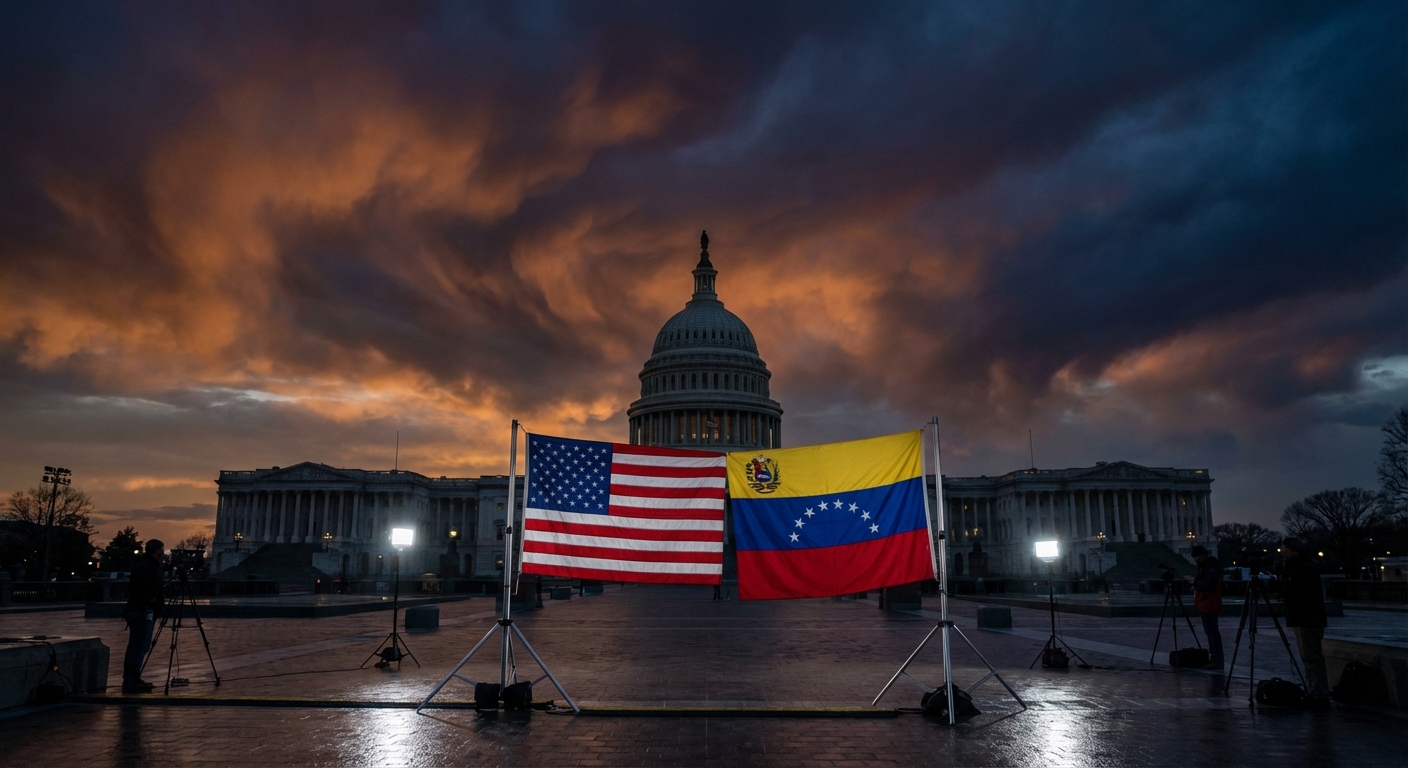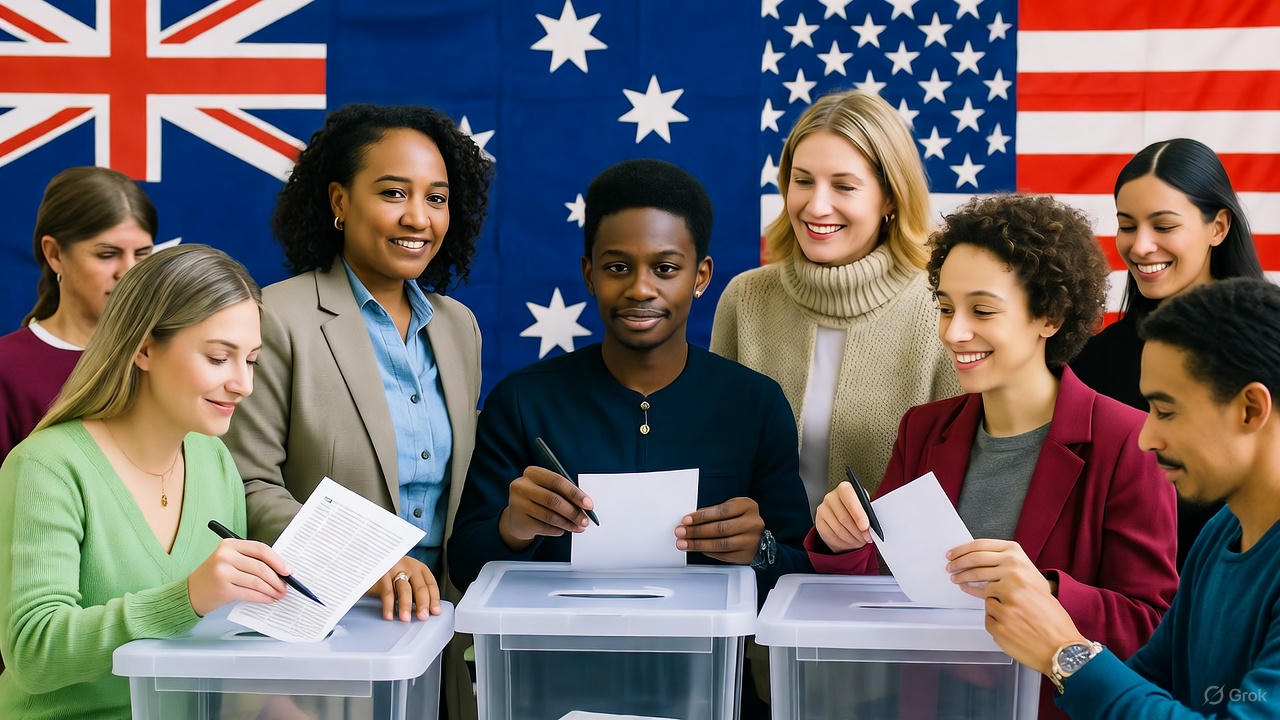
In Australia’s last federal election, voter turnout hit 91%. In the United States, the 2020 election was celebrated as a historic high at 66%. That 25-point gap isn’t explained by civic virtue or political engagement. It’s explained by law. Australia, along with Belgium, Brazil, and about 20 other nations, practices mandatory voting, requiring citizens to show up at the polls or face a small fine.
As the United States grapples with polarization, voter suppression battles, and participation rates that lag behind most developed democracies, this idea is moving from academic theory to serious policy debate. Three states have introduced mandatory voting bills in the past two years, according to the National Conference of State Legislatures, and the concept has found surprising supporters on both sides of the aisle.
The Case for Compulsion
Proponents argue that voluntary voting fundamentally distorts democracy. Data from the Pew Research Center shows that older, wealthier, and more partisan citizens vote at dramatically higher rates than young, poor, or politically moderate Americans. This skew means elected officials naturally cater to the interests of those who show up, not the population as a whole.
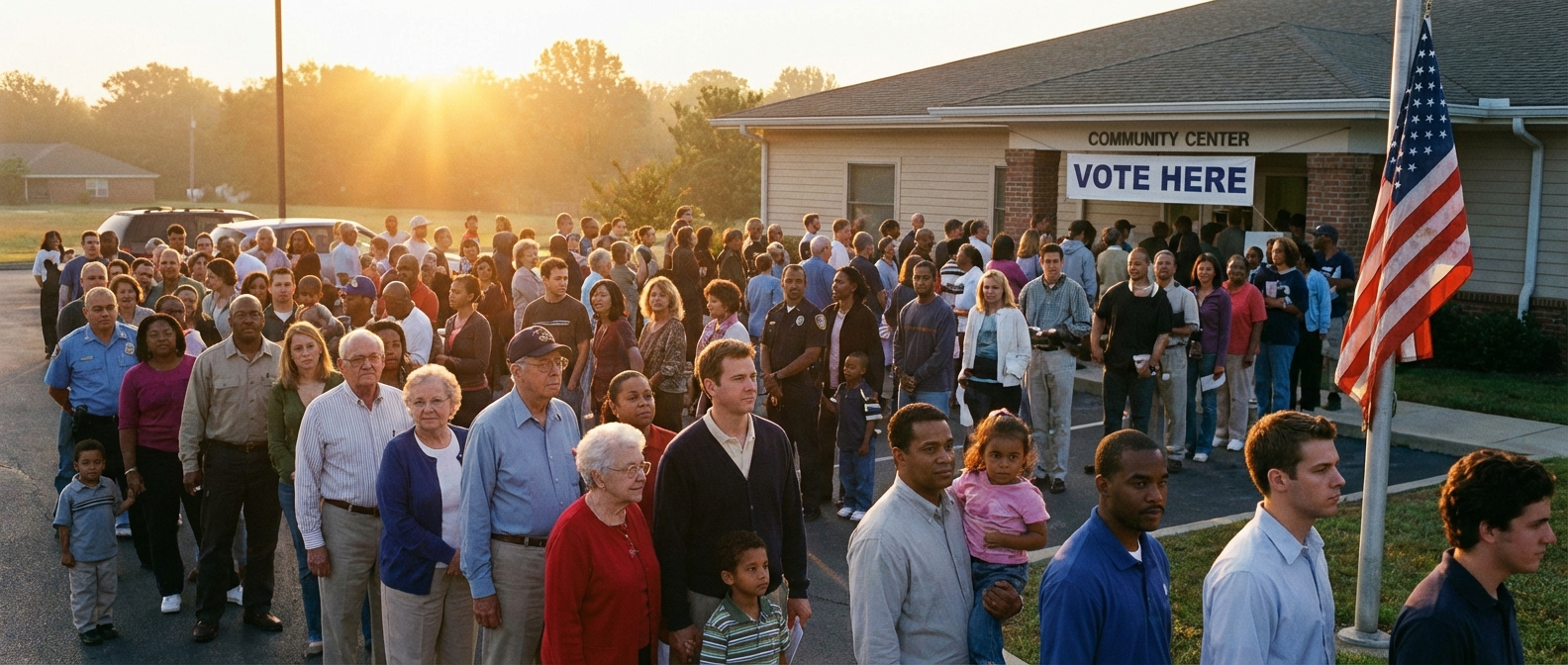
Mandatory voting would force politicians to address the needs of the entire population, including low-propensity voters who currently feel ignored. Political scientists like Arend Lijphart at UC San Diego have argued it could reduce polarization: since parties wouldn’t need to “fire up the base” with extreme rhetoric to drive turnout, they might pivot to persuading the moderate middle.
There’s also a practical benefit. Universal participation acts as a shield against voter suppression. If everyone must vote, tactics designed to make voting harder for specific groups become ineffective. Closing polling places in minority neighborhoods or implementing strict ID requirements still create inconvenience, but they can’t prevent participation when participation is legally required.
How It Actually Works
The reality of mandatory voting is less authoritarian than it sounds. In Australia, the fine for not voting is about $20 USD, roughly the cost of a parking ticket. You don’t even have to cast a valid ballot. You just have to show up and get your name marked off. Draw a picture on the ballot if you want. The law forces participation, not speech.
The result, according to the Australian Electoral Commission, is a political culture where voting is viewed as a civic duty, like jury duty, rather than an optional hobby. Australians don’t debate whether voting is worth the effort. They assume everyone votes because everyone does.
The American Resistance
In the United States, the hurdles are massive and come from multiple directions. Culturally, Americans have a deep resistance to anything perceived as government coercion. The libertarian streak runs through both parties, and “forcing” people to vote feels fundamentally un-American to many.
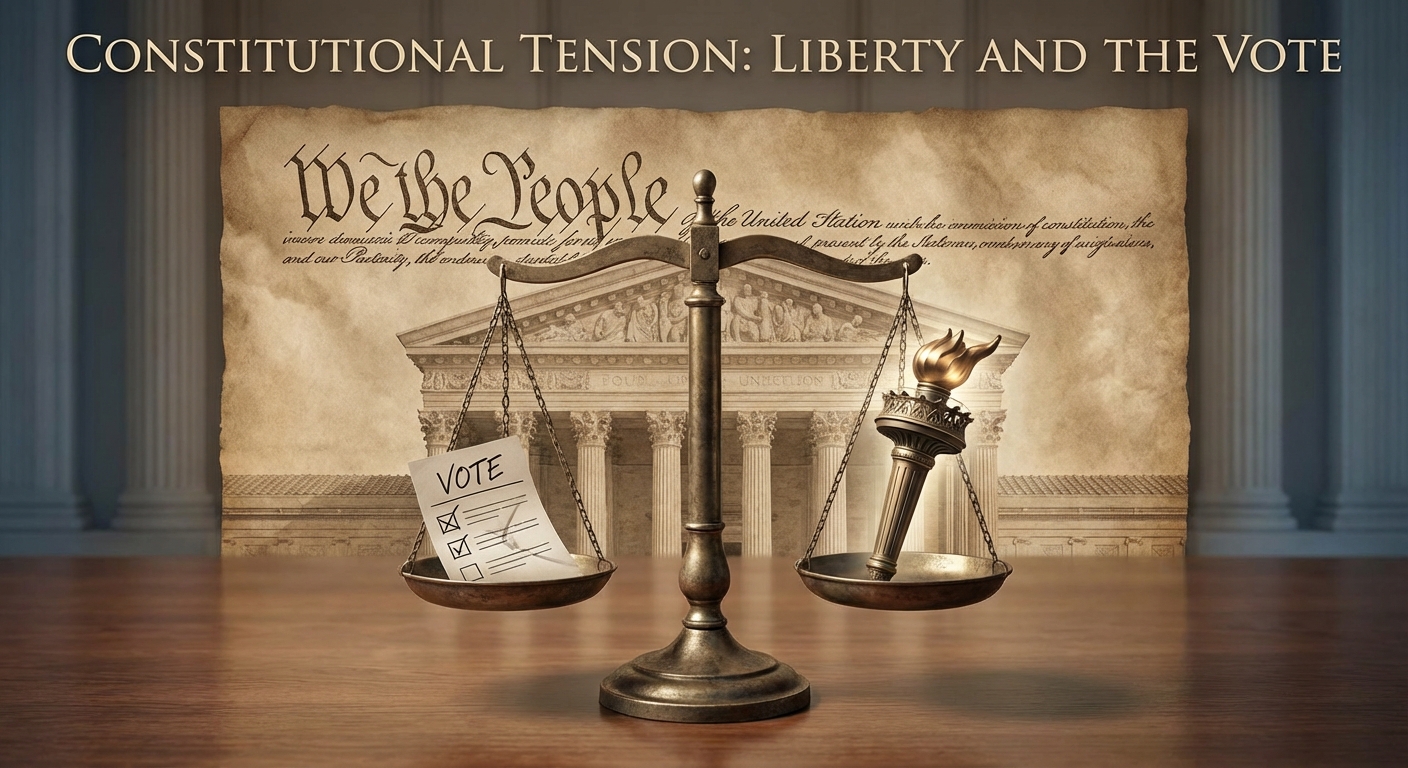
Legally, mandatory voting might face First Amendment challenges. The Supreme Court has held that the right to speak includes the right not to speak. Some constitutional scholars argue that compelled voting, even with a “none of the above” option, violates this principle. Others counter that showing up isn’t speech and that countries with strong free-speech protections have sustained mandatory voting for decades.
Politically, neither party truly wants it. Republicans fear it would mobilize low-propensity voters who historically lean Democratic. Democrats worry about the unpredictable nature of forcing millions of disengaged people into the voting booth. This connects to broader questions about voter engagement that both parties are wrestling with, particularly around younger voters.
The Democratic Dilemma
Mandatory voting solves the turnout problem instantly, but it doesn’t solve the engagement problem. Does forcing an uninformed or uninterested person to vote actually improve democracy? Or does it just add noise to the signal, diluting the votes of people who have done their research?
Research from the University of Melbourne suggests mandatory voting correlates with slightly higher political knowledge over time, as citizens who must vote become more likely to seek information. But the causation is unclear, and skeptics argue that civic engagement should be encouraged, not mandated.
The debate ultimately forces Americans to confront what they value more: the freedom to opt out of democracy, or a government that genuinely represents everyone. With independent voters now outnumbering both major parties, the question of who participates and why has never been more pressing.
The Bottom Line
Mandatory voting won’t come to America anytime soon. The cultural and constitutional barriers are simply too high, and neither party sees clear advantage in pushing for it. But the conversation itself is valuable, forcing us to examine why American turnout lags behind peer democracies and whether voluntary participation produces governments that truly represent the people.
The Australian model proves that mandatory voting can coexist with robust democracy and individual freedom. Whether Americans are willing to trade a sliver of liberty for a more representative government remains an open question, one that reveals as much about national values as any policy debate can.
Sources: Australian Electoral Commission, Pew Research Center, National Conference of State Legislatures.