TIME magazine just named its 2025 Person of the Year, and for the first time in the award’s 98-year history, the honor went to an entire category of people: the “Architects of AI.” The eight tech leaders selected, including Sam Altman, Jensen Huang, Elon Musk, and Mark Zuckerberg, collectively command more than $870 billion in wealth and lead companies that have fundamentally reshaped how humans interact with technology. But the announcement came on the same day as a series of developments that underscore just how complicated the AI revolution has become.
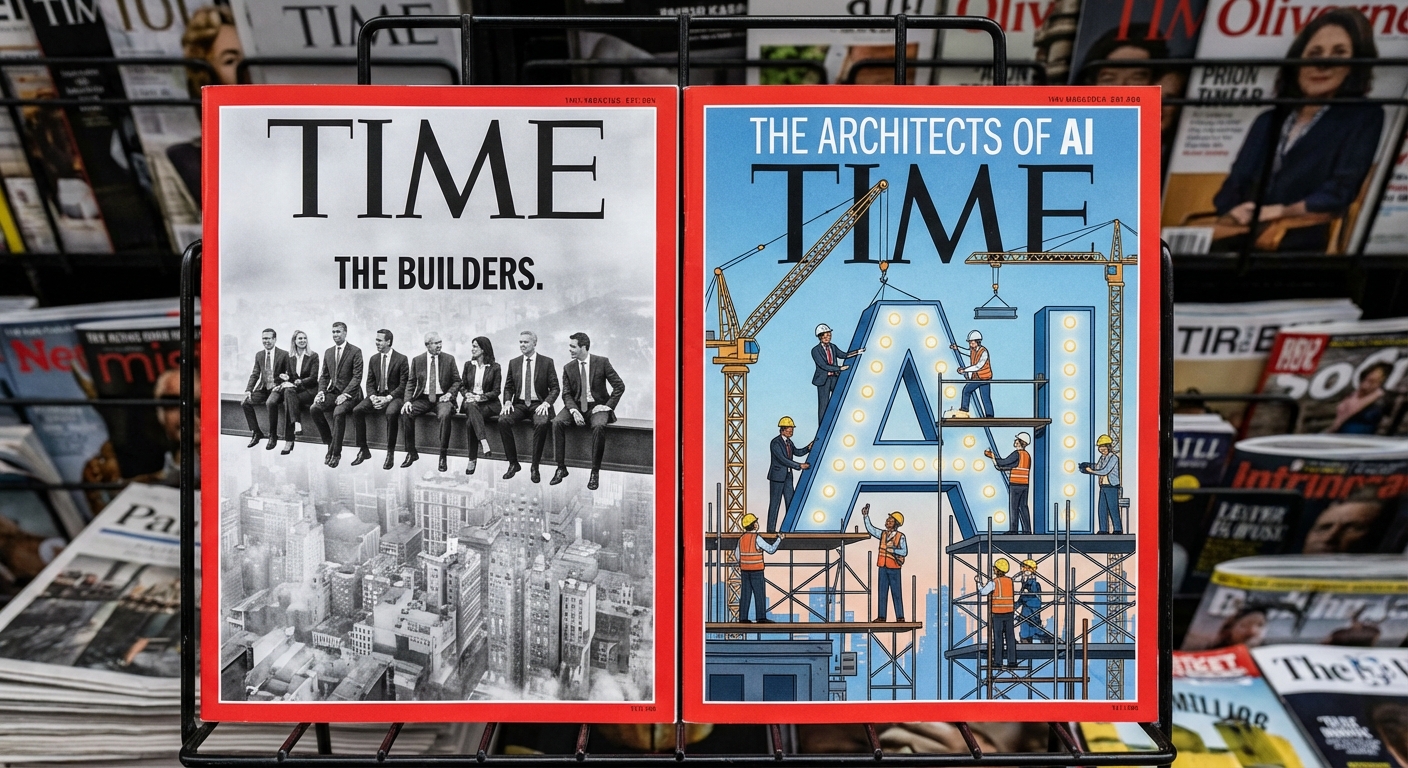
“For delivering the age of thinking machines, for wowing and worrying humanity, for transforming the present and transcending the possible, the Architects of AI are TIME’s 2025 Person of the Year,” wrote editor-in-chief Sam Jacobs. The magazine released two covers to mark the occasion: one depicting the eight leaders perched on a steel beam in a modern recreation of the iconic 1932 “Lunch Atop a Skyscraper” photograph, and another placing them among scaffolding constructing the giant letters “AI.”
The Eight Leaders Who Made the Cut
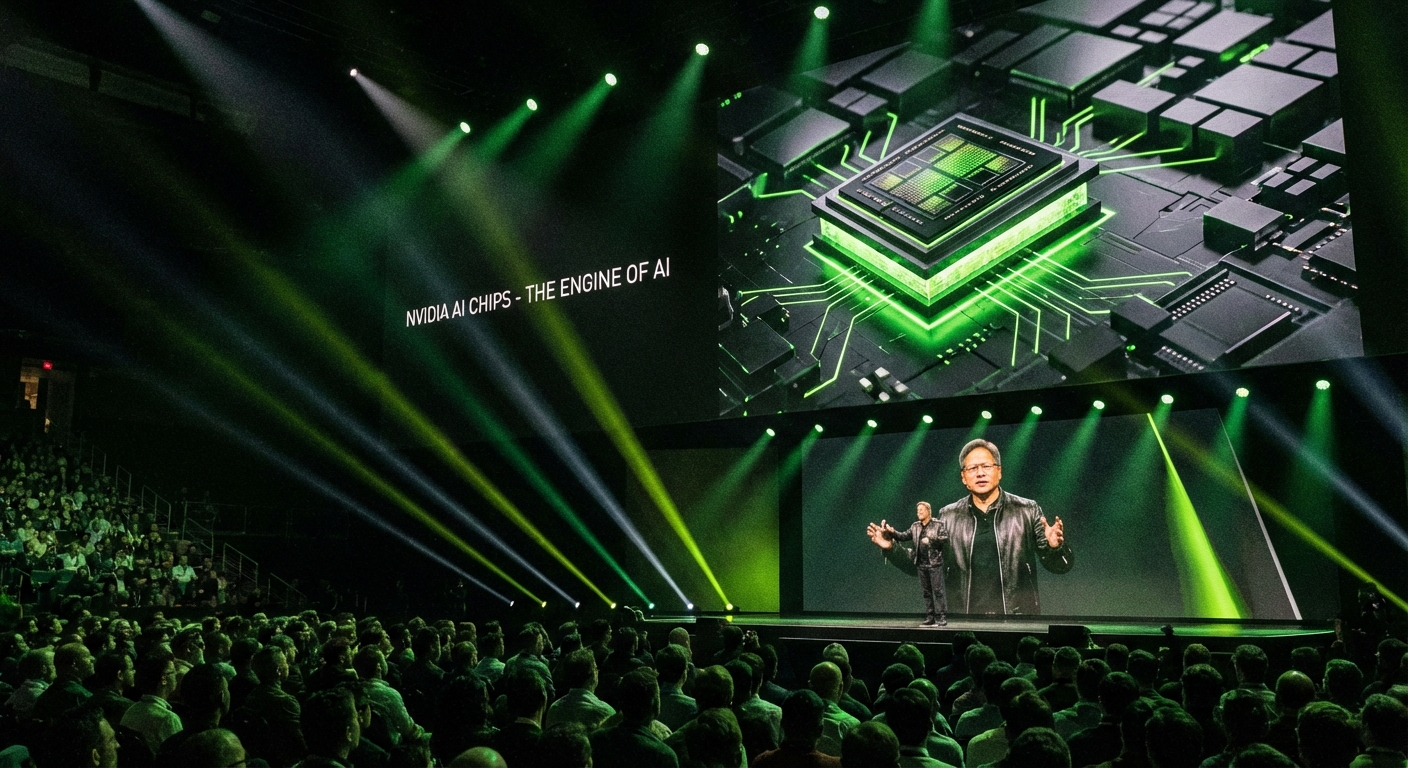
The selection spans the AI ecosystem from chips to applications. Nvidia CEO Jensen Huang leads the company that manufactures the GPUs powering virtually every major AI system, making Nvidia the most valuable company in the world. OpenAI CEO Sam Altman built the ChatGPT phenomenon that introduced generative AI to mainstream users. Meta’s Mark Zuckerberg pivoted his entire company toward AI and released competitive open-source models. And Elon Musk, despite publicly criticizing AI development, founded xAI and continues shaping the conversation around AI risks.
The list also includes some names less familiar to casual tech observers. AMD CEO Lisa Su has positioned her company as the primary alternative to Nvidia’s AI chip dominance. Google DeepMind CEO Demis Hassabis won the Nobel Prize in Chemistry this year for AI-powered protein structure prediction. Anthropic CEO Dario Amodei leads the AI safety-focused company behind Claude. And Stanford professor Fei-Fei Li, whose ImageNet dataset helped catalyze the deep learning revolution, launched her own AI startup World Labs in 2024.
What unites them, according to TIME’s coverage, is their direct role in building the technologies now used by nearly 800 million people worldwide. These eight individuals didn’t just invest in AI or talk about its potential. They designed architectures, trained models, manufactured hardware, and made strategic decisions that determined how AI developed.
The Complicated Timing
Here’s where TIME’s announcement gets awkward. The magazine revealed its choice on the same day CNN reported that President Trump signed an executive order seeking to prevent states from regulating AI, and just days after OpenAI warned that its next-generation models could pose “high” cybersecurity risks, including potential zero-day exploit development.
The juxtaposition highlights the central tension in AI’s rapid ascent. The same technologies earning global recognition for their transformative potential are simultaneously raising urgent questions about safety, job displacement, concentration of power, and democratic governance. TIME acknowledged this directly in its coverage, noting that AI has been “wowing and worrying humanity” in equal measure.
The wealth concentration is particularly striking. Five of the eight honorees, Musk, Zuckerberg, Huang, Altman, and Su, are already billionaires. Their combined fortune of $870 billion was largely accumulated during the past three years of AI fever, representing one of the fastest concentrations of wealth in economic history. Nvidia’s stock alone has risen more than 800% since ChatGPT’s launch in late 2022.
The AI-Writes-AI Moment
Perhaps the most remarkable detail in TIME’s coverage involves how AI development itself has changed. According to the magazine’s reporting, coding tools like Cursor and Claude Code have become so powerful that engineers across top AI companies now use them for virtually every aspect of their work, a shift that connects to the broader agentic AI revolution transforming how software gets built. At Nvidia, most engineers use AI coding assistants. At Anthropic, the company’s own AI model Claude now writes up to 90% of its own code.

This recursive quality, AI systems building the next generation of AI systems, captures something profound about where the technology stands. The architects TIME honored aren’t just building products anymore. They’re creating systems capable of extending their own capabilities with diminishing human intervention. Whether that represents humanity’s greatest achievement or its greatest risk depends largely on whom you ask among the eight people on those magazine covers.
The divergence in philosophy among the honorees is notable. Altman has pushed for rapid deployment and argues that real-world feedback improves AI safety faster than theoretical research. Amodei’s Anthropic has emphasized cautious scaling and safety research before deployment. Musk has oscillated between warning about AI existential risk and racing to build competitive systems. Zuckerberg has championed open-source AI as a democratizing force. These aren’t minor tactical disagreements but fundamental differences in how AI should develop.
What This Means for 2026
TIME’s choice reflects a particular moment in AI history, the point where the technology transitioned from specialized research projects to tools used by hundreds of millions of people daily. ChatGPT reaching 100 million users faster than any consumer application in history marked that transition. The subsequent explosion of AI applications across healthcare, legal services, creative industries, and software development confirmed it.
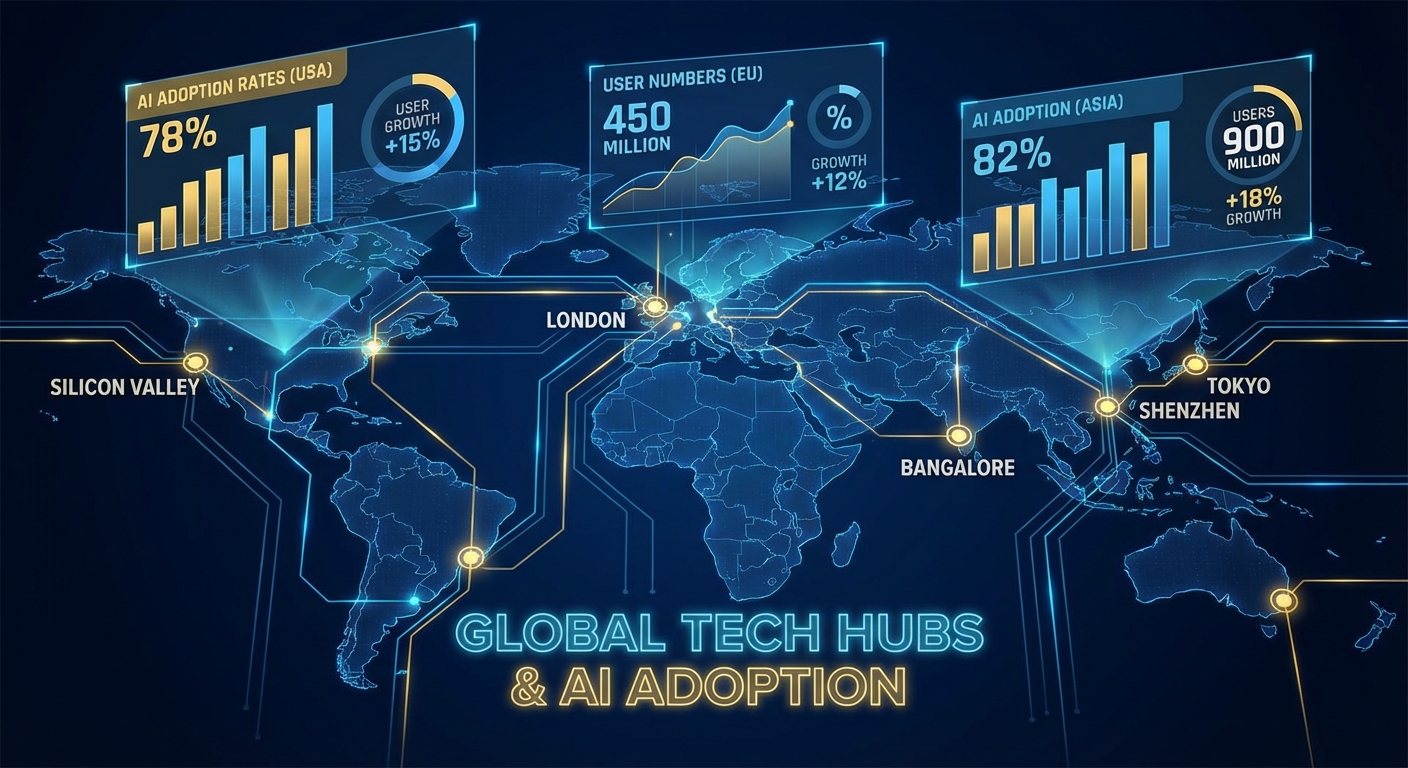
But the selection also arrives at a moment of reckoning. Regulators worldwide are scrambling to establish frameworks for AI governance. The EU’s AI Act has taken effect. China has implemented its own comprehensive AI rules, even as it launches new degree programs to train the next generation of AI-robotics engineers. And in the United States, the battle between federal light-touch approaches and stricter state regulations is playing out in real time.
The eight people TIME honored will help determine how those battles resolve. Their companies lobby legislators, their technical choices constrain regulatory options, and their public statements shape how society understands AI risks and benefits. Whether history judges them as visionaries who improved human welfare or as architects of systems that concentrated power and displaced workers depends on decisions still being made.
The Bottom Line
TIME’s Person of the Year award has always been about influence, not endorsement. The magazine’s own coverage notes both the transformative benefits and serious risks of AI technology. By selecting eight people rather than one, TIME acknowledged that AI’s development hasn’t been the vision of a single genius but a collective effort with collective responsibility.
For the honorees, the recognition represents validation of decisions that seemed risky when they made them. Huang’s bet on AI computing a decade ago looked questionable until it didn’t. Altman’s choice to release ChatGPT publicly rather than keeping it restricted attracted criticism before becoming the template others followed. Amodei’s departure from OpenAI to found a safety-focused competitor seemed like professional suicide before Anthropic raised billions.
The question now isn’t whether AI will continue transforming society. That’s settled. The question is whether the architects of these systems can navigate the growing tensions between innovation and safety, competition and cooperation, profit and public benefit. TIME gave them the spotlight. What they do with it matters more than any magazine cover.
Sources: TIME Magazine, CBS News, TechCrunch, NBC News, CNN.